
Close Menu
    Facebook X (Twitter) Instagram
    SciTechDaily
    • Biology
    • Chemistry
    • Earth
    • Health
    • Physics
    • Science
    • Space
    • Technology
    Facebook X (Twitter) Pinterest YouTube RSS
    SciTechDaily
    Home»Science»Self-Healing Materials Created After Breakthrough on Science of Cracking
    Science

    Self-Healing Materials Created After Breakthrough on Science of Cracking

    By Princeton University, Engineering SchoolOctober 9, 2019No Comments2 Mins Read
    Facebook Twitter Pinterest Telegram LinkedIn WhatsApp Email Reddit
    Share
    Facebook Twitter LinkedIn Pinterest Telegram Email Reddit

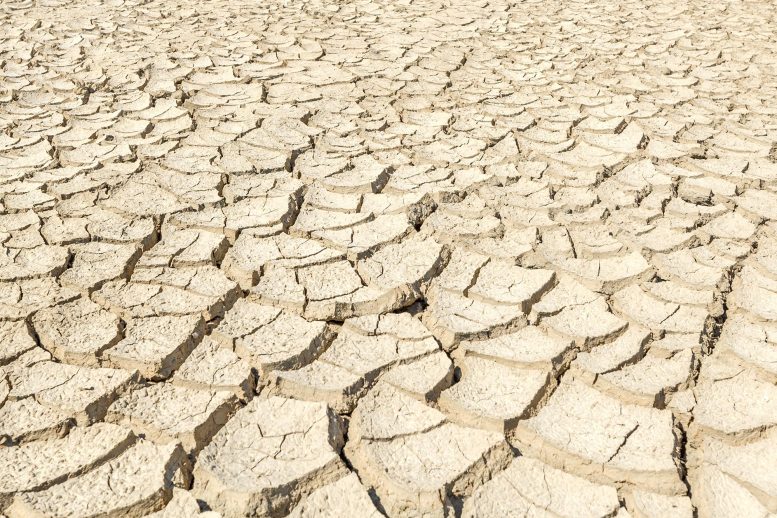
    Cracked Desert Soil

    Cracks in the desert floor appear random to the untrained eye, even beautifully so, but the mathematics governing patterns of dried clay turn out to be predictable — and useful in designing advanced materials.

    In a pair of new studies from Princeton University, researchers found that in a large class of common materials, including clay and human skin, individual grains of the material shrink as they dry. The amount and speed of shrinkability vary with the material’s physical properties. By harnessing this previously unknown trait, the researchers are able to predict, and even reverse, cracking over time.

    “The application of materials that spontaneously heal themselves, by leveraging shrinkability, is something I’m very excited about,” said Sujit Datta, assistant professor of chemical and biological engineering at Princeton University and lead author on the studies.

    In the first paper, by balancing conditions just so, the researchers fine-tuned a shrinkable granular material so that it alternately cracked apart in precise clusters, didn’t crack at all, or started to crack but closed again. The second paper, due out October 10 in Physical Review Letters, lays out the general physics governing shrinkability — that is, how each grain changes individually as it interacts with the aggregate, and how this trait impacts the sizes of clusters left after a granular material cracks. Nearly a century of work in this field had assumed all grains retain their size, failing to describe the shrinking of individual grains in such materials. The revelation impacts everything from biomedical treatments to fuel cells to toxic-waste containment.

    ###

    This work was funded in part by the School of Engineering and Applied Science at Princeton University, the Grand Challenges Initiative of the Princeton Environmental Institute, and the Princeton Center for Complex Materials, a Materials Research Science and Engineering Center supported by NSF grant DMR-1420541.

    Reference: “Crack formation and self-closing in shrinkable, granular packings” by H. Jeremy Cho, Nancy B. Lu, Michael P. Howard,  Rebekah A. Adams and Sujit S. Datta, Soft Matter, Issue 23, 2019.
    DOI: 10.1039/C9SM00731H

    Never miss a breakthrough: Join the SciTechDaily newsletter.
    Follow us on Google and Google News.

    Materials Science Princeton University
    Share. Facebook Twitter Pinterest LinkedIn Email Reddit

    Related Articles

    5.6x More Damage-Resistant: Princeton Engineers Develop New Super-Tough Cement

    Princeton Engineers Develop New Cement That Is 17x More Crack-Resistant

    Optically Switchable Chiral THz Metamolecules

    Graphite Foam Could Harness Energy from Temperature Gradient in Oceans

    Researchers Uncover Why Lithium Iron Phosphate Works So Well

    Self-Healing Polymer Mechanism Rediscovered After 60 Years

    Scientists Make 3D Objects Invisible to Microwave Wavelengths

    Graphene is Transparent to Water

    Research for High Pressure Materials for DoD Underway

    Leave A Reply Cancel Reply

    • Facebook
    • Twitter
    • Pinterest
    • YouTube

    Don't Miss a Discovery

    Subscribe for the Latest in Science & Tech!

    Trending News

    Monster Storms on Jupiter Unleash Lightning Beyond Anything on Earth

    Scientists Create “Liquid Gears” That Spin Without Touching

    The Simple Habit That Could Help Prevent Cancer

    Millions Take These IBS Drugs, But a New Study Finds Serious Risks

    Scientists Unlock Hidden Secrets of 2,300-Year-Old Mummies Using Cutting-Edge CT Scanner

    Bread Might Be Making You Gain Weight Even Without Eating More Calories

    Scientists Discover Massive Magma Reservoir Beneath Tuscany

    Europe’s Most Active Volcano Just Got Stranger – Here’s Why Scientists Are Rethinking It

    Follow SciTechDaily
    • Facebook
    • Twitter
    • YouTube
    • Pinterest
    • Newsletter
    • RSS
    SciTech News
    • Biology News
    • Chemistry News
    • Earth News
    • Health News
    • Physics News
    • Science News
    • Space News
    • Technology News
    Recent Posts
    • Scientists Were Wrong About This Strange “Rule-Breaking” Particle
    • Webb Space Telescope Uncovers Unexpected Ice Clouds on a Jupiter-Like World
    • 289-Million-Year-Old Reptile Mummy Reveals Origin of Human Breathing System
    • New Brain Discovery Challenges Long-Held Theory of Teenage Brain Development
    • Sharks Are Overheating as Warming Oceans Push Them to the Edge
    Copyright © 1998 - 2026 SciTechDaily. All Rights Reserved.
    • Science News
    • About
    • Contact
    • Editorial Board
    • Privacy Policy
    • Terms of Use

    Type above and press Enter to search. Press Esc to cancel.