
Close Menu
    Facebook X (Twitter) Instagram
    SciTechDaily
    • Biology
    • Chemistry
    • Earth
    • Health
    • Physics
    • Science
    • Space
    • Technology
    Facebook X (Twitter) Pinterest YouTube RSS
    SciTechDaily
    Home»Space»Sentinel-6 Michael Freilich Is Ready to Head Into Space
    Space

    Sentinel-6 Michael Freilich Is Ready to Head Into Space

    By Jet Propulsion LaboratoryNovember 8, 2020No Comments3 Mins Read
    Facebook Twitter Pinterest Telegram LinkedIn WhatsApp Email Reddit
    Share
    Facebook Twitter LinkedIn Pinterest Telegram Email Reddit
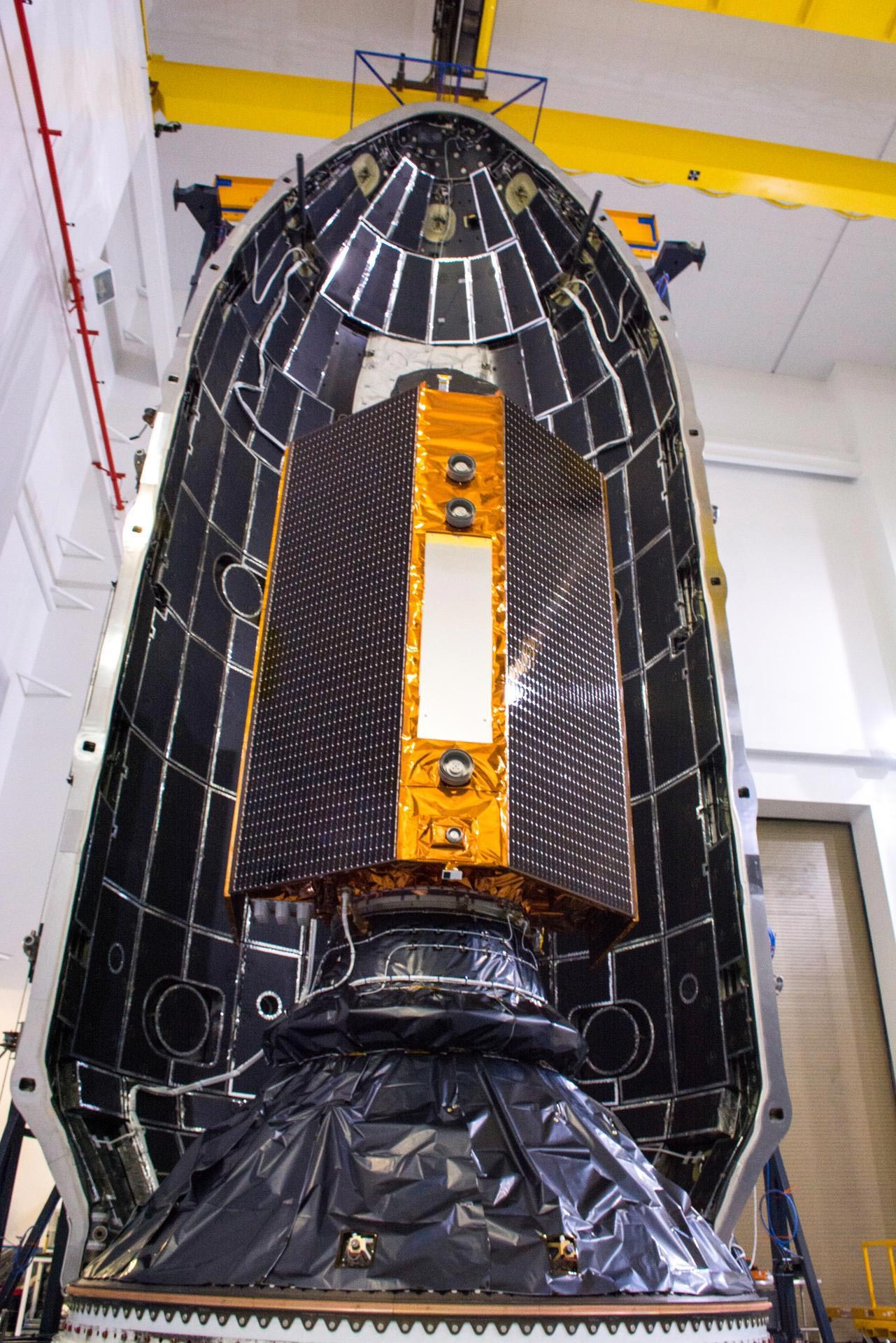
    Sentinel-6 Michael Freilich Encapsulated
    The Sentinel-6 Michael Freilich satellite is encapsulated in a protective nosecone, or payload fairing, at Vandenberg Air Force Base in California. The fairing will sit atop a SpaceX Falcon 9 rocket that will launch the satellite into Earth orbit in the late-November 2020. Credit: NASA/Randy Beaudoin

    The newest addition to a long line of ocean-monitoring satellites is ready to head into space.

    With a little over two weeks to go until its California launch, the Sentinel-6 Michael Freilich spacecraft is undergoing final preparations. Technicians and engineers have encapsulated the satellite in the payload fairing — the protective nosecone that will ride atop the SpaceX Falcon 9 rocket. The launch is targeted for November 21, 2020.

    “We’re almost there,” said project manager Parag Vaze of NASA’s Jet Propulsion Laboratory in Southern California. “Soon, we’ll be watching the satellite on its journey into Earth orbit 830 miles above our planet.” Project manager Pierrik Vuilleumier of ESA (European Space Agency) echoed the sentiment.
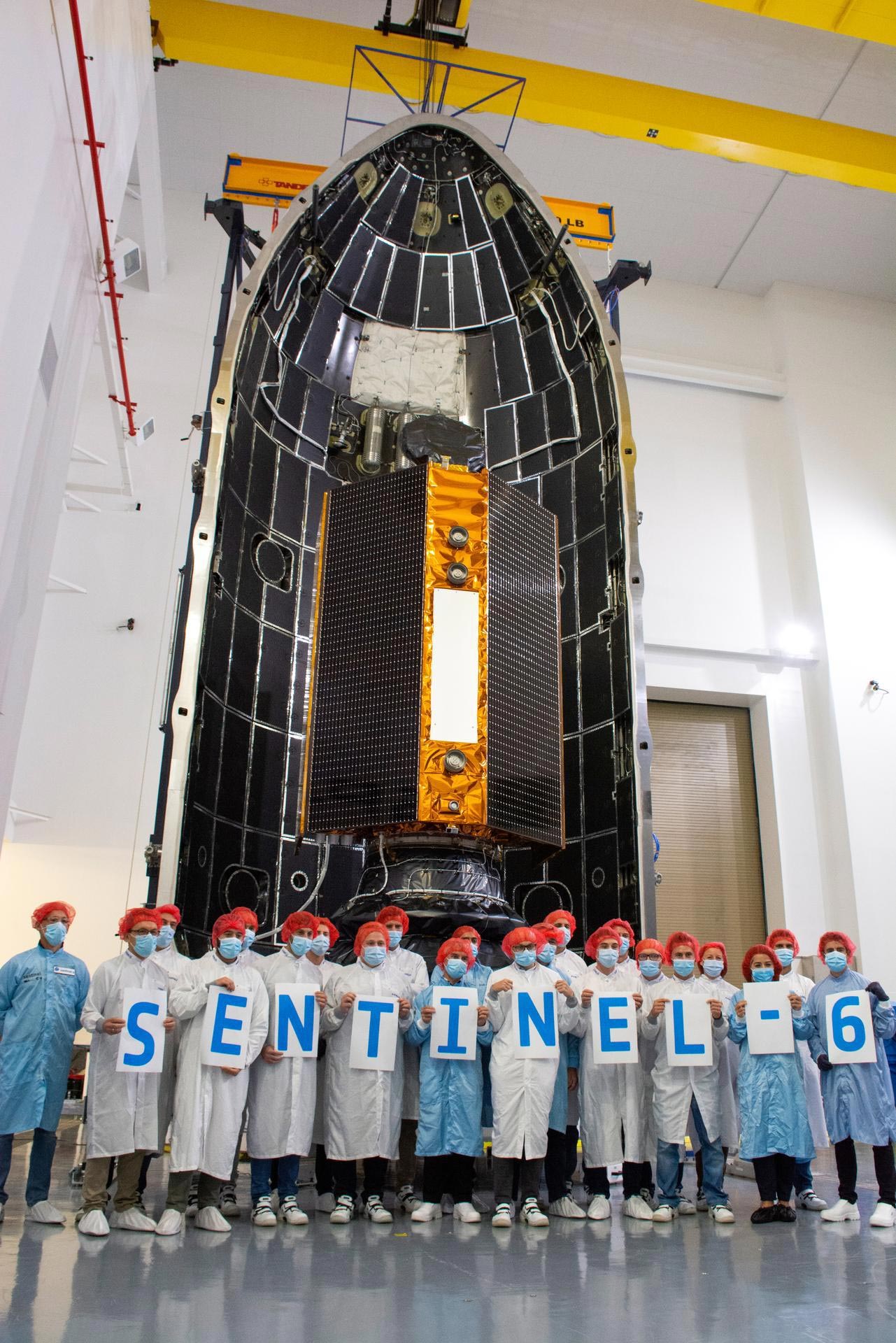
     Sentinel-6 Michael Freilich Spacecraft Team and Fairing
    Technicians and engineers working on the Sentinel-6 Michael Freilich satellite pose in front of the spacecraft in its protective nosecone, or payload fairing, at Vandenberg Air Force Base in California. Once closed, the fairing will sit atop a SpaceX Falcon 9 rocket, launching in late November 2020. Credit: NASA/Randy Beaudoin

    About the size of a small pickup truck, Sentinel-6 Michael Freilich will play a central role in efforts to track sea level rise caused by climate change. What’s more, the data that it collects on sea level variations near coastlines will provide information to support coastal management and with planning for floods, while its atmospheric measurements will enhance weather and hurricane forecasts.

    Sentinel-6 Michael Freilich is one of two identical satellites that are a part of the Sentinel-6/Jason-CS (Continuity of Service) mission, a U.S.-European collaboration. The mission is part of Copernicus, the European Union’s Earth observation program managed by the European Commission. Continuing the legacy of the Jason series missions, Sentinel-6/Jason-CS will extend the records of sea level into their fourth decade, collecting accurate measurements of sea surface height for more than 90% of the world’s oceans, and providing crucial information for operational oceanography, marine meteorology, and climate studies. Sentinel-6 Michael Freilich’s twin, Sentinel-6B, is scheduled to launch in 2025.

    More About the Mission

    Sentinel-6/Jason-CS is being jointly developed by ESA, the European Organisation for the Exploitation of Meteorological Satellites, NASA, and the National Oceanic and Atmospheric Administration, with funding support from the European Commission and technical support from France’s National Centre for Space Studies.

    JPL, a division of Caltech in Pasadena, is contributing three science instruments for each Sentinel-6 satellite: the Advanced Microwave Radiometer, the Global Navigation Satellite System – Radio Occultation, and the Laser Retroreflector Array. NASA is also contributing launch services, ground systems supporting operation of the NASA science instruments, the science data processors for two of these instruments, and support for the U.S. members of the international Ocean Surface Topography Science Team.

    Never miss a breakthrough: Join the SciTechDaily newsletter.
    Follow us on Google and Google News.

    Jason-CS/Sentinel-6 Mission JPL NASA
    Share. Facebook Twitter Pinterest LinkedIn Email Reddit

    Related Articles

    Follow Sentinel-6 Michael Freilich in Real Time As It Orbits Earth, Gathering Critical Measurements

    SpaceX Falcon 9 Launches Satellite to Monitor the World’s Oceans

    New Sentinel-6 Sea Level Satellite Arrives at California Launch Site

    Copernicus Sentinel-6: Testing Complete for New International Ocean Satellite

    NASA’s Opportunity Rover Continues Research at Greeley Haven

    Extrasolar Planetary System Suggests Our Own Isn’t That Special

    Milky Way Galaxy Mosaic of Images from WISE

    New Herschel Space Observatory Image Shows Magellanic Cloud Galaxy

    NASA Plans Trajectory Maneuver for Mars Science Laboratory Spacecraft

    Leave A Reply Cancel Reply

    • Facebook
    • Twitter
    • Pinterest
    • YouTube

    Don't Miss a Discovery

    Subscribe for the Latest in Science & Tech!

    Trending News

    New “Nanozyme Hypothesis” Could Rewrite the Story of Life’s Origins

    Anatomy Isn’t Finished: The Human Body Still Holds Secrets

    “Pretty Close to Home”: The Hidden Earthquake Threat Beneath Seattle

    The Surprising Reason You Might Want To Sleep Without a Pillow

    Scientists Say This Natural Hormone Reverses Obesity by Targeting the Brain

    35-Million-Year-Old Mystery: Strange Arachnid Discovered Preserved in Amber

    Is AI Really Just a Tool? It Could Be Altering How You See Reality

    JWST Reveals a “Forbidden” Planet With a Baffling Composition

    Follow SciTechDaily
    • Facebook
    • Twitter
    • YouTube
    • Pinterest
    • Newsletter
    • RSS
    SciTech News
    • Biology News
    • Chemistry News
    • Earth News
    • Health News
    • Physics News
    • Science News
    • Space News
    • Technology News
    Recent Posts
    • The Ocean Current Stronger Than All Rivers Changed Earth Forever
    • NASA Artemis II Splashdown and Astronaut Recovery Operation [Image Gallery]
    • Splashdown! NASA Artemis II Returns From Record-Breaking Moon Mission
    • Scientists Freeze a Spinning Nanoparticle to Its Quantum Limit
    • A 100x Faster Breakthrough Could Fix Quantum Computers’ Biggest Problem
    Copyright © 1998 - 2026 SciTechDaily. All Rights Reserved.
    • Science News
    • About
    • Contact
    • Editorial Board
    • Privacy Policy
    • Terms of Use

    Type above and press Enter to search. Press Esc to cancel.