
Close Menu
    Facebook X (Twitter) Instagram
    SciTechDaily
    • Biology
    • Chemistry
    • Earth
    • Health
    • Physics
    • Science
    • Space
    • Technology
    Facebook X (Twitter) Pinterest YouTube RSS
    SciTechDaily
    Home»Science»Shadow of a Titan: Tyrannosaurus McRaeensis Rises From T. Rex’s Past
    Science

    Shadow of a Titan: Tyrannosaurus McRaeensis Rises From T. Rex’s Past

    By Scientific ReportsJanuary 23, 20241 Comment3 Mins Read
    Facebook Twitter Pinterest Telegram LinkedIn WhatsApp Email Reddit
    Share
    Facebook Twitter LinkedIn Pinterest Telegram Email Reddit
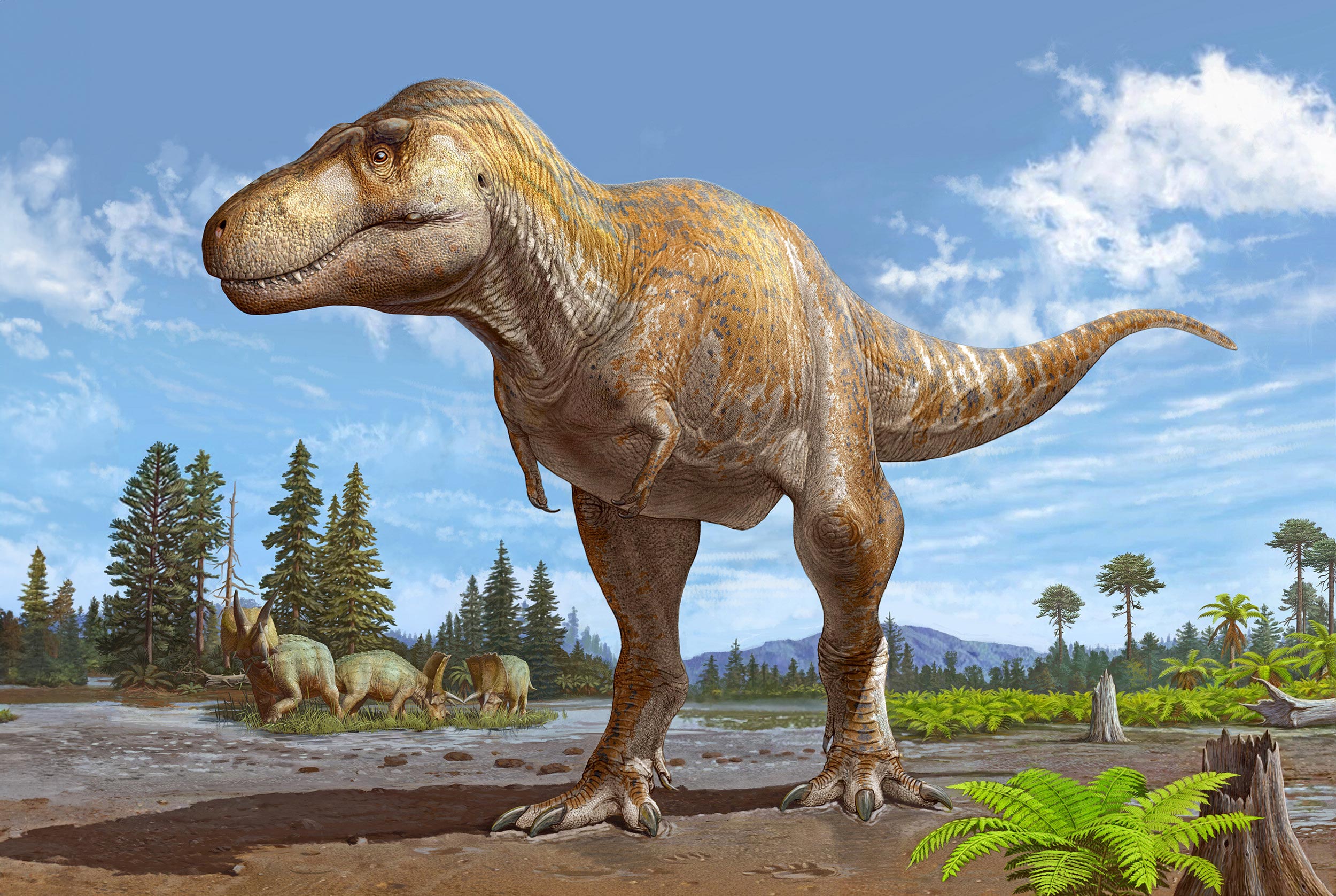
    Tyrannosaurus mcraeensis Reconstruction
    Reconstruction of Tyrannosaurus mcraeensis. Credit: Sergei Krasinski, edited

    Newly discovered Tyrannosaurus mcraeensis, potentially T. rex’s closest relative, lived 71-73 million years ago in southern Laramidia, indicating the early evolution of giant tyrannosaurs.

    A new species of tyrannosaur from southern North America that may the closest known relative of Tyrannosaurus rex is described in a study published in Scientific Reports.

    Sebastian Dalman and colleagues identified the new species — which they have named Tyrannosaurus mcraeensis — by examining a fossilized partial skull, which was previously discovered in the Hall Lake Formation, New Mexico, USA.
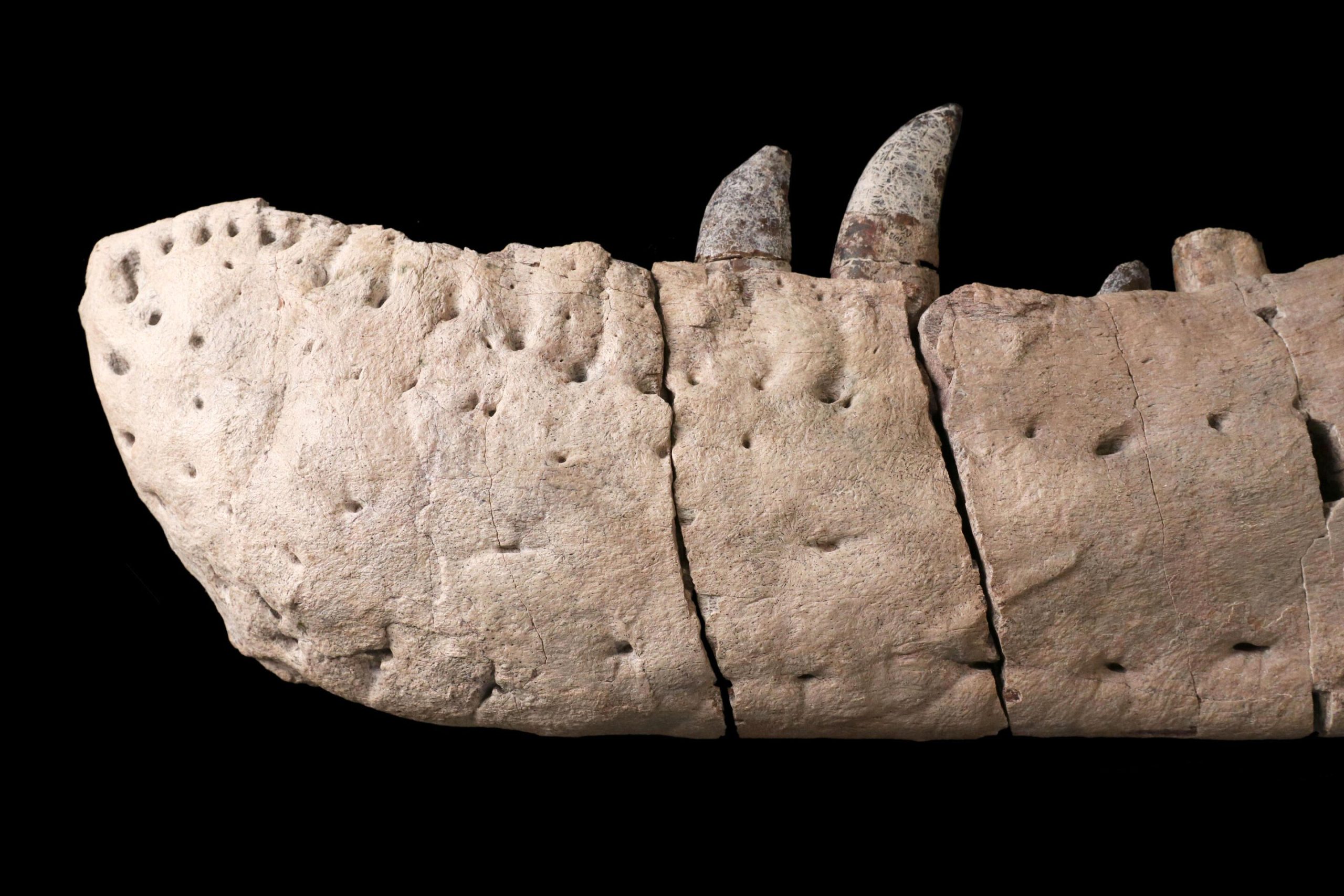
    Tyrannosaurus mcraeensis Jaw
    Jaw of Tyrannosaurus mcraeensis at the New Mexico Museum of Natural History and Science. Note the large scar towards the back of the jaw, which the authors speculate may have resulted from a fight with another Tyrannosaurus. Credit: Nick Longrich

    Although these remains were initially assigned to T. rex and are comparable in size to those of T. rex (which was up to 12 meters / 39 feet long), the authors propose that they belong to a new species due to the presence of multiple subtle differences in the shape of, and joins between, the skull bones of the specimen and T. rex.

    Based on the locations of the remains in relation to rocks and other dinosaur remains that have been previously dated to between 66 and 75 million years ago, the authors suggest that T. mcraeensis may have lived between 71 and 73 million years ago — between five and seven million years before T. rex.
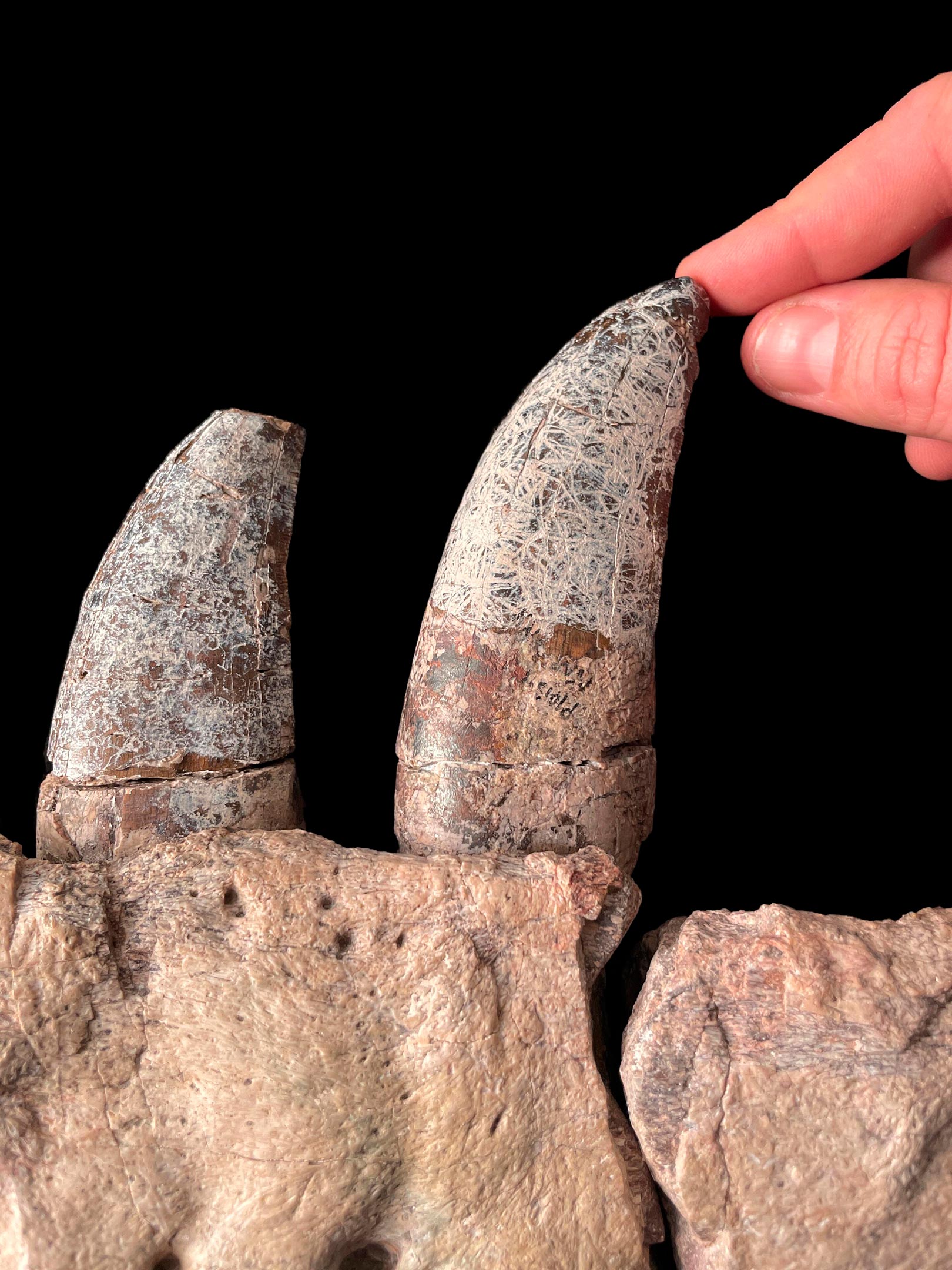
    Tyrannosaurus mcraeensis Teeth
    Teeth of Tyrannosaurus mcraeensis. Credit: Nick Longrich

    Analysis of the relationships between T. mcraeensis and other theropod dinosaur species indicates that T. mcraeensis may have been a sister species to T. rex, making it the closest known relative of T. rex.

    Based on its discovery in New Mexico and its relationship to T. rex, the authors suggest that the Tyranosaurus lineage, Tyrannosaurini, may have originated in southern Laramidia — an island continent that existed between 100 and 66 million years ago and stretched from modern-day Alaska to Mexico.
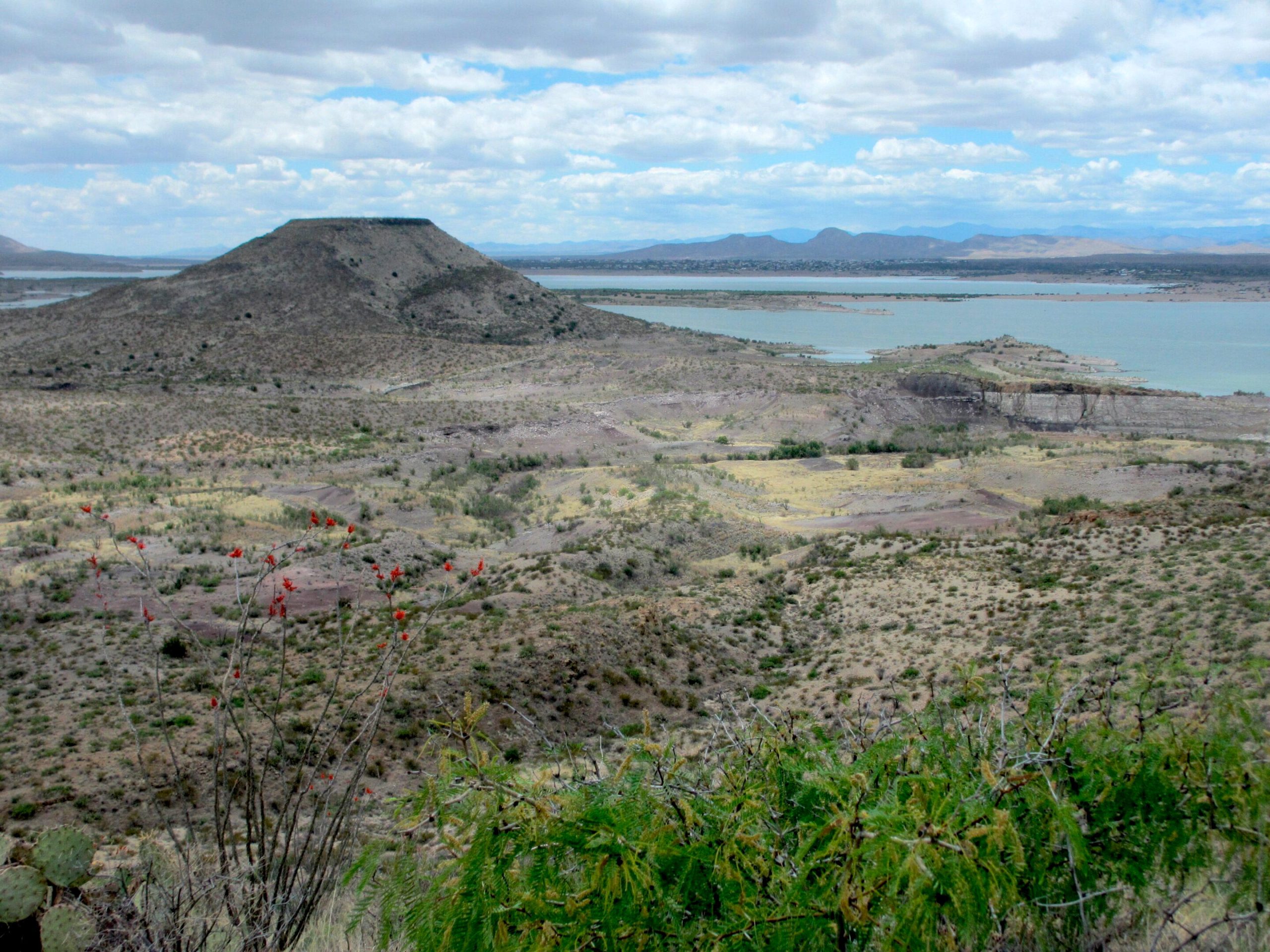
    Kettle Top Butte in Southeastern New Mexico
    Kettle Top Butte in southeastern New Mexico. This fossilized jaw from Tyrannosaurus mcraeensis was uncovered near the base of the butte. Credit: Dr. Spencer Lucas, NM Museum of Natural History & Science. Credit NM Department of Cultural Affairs

    Additionally, they propose that Tyrannosaurini may have evolved a giant body size by approximately 72 million years ago, alongside other giant dinosaurs from southern Laramidia such as ceratopsians, hadrosaurs, and titanosaurs.

    The authors speculate that the evolution of giant tyrannosaurins may have been driven by the giant body sizes of herbivores that they preyed on in southern Laramidia.

    For more on this discovery, see New Fossil Sheds Light on Tyrannosaurus Rex’s Earliest Known Relative.

    Reference: “A giant tyrannosaur from the Campanian–Maastrichtian of southern North America and the evolution of tyrannosaurid gigantism” by Sebastian G. Dalman, Mark A. Loewen, R. Alexander Pyron, Steven E. Jasinski, D. Edward Malinzak, Spencer G. Lucas, Anthony R. Fiorillo, Philip J. Currie and Nicholas R. Longrich, 11 January 2024, Scientific Reports.
    DOI: 10.1038/s41598-023-47011-0

    Never miss a breakthrough: Join the SciTechDaily newsletter.
    Follow us on Google and Google News.

    Dinosaurs New Species Paleontology Tyrannosaurus Rex
    Share. Facebook Twitter Pinterest LinkedIn Email Reddit

    Related Articles

    New Fossil Discovery Sheds Light on Tyrannosaurus Rex’s Earliest Known Relative

    Paleontology Plot Twist: New Research Shows Nanotyrannus Is Separate Species, Not “Juvenile T. rex”

    Paleontologists Believe 2.5 Billion T. rex Roamed the Earth Over the Cretaceous Period

    Paleontologists Stunning Conclusion: 2.5 Billion T. Rexes Roamed North America Over the Cretaceous Period

    Younger Tyrannosaurus Rex Were Incapable of Delivering the Ferocious Bone-Crunching Bites of Adults

    Dinosaurs Once Crossed Oceans: First Duckbill Dinosaur Fossil Discovered in Africa

    Evidence T. Rex’s Long Legs Evolved for Distance, Not Speed Like Previously Thought

    Growing Up Tyrannosaurus Rex: Researchers Learn More About Teen-Age T.Rex

    Feathered Yutyrannus Huali Specimen Found in China, Closely Related to Tyrannosaurus Rex

    1 Comment

    1. Christopher Young on January 29, 2024 3:52 am

      Remind me again why Tarbosaurus is placed outside Tyrannosaurus.

      Reply
    Leave A Reply Cancel Reply

    • Facebook
    • Twitter
    • Pinterest
    • YouTube

    Don't Miss a Discovery

    Subscribe for the Latest in Science & Tech!

    Trending News

    The Strange “Spacetime Crystal” That Can Suddenly Turn Into a Black Hole

    The Surprising Way Asteroids May Have Helped Life Begin on Earth

    Vast Hidden Structure Discovered Under Miles of Ice in East Antarctica

    A Surprising Discovery Suggests Autism Is Not One Condition

    New Alzheimer’s Discovery Could Change How Scientists Fight the Disease

    Yale Discovery Overturns Long-Held “Evolutionary Dead End” Theory

    UCLA Scientists Uncover a “Hidden Weakness” in Some of the World’s Deadliest Cancers

    Humpback Whale Stuns Scientists With 15,000 Kilometer Journey Across Oceans

    Follow SciTechDaily
    • Facebook
    • Twitter
    • YouTube
    • Pinterest
    • Newsletter
    • RSS
    SciTech News
    • Biology News
    • Chemistry News
    • Earth News
    • Health News
    • Physics News
    • Science News
    • Space News
    • Technology News
    Recent Posts
    • Food Waste Becomes a Powerful Carbon Trap in Climate Breakthrough
    • Battery-Free Artificial Photosynthesis Turns Sunlight, Water, and CO2 Into Fuel
    • How Ancient People Moved a 6-Ton Stone 700 Kilometers to Stonehenge
    • Scientists Finally See How Antibodies Really Attack Viruses
    • The Unexpected Gut Health Risk of Cutting Out Sugar
    Copyright © 1998 - 2026 SciTechDaily. All Rights Reserved.
    • Science News
    • About
    • Contact
    • Editorial Board
    • Privacy Policy
    • Terms of Use

    Type above and press Enter to search. Press Esc to cancel.