
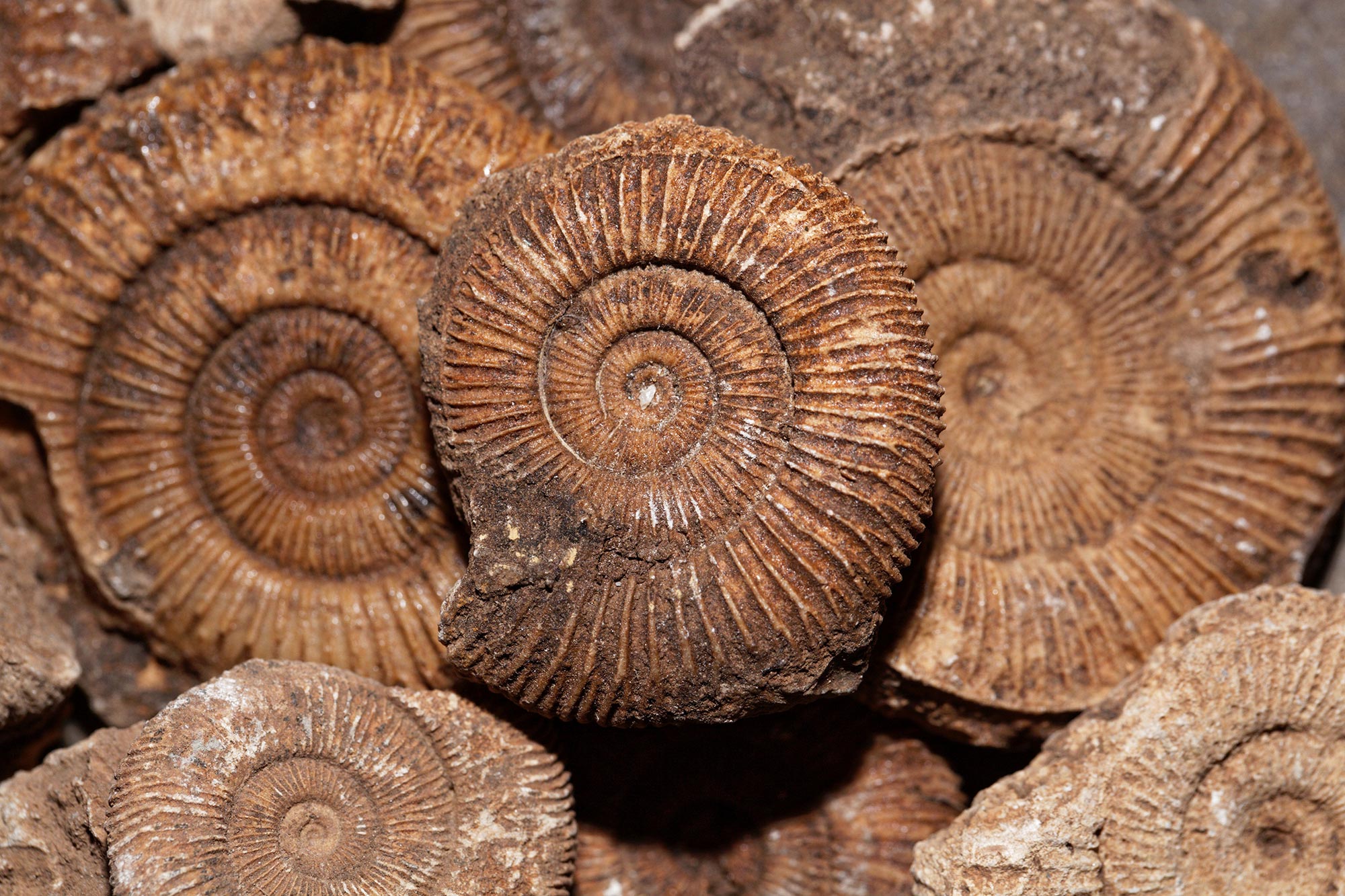
Across 540 million years, fossil shell records show marine biomass rising hand-in-hand with biodiversity, dipping only during the planet’s great extinctions.
Stanford scientists stitched together 7,700 limestone samples to reveal that more diverse seas recycle nutrients better and build bigger food webs—an ancient trend now threatened by human-driven species loss.
Half-Billion-Year Ocean Life Trends
In a groundbreaking study, Stanford scientists traced changes in ocean life over the past 540 million years. By examining more than 7,700 limestone samples packed with fossil shells, the team revealed that the total mass of marine organisms has generally climbed through deep time, pausing only when Earth’s great extinction events struck.
The pattern mirrors a similar long-term rise in biodiversity first spotted in 19th-century studies. More species appear to foster more living mass, linking the variety of life to the energy and food available in ancient seas. The work, published June 25 in Current Biology, bridges a major gap in our understanding of how past ecosystems functioned.
“Understanding the amount of biomass is important because it represents key traits about an ecosystem that are not captured by the number of species or even the number of niches that they fill,” said study lead author Pulkit Singh, a postdoctoral scholar in Earth and Planetary Sciences in the Stanford Doerr School of Sustainability. “But as we move into the past, our measurements of biomass are very limited, so that was the big gap in biological history we wanted to fill with our study.”
Biomass Mirrors Marine Biodiversity Boom
Most clues came from the shells of animals, algae, and single-celled protists. These hard parts recorded how much living material settled onto the sea floor at different points in history. When biomass rose, it signaled more productive oceans capable of supporting rich food webs and recycling nutrients efficiently.
The analysis also confirms that when biodiversity crashes, ecosystem productivity can sag for millions of years.
“Our findings show that overall biomass is linked to biodiversity and that losses in biodiversity may suppress productivity for geologically meaningful intervals, adding one more argument of why conserving biodiversity is essential for the health of humans and our planet. ”
Jonathan Payne Dorrell William Kirby Professor of Earth and Planetary Sciences
Uncovering Fossil Shell Evidence
Researchers have long shied away from attempting to measure biomass, given the immense effort required to gather relevant data and the possibility that data wouldn’t be sufficient for revealing meaningful patterns. Singh undertook the challenge, devoting several years to compiling data published over decades, as well as adding new data from his own samples.
“The first quantitative effort to document and graph biodiversity across geological time was made in 1860, but until Pulkit’s paper, there’s never been a corresponding biomass-across-time paper,” said senior study author Jonathan Payne, the Dorrell William Kirby Professor of Earth and Planetary Sciences at Stanford. “I’m impressed by his intellectual courage to go and take a chance on a project like this.”
For the study, Singh and colleagues considered more than 7,700 marine limestone samples from all over the world spanning the past 540 million years that have been documented across more than 100 scientific studies. The research team relied on data gathered via a standard method known as petrographic point-counting to assess the percentage of each sample that contained skeletal remains. The time-consuming technique involves cutting and polishing rocks very thinly so light can shine through them, then examining the thin sections of rock samples under a microscope to quantify their composition.
Rise, Fall, and Recovery Across Mass Extinctions
During the Cambrian, the earliest period sampled that started about 540 million years ago, researchers found fewer than 10 percent of the rocks, on average, were composed of shell material. As the Cambrian gave way to the Ordovician Period about 485 million years ago, that percentage climbed, partly reflecting the “Cambrian Explosion,” when life on Earth dramatically expanded in diversity and complexity. Calcifying sponges were initially notable contributors to biomass but were later leapfrogged by newly evolved echinoderms – including ancestors of modern-day starfish – and marine arthropods, including extinct trilobites and ancestors of crabs.
Throughout much of the next 230 million years, shell content soared well above 20 percent, with a significant decrease during one of the “Big Five” mass extinction events in the Late Devonian, about 375 to 360 million years ago. The biggest drop in living history then struck about 250 million years ago during the “Great Dying,” the Permian-Triassic extinction, when shell percentage plummeted to about 3 percent.
Life recovered, and except for subsequent significant mass extinctions – the end-Triassic extinction about 200 million years ago and the Cretaceous-Paleogene about 66 million years ago, which infamously killed off the non-avian dinosaurs – biomass has boomed in our current geological era, the Cenozoic, with shells exceeding 40 percent of rock volume, thanks in part to substantial contributions from mollusks and corals. “The overall pattern that we were able to capture is that it’s a gradual increase,” Singh said.
Data Tests Confirm Global Pattern
One of the biggest challenges in conducting the study involved determining whether the increasing shell content in rocks truly signaled a rise in bio-abundances over time or if other ecological factors, such as a decrease in shell-boring and -destroying predators, or methodological sample biases, were behind the pattern.
To cross-check their results, the researchers performed a series of rigorous tests. They sorted samples by depositional environment of shallow or deep water, factoring in how shell remains accumulate more frequently in better-populated shallow waters. The researchers also sorted samples by different latitudes and locations and shapes of the predecessors of today’s continents. Through it all, the signal remained strongly consistent across water depths, latitudes, and geologic settings.
“The more tests we did and the more we divided our dataset, we realized that these big biological patterns we were seeing stayed over time,” Singh said.
Diversity Fuels Ocean Productivity
As to why marine life has generally increased, evidence points to the parallel trends in greater diversity. With marine organisms becoming more specialized and more variable in their specializations, more energy can be extracted from available nutrients and food resources. This enhanced nutrient recycling starts with the autotrophs, such as phytoplankton, that photosynthetically “feed” on sunlight and ends with decomposers returning nutrients to the environment that autotrophs take up.
“The overall idea is that there is more food available in ecosystems and because of that, the ecosystems can support more life, there’s more energy available, and that leads to greater abundance expressed in biomass,” Singh said.
Human Impact Threatens Ancient Gains
Whether or not the plenitude seen over the last hundreds of millions of years will persist could be in question, considering impacts from human activities. Although people have caused fertilizer runoff, overfishing, ocean acidification, and more during a mere blip in geological time, scientists have widely documented an ongoing, human-driven sixth mass extinction. Accumulating losses in biodiversity could potentially reduce biomass, and vice versa – a signal that perhaps could be captured in the fossil record currently being laid down.
“From our study’s perspective, modern times are quite complicated given the extent of human activity that’s rapidly altering conditions planetwide, including in the oceans,” said Payne, who is also a senior fellow at the Stanford Woods Institute for the Environment. “But our findings show that overall biomass is linked to biodiversity and that losses in biodiversity may suppress productivity for geologically meaningful intervals, adding one more argument of why conserving biodiversity is essential for the health of humans and our planet.”
Reference: “Macroevolutionary coupling of marine biomass and biodiversity across the Phanerozoic” by Pulkit Singh, Jordan Ferré, Bridget Thrasher, Pedro M. Monarrez, Khalid Al-Ramadan, Dave L. Cantrell, Daniel J. Lehrmann, Michele Morsilli and Jonathan L. Payne, 25 June 2025, Current Biology.
DOI: 10.1016/j.cub.2025.06.006
Additional Stanford co-authors include Jordan Ferré, Bridget Thrasher, and Pedro Monarrez. Other study co-authors are from the Virginia Polytechnic Institute and State University, King Fahd University of Petroleum and Minerals, Cantrell GeoLogic LLC, Trinity University, and the University of Ferrara. The research was supported by a Frontier Research in Earth Sciences grant from the U.S. National Science Foundation.
Never miss a breakthrough: Join the SciTechDaily newsletter.
Follow us on Google and Google News.
1 Comment
“I’m impressed by his intellectual courage to go and take a chance on a project like this.”
I’m reminded of the old aphorism, “Fools rush in where angels fear to tread.”
I’m surprised that the authors express little concern about the reason(s) for originally collecting the 7,749 limestone samples. If it were me, I would be concerned about sampling bias, which they do at least give a nod to. That is, the samples were likely collected precisely because of interesting fossils in them, not because they were representative of the time period in which the organisms lived. Was the impact of diagenesis considered in preserving the microfossils? Did the fossilized organisms die of old age, or an anoxic event that allowed selective killing and accumulation of fossils. An unbiased collection would require random or gridded sampling, which does not appear to be the case.
“…, scientists have widely documented an ongoing, human-driven sixth mass extinction.”
As assertion does not stand on its own. It requires evidence. Extinctions happen all the time as adjustments to Plate Tectonic changes in the landforms and oceans. That is, orogenies create new ecological niches, which are reversed as erosion to a peneplane reduces the niches. The End Permian and Cretaceous extinction events were nothing like what we are experiencing today! I suspect that our human perspective is distorting reality, although there is evidence for what has been called “Punctuated Evolution.” It is difficult for a newly evolved organism to compete against similarly evolved organisms when they are already well established in a particular ecological niche. I would imagine that one or the other would become extinct, especially if they are specialists instead of generalists.