
In new research, Griffith University scientists have demonstrated that a bacteria can travel through the olfactory nerve in the nose and into the brain in mice, where it creates markers that are a tell-tale sign of Alzheimer’s disease.
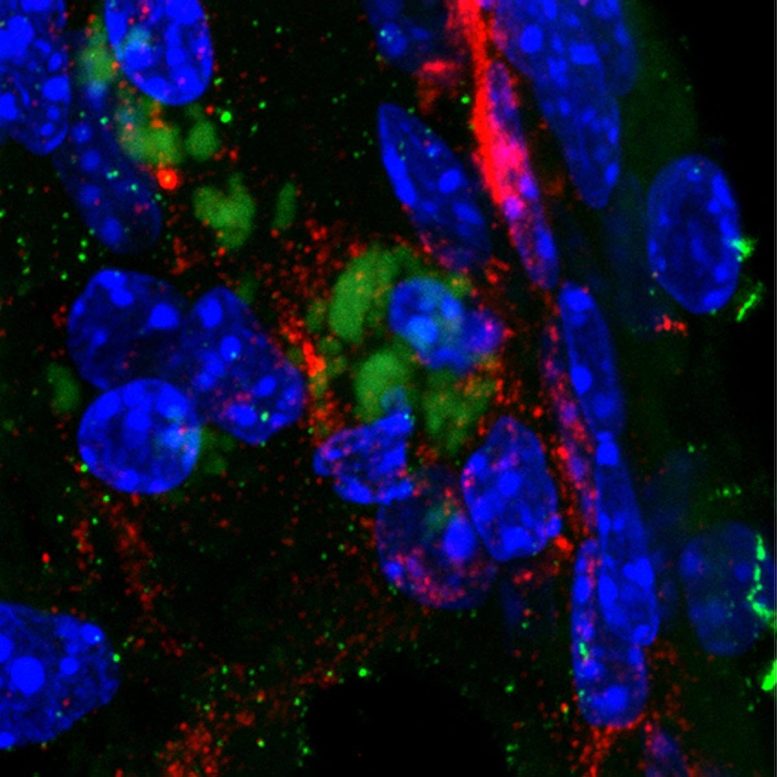
The study revealed that Chlamydia pneumoniae, a type of bacteria that can cause respiratory tract infections, such as pneumonia, exploited the nerve extending between the nasal cavity and the brain as an invasion path to assault the central nervous system. In response, the cells in the brain began depositing amyloid beta protein which is a hallmark of Alzheimer’s disease. The study was published earlier this year in the journal Scientific Reports.
“If you damage the lining of the nose, you can increase how many bacteria can go up into your brain.” Professor James St John
Professor James St John, Head of the Clem Jones Center for Neurobiology and Stem Cell Research, is a co-author of the world first research.
“We’re the first to show that Chlamydia pneumoniae can go directly up the nose and into the brain where it can set off pathologies that look like Alzheimer’s disease,” Professor St John said. “We saw this happen in a mouse model, and the evidence is potentially scary for humans as well.”
The olfactory nerve in the nose is directly exposed to air and offers a short pathway to the brain, one which bypasses the blood-brain barrier. It’s a route that bacteria and viruses have sniffed out as an easy one into the brain.
The team at the Center is already planning the next phase of research and aims to prove the same pathway exists in humans.
“We need to do this study in humans and confirm whether the same pathway operates in the same way. It’s research that has been proposed by many people, but not yet completed. What we do know is that these same bacteria are present in humans, but we haven’t worked out how they get there.”
Simple Steps to Protect Nasal Health
There are some simple steps to look after the lining of your nose that Professor St John suggests people can take now if they want to lower their risk of potentially developing late-onset Alzheimer’s disease.
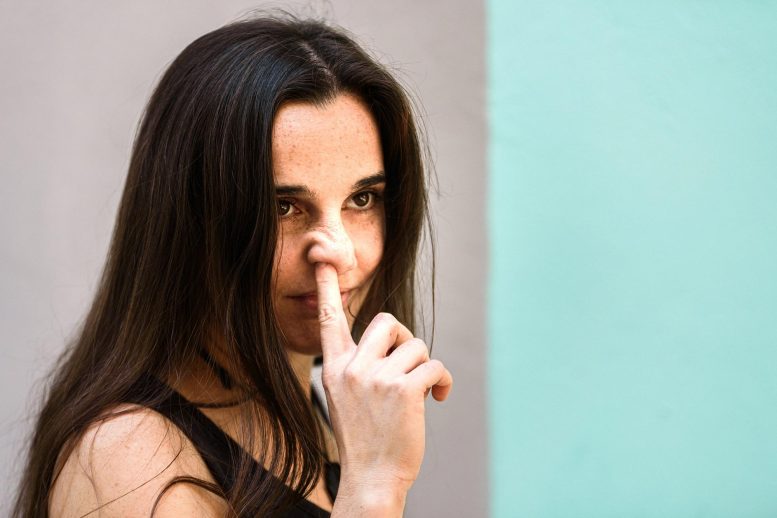
“Picking your nose and plucking the hairs from your nose are not a good idea”,” he said.
“We don’t want to damage the inside of our nose and picking and plucking can do that.
“If you damage the lining of the nose, you can increase how many bacteria can go up into your brain.”
Smell tests may also have potential as detectors for Alzheimer’s and dementia says Professor St John, as loss of sense of smell is an early indicator of Alzheimer’s disease. He suggests smell tests from when a person turns 60 years old could be beneficial as an early detector.
“Once you get over 65 years old, your risk factor goes right up, but we’re looking at other causes as well, because it’s not just age—it is environmental exposure as well. And we think that bacteria and viruses are critical.”
Reference: “Chlamydia pneumoniae can infect the central nervous system via the olfactory and trigeminal nerves and contributes to Alzheimer’s disease risk” by Anu Chacko, Ali Delbaz, Heidi Walkden, Souptik Basu, Charles W. Armitage, Tanja Eindorf, Logan K. Trim, Edith Miller, Nicholas P. West, James A. St John, Kenneth W. Beagley and Jenny A. K. Ekberg, 17 February 2022, Scientific Reports.
DOI: 10.1038/s41598-022-06749-9
This research was supported by the Goda Foundation and the Menzies Health Institute Queensland.
Never miss a breakthrough: Join the SciTechDaily newsletter.
Follow us on Google and Google News.
13 Comments
kind of a click-bait headline IMHO
There are Basically 2 Types of Noses .. producing 2 Types of Nose Debris …
#1) a WET / Always Dripping Nose which Requires Blowing
#2) a DRY Nose which requires “Physical” Cleaning / Removal
With Either “Method” .. a Polite Discretion is Requested.
Another mindless pos “study” that was surely funded with our tax money, while we seek to find enough food for our children without going broke. This explains what Biden is doing in the oval office all day to acquire his dementia. Clymidia comes from sex with dirty people anyway.
Get a woman in your life because that hand is not going well for you.
I didn’t realize that mice picked their noses. Good to know. I’ll avoid hanging out with mice.
Who is picking the nose of the mice?
It is either the mice themselves or the researchers are doing it for them. It isn’t a job I would want to have, but I guess somebody has to do it if we are going to get world-class science done.
What about the covid swabs? The first ones went further than a person could reach.. Irrited to the point of eyes watering. The next ones rubbed the inner nose raw.
Why mention President Biden? Stop acting t like a baby and more like a grown man!
So mice pick their nose? Who knew?! I find it very disturbing that loss of smell was a symptom of Covid. Does this mean in a few years the earth will be roamed by a bunch of mindless people? Scary!
‘Nationalist’ the government involved is Australia, Queensland, but you were to busy making up BS, to read.
Some folks can’t control themselves, and have to bring politics into everything.
https://www.msn.com/en-us/health/medical/here-s-the-deal-with-the-study-that-allegedly-linked-nose-picking-to-dementia/ar-AA13CUxu?ocid=winp1taskbar&cvid=eda1dd0ec1754799a2ccae9a4668ec1f