

A low-dose blend of zinc, serine, and branched-chain amino acids dramatically improved brain signaling and social behavior across three different mouse models of autism.
Even brief treatment sparked real-time changes in neural connectivity, making this nutrient cocktail an intriguing path for future exploration.
Low-Dose Nutrient Blend Shows Potential in Autism Mouse Models
Researchers led by Tzyy-Nan Huang and Ming-Hui Lin at Academia Sinica in Taiwan have found that a small-dose combination of zinc, serine, and branched-chain amino acids may ease behavioral problems in several mouse models of autism.
The work, published December 2nd in the open-access journal PLOS Biology, suggests that these three supplements, when taken together, help strengthen communication between neurons and improve social interactions in the animals.
Why Nutrition Matters in Autism Research
Autism spectrum disorder (ASD) is linked to disrupted brain development that affects how neurons connect with one another. Nutrition is also recognized as an environmental factor that can influence ASD. Zinc, serine, and branched-chain amino acids have each been associated with potential benefits for neural connectivity.
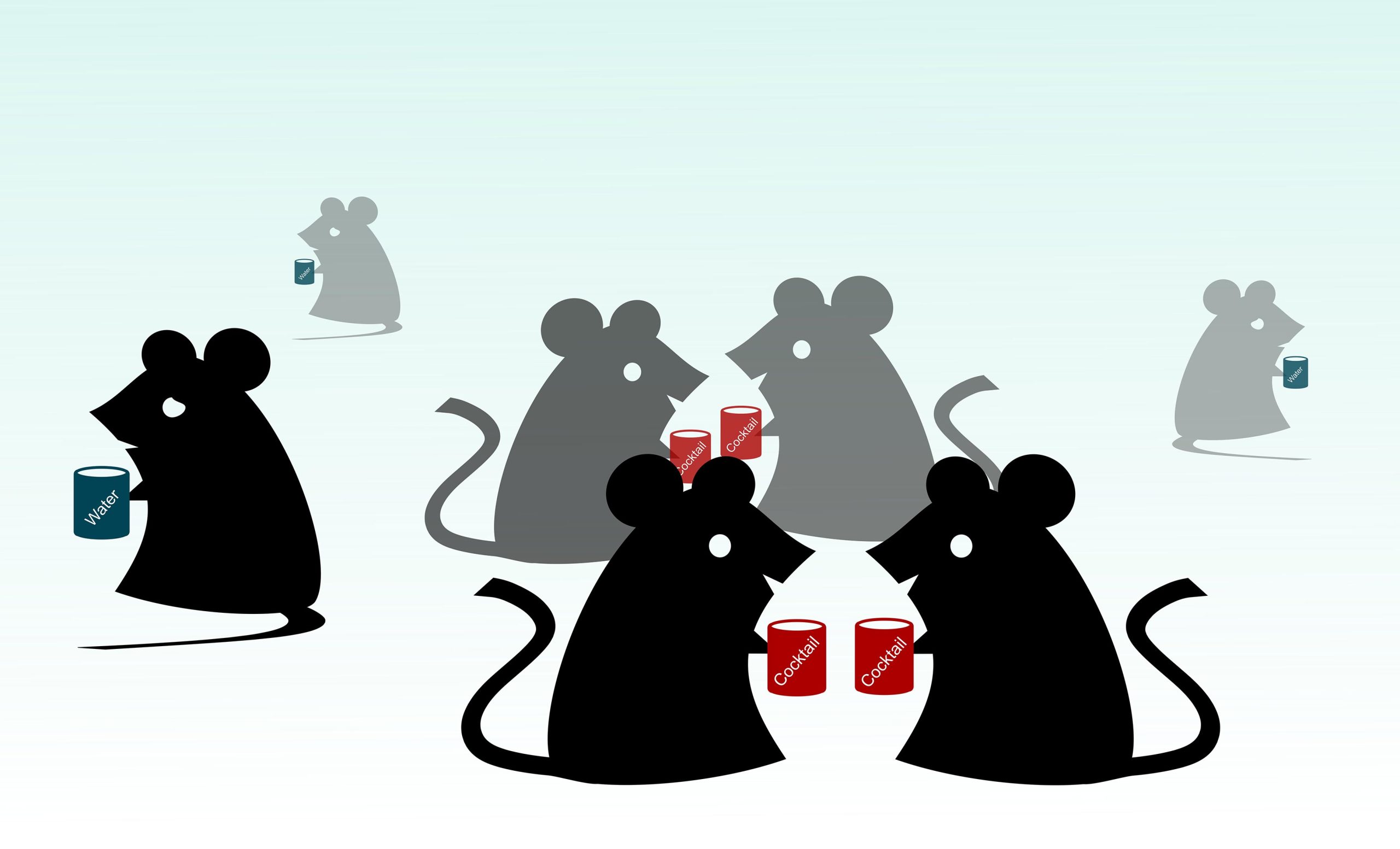
The research team proposed that using all three together might work better than giving any one on its own and might also allow for lower doses. To test this idea, they used three different mouse models of ASD, examining levels of proteins involved in synapses, measuring calcium signals in the amygdala to track neural activity, and evaluating changes in social behaviors.
Combination Outperforms Individual Supplements
The team observed that autistic mice receiving the nutrient mixture showed protein expression patterns in the synapse that were more similar to those of typical mice. The treatment also reduced the excessive firing of neurons in the amygdala.
Behaviorally, the mice displayed improved social interactions after receiving the combined supplements. In contrast, giving the same amount of each nutrient alone produced no behavioral changes. This pattern held true in two additional autism mouse models, emphasizing that the three nutrients must act together for the low-dose approach to work.
Researchers Highlight Advantages of a Multi-Nutrient Strategy
Yi-Ping Hsueh explained, “As hundreds of genes are implicated in autism, each with distinct molecular functions, a ‘one gene–one therapy’ approach is impractical for addressing the complexity of ASD. Our findings show that a low-dose nutrient mixture containing zinc, branched-chain amino acids (BCAAs), and serine—working synergistically to improve synaptic function and social behaviors across three ASD mouse models—offers a safer and more practical strategy for long-term, broad application, even beginning in childhood.”
Tzyy-Nan Huang, one of the study’s first authors, added, “High doses of individual nutrient supplements such as zinc, branched-chain amino acids, and serine can improve synaptic function through different mechanisms, but low doses of any single nutrient alone are ineffective. It is exciting to see that combining these nutrients at low doses successfully restores synaptic proteomes and enhances social behaviors in three different mouse models of autism.”
Rapid Neural Changes Observed Within Days
Ming-Hui Lin, the study’s co–first author, noted, “I was thrilled to observe that just seven days of treatment with the nutrient mixture significantly modulated neuronal circuit activity and connectivity in real time. These results provide strong support for the beneficial effects of low-dose nutrient supplement combinations.”
Reference: “Low-dose mixtures of dietary nutrients ameliorate behavioral deficits in multiple mouse models of autism” by Tzyy-Nan Huang, Ming-Hui Lin, Tsan-Ting Hsu, Chen-Hsin Yu and Yi-Ping Hsueh, 2 December 2025, PLOS Biology.
DOI: 10.1371/journal.pbio.3003231
Never miss a breakthrough: Join the SciTechDaily newsletter.
Follow us on Google and Google News.
2 Comments
How do we know it’ll work for humans?
Mice studies only definitively teach us about mice, and while humans (who are adults) may not have any issues with trying this out, we can’t know until someone decides to be a human test subject. Even then, an experiment needs to be replicated and shown to have repeated improvement for people to confidently say it’ll work on humans. Mice & Human bodies ade drastically different.
I was thinking the same thing. How can they even tell if a mouse is autistic? They can only observe social interactions, and each mouse is an individual so how can they possibly know which mice are autistic and which are just aloof or loners or whatever. Very strange research. And it sounds like they killed and dissected the mice when the behavior portion of the experiment was over to examine their brains. Scientists and researchers should just leave animals alone and deal directly with humans. It would make their findings much more believable, accurate and useful. And the research would not be cruel or exploitive to animals. I am SURE it would be easy to find autistic humans who would volunteer for research like this. (to try taking the supplements, not the killing and dissecting part) Not just to further research that would benefit themselves, but also to spare more animals from more suffering and death.