
Recent studies reveal that individual cells possess the ability to learn, refuting the idea that complex learning behaviors are exclusive to organisms with nervous systems.
By using computer simulations, researchers demonstrated how cells adapt to repeated stimuli, offering insights that could revolutionize treatments for diseases and further computational biology research.
Rethinking Cellular Behavior and Learning
Individual cells may possess the ability to learn, a trait previously thought to be exclusive to animals with brains and complex nervous systems. This groundbreaking discovery comes from a study conducted by researchers at the Centre for Genomic Regulation (CRG) in Barcelona and Harvard Medical School in Boston.
Published on November 19 in the journal Current Biology, the findings challenge long-standing assumptions about the fundamental nature of life and could reshape our understanding of cellular behavior.
“Rather than following pre-programmed genetic instructions, cells are elevated to entities equipped with a very basic form of decision-making based on learning from their environments,” explains Jeremy Gunawardena, Associate Professor of Systems Biology at Harvard Medical School, and co-author of the study.
Examining Cellular Habituation
The study looked at habituation, the process by which an organism gradually stops responding to a repeated stimulus. It’s why humans stop noticing the ticking of a clock or become less distracted by flashing lights. This lowest form of learning has been studied extensively in animals with complex nervous systems.
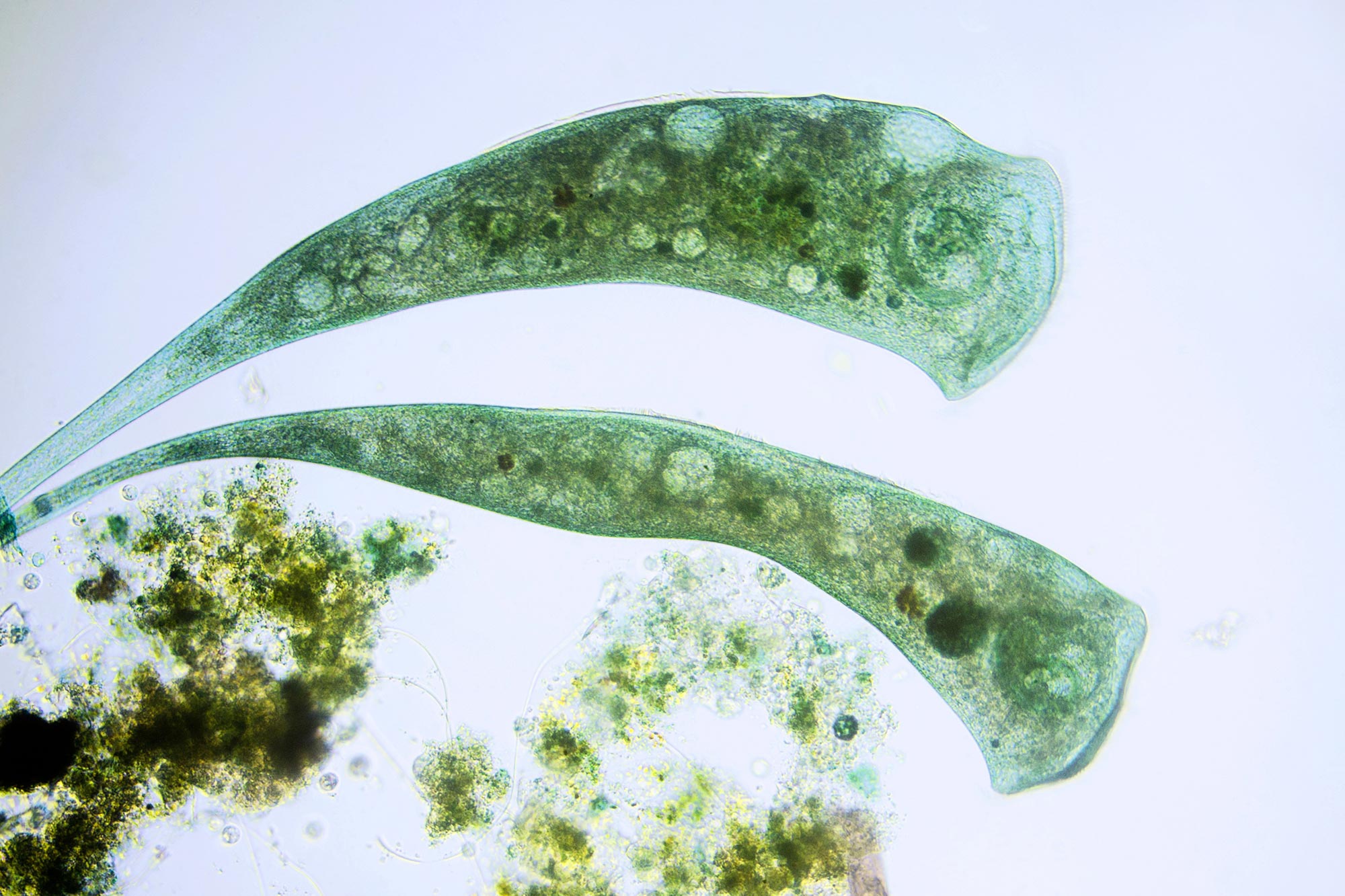
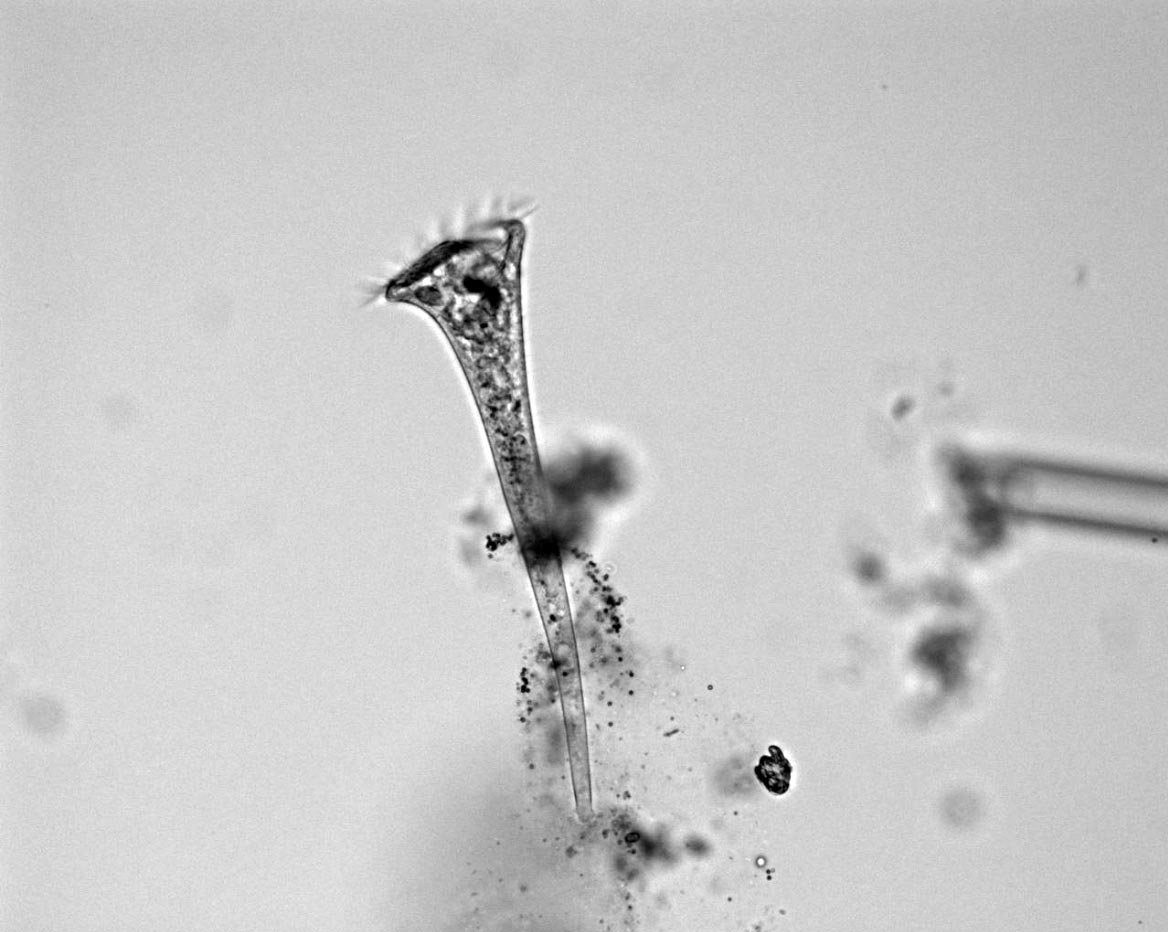
Whether learning-like behaviors like habituation exist at cellular scale is a question that’s remained fraught with controversy. Early 20th-century experiments with the single-celled ciliate Stentor roeselii first shed light on behavior that resembled learning, but the studies were overlooked and dismissed at the time. In the 1970s and 1980s, signs of habituation were found in other ciliates, and modern experiments have continued to add further weight to the theory.
“These creatures are so different from animals with brains. To learn would mean they use internal molecular networks that somehow perform functions similar to those carried out by networks of neurons in brains. Nobody knows how they are able to do this, so we thought it is a question that needed to be explored,” says Rosa Martinez, co-author of the study and researcher at the Centre for Genomic Regulation (CRG) in Barcelona.
Understanding Cellular Information Processing
Cells rely on biochemical reactions as their means of processing information. For example, the addition or removal of a phosphate tag from the surface of a protein causes it to switch on or off. To track how cells process information, instead of working with cells in lab dishes, the researchers used computer simulations based on mathematical equations to monitor these reactions and decode the ‘language’ of the cell. This allowed them to see how the molecular interactions inside cells changed when exposed to the same stimulus over and over again.
Specifically, the study looked at two common molecular circuits – negative feedback loops and incoherent feedforward loops. In negative feedback, the output of a process inhibits its own production, like a thermostat shutting off a heater when a room reaches a certain temperature. In incoherent feedforward loops, a signal simultaneously activates both a process and its inhibitor, like a motion-activated light with a timer. After detecting movement, the light automatically switches off after a certain period of time.
Insights Into Cellular Memory and Habituation
The simulations suggest that cells use a combination of at least two of these molecular circuits to finetune their response to a stimulus and reproduce all the hallmark features of habituation seen in more complex forms of life. One of the key findings is a requirement for “timescale separation” in the behavior of the molecular circuits, where some reactions happen much faster than others.
“We think this could be a type of ‘memory’ at the cellular level, enabling cells to both react immediately and influence a future response” explains Dr. Martinez.
Bridging Cognitive Sciences and Neuroscience
The finding may also illuminate a longstanding debate between neuroscientists and cognitive researchers. For years, these two groups have had different takes on how habituation strength relates to the frequency or intensity of stimulation. Neuroscientists focus on observable behavior, noting that organisms show stronger habituation with more frequent or less intense stimuli.
Cognitive scientists, however, insist on testing for the existence of internal changes and memory formation after habituation has taken place. When following their methodology, habituation seems stronger for less frequent or more intense stimuli.
The study shows that the behavior of the models aligns with both views. During habituation, the response decreases more with more frequent or less intense stimuli, but after habituation, the response to a common stimulus is also stronger in these cases.
“Neuroscientists and cognitive scientists have been studying processes which are basically two sides of the same coin,” says Gunawardena. “We believe that single cells could emerge as a powerful tool to study the fundamentals of learning.”
Implications for Biological Research and Application
The research deepens our understanding of how learning and memory operate at the most basic level of life. If single cells can “remember,” it could also help explain how cancer cells develop resistance to chemotherapy or how bacteria become resistant to antibiotics — situations where cells seem to “learn” from their environment.
However, the predictions need to be confirmed with real-world biological data. The study used mathematical modeling to explore the concept of learning in cells because it let them test many different scenarios rapidly to see which ones are worth investigating further in real experiments.
Future Directions in Cellular Biology Research
The work could lay the foundation for experimental scientists to now design lab experiments and test these predictions.
“The moonshot in computational biology is to make life as programmable as a computer, but lab experiments can be costly and time-consuming,” says Dr. Martinez, who is based at the Barcelona Collaboratorium, a joint initiative between the CRG and EMBL Barcelona specifically designed to advance research based on mathematical modeling to address big questions in biology.
“Our approach can help us prioritize which experiments are most likely to yield valuable results, saving time and resources and leading to new breakthroughs,” she adds. “We think it can be useful to address many other fundamental questions.”
For more on this research, see Cells Exhibit Surprising Learning Abilities.
Reference: “Biochemically plausible models of habituation for single-cell learning” by Lina Eckert, Maria Sol Vidal-Saez, Ziyuan Zhao, Jordi Garcia-Ojalvo, Rosa Martinez-Corral and Jeremy Gunawardena, 19 November 2024, Current Biology.
DOI: 10.1016/j.cub.2024.10.041
Never miss a breakthrough: Join the SciTechDaily newsletter.
Follow us on Google and Google News.