
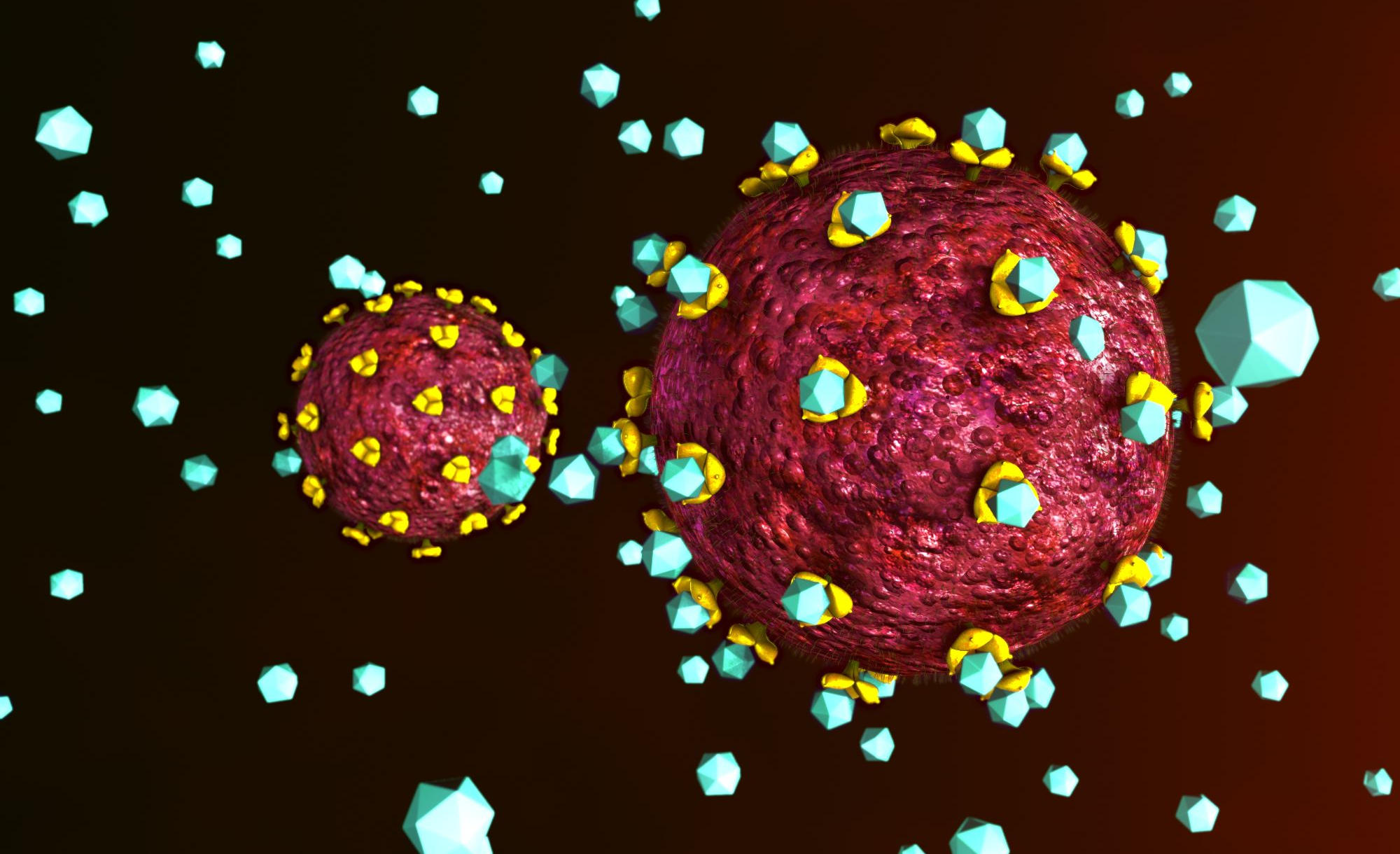
A large international clinical trial has unveiled a promising new option for people living with highly treatment-resistant HIV.
For a small but important group of people living with HIV, treatment has never reached the “one pill a day” milestone. Drug resistance built up over decades, along with other medical conditions and long medication lists, can leave them stuck on complicated combinations that are harder to manage and more likely to clash with other prescriptions.
A phase 3 clinical trial led by Professor Chloe Orkin of Queen Mary University of London now suggests a simpler option may be within reach: a once-daily oral tablet that pairs two existing HIV medicines, bictegravir and lenacapavir (BIC/LEN), into a single regimen for people who currently need complex treatment.
Researchers shared the results on February 25 at the 2026 Conference on Retroviruses and Opportunistic Infections in Denver, Colorado, a major meeting where new HIV research is often first reported, and the data appeared at the same time in The Lancet.
Trial Results Show Strong Viral Control
The trial enrolled more than 550 people across 15 countries and focused on participants whose virus had resistance to prior therapies. Nearly 96 percent of those who switched to the simplified BIC/LEN regimen kept the virus under control, with no new drug resistance reported. Outcomes were similar to the comparator group. Investigators also found no significant or unexpected safety issues, and participants’ lipid profiles improved, a finding that matters because cholesterol and other blood fats are closely tied to long-term heart health.
Beyond lab results, participants described the new option as easier and more convenient to take, which can make day-to-day adherence more realistic for people who have spent years managing demanding schedules of medication.
Expert Perspective on the Findings
Professor Chloe Orkin MBE, Clinical Professor of Infection and Inequities at Queen Mary University of London said: “Simplifying HIV treatment from handfuls of pills at the start of the epidemic to one pill a day has improved clinical outcomes for most people living with HIV. However, until now, some people with resistant virus or clinical contraindications cannot take these simpler regimens and must instead take complex regimens which may place them at risk of drug interactions.“The ARTISTRY-1 trial results demonstrate that a single tablet containing the drugs bictegravir and lenacapavir works just as well as their complex multi-tablet regimen and improved participants’ lipid profile. The findings are game-changing for this group of people, many of whom have lived with HIV for decades, and who have other cardiovascular conditions associated with aging.”
The median age of participants in the trial was 60 years, making it the oldest median age reported in any HIV registration trial to date. On average, participants had been receiving HIV treatment for 28 years. Most were taking at least three pills per day at the start of the study, and some were taking as many as 11. About 80 percent had resistance to previous HIV therapies, and most had additional health conditions such as cardiovascular disease or kidney disease.
Further clinical trials are now underway to evaluate the long-term safety and effectiveness of the BIC/LEN single-tablet regimen.
Reference: “Switch to single-tablet bictegravir–lenacapavir from a complex HIV regimen (ARTISTRY-1): a randomised, open-label, phase 3 clinical trial” by Chloe Orkin, Peter J Ruane, Malcolm Hedgcock, Cyril Gaultier, Marcelo H Losso, Benoit Trottier, Thomas Lutz, Mark O’Reilly, Mark Bloch, Jihad Slim, Moti Ramgopal, Simiso Sokhela, Karam Mounzer, Hung-Chin Tsai, Jorge Santana Bagur, Xu Zhang, Keith Aizen, Kwanza Price, Nicolas Margot, Jairo M Montezuma-Rusca, Peter Sklar, Martin Rhee, Pedro Cahn, Simiso Sokhela, Yashna Singh, Yoshiyuki Yokomaku, Takuma Shirasaka, Shin-Woo Kim, Jun Yong Choi, Po-Liang Lu, Shu-Hsing Cheng, Hung-Chin Tsai, Carlos Adon Moreta, Jorge L Santana Bagur, Lizette Santiago, Eric Cua, Jade Ghosn, Valerie Pourcher, Emma Rubenstein, Christoph Boesecke, Stephan Grunwald, Christian Hoffmann, Celia Jonsson-Oldenbüttel, Thomas Lutz, Andrea Antinori, Antonella Castagna, Giovanni Di Perri, Maria Vittoria Cossu, Cristina Mussini, José Ignacio Bernardino de la Serna, Vicente Estrada, Luis Fernando Lopez Cortes, Josep Mallolas Masferrer, Santiago Moreno Guillén, Amanda Clarke, Mark Nelson, Chloe Orkin, Frank Post, Stephen Taylor, Alexander Wong, Bertrand Lebouche, Jason Brunetta, Malcolm Hedgcock, Benoit Trottier, Jonathan Angel, Karam Mounzer, Onyema Ogbuagu, Jihad Slim, Alexandra Stang, Jeffrey L Stephens, Jeffrey Burack, Paul Benson, Mezgebe Berhe, Cynthia Brinson, Catherine M Creticos, Edwin DeJesus, Edward Gardner, Joseph C Gathe, Cyril Gaultier, Cindy Gay, Linda Gorgos, Ricky K Hsu, Dushyantha Jayaweera, Susan Little, Cheryl McDonald, Eric Meissner, Anthony Mills, Godson Oguchi, Olayemi Osiyemi, David J Prelutsky, Moti N Ramgopal, Peter J Ruane, William Sanchez, Anita Scribner, Michael Sension, Peter Shalit, James Sims, Gary I Sinclair, Marcus Tellez, Blair Thedinger, Lok Yung, Christine Zurawski, James McMahon, Mark Bloch, Mark O’Reilly, Andrew Carr, Isabel L Cassetti, Pedro Cahn and Marcelo H Losso, 25 February 2026, The Lancet.
DOI: 10.1016/S0140-6736(26)00307-7
Never miss a breakthrough: Join the SciTechDaily newsletter.
Follow us on Google and Google News.
2 Comments
good article
good thanks