
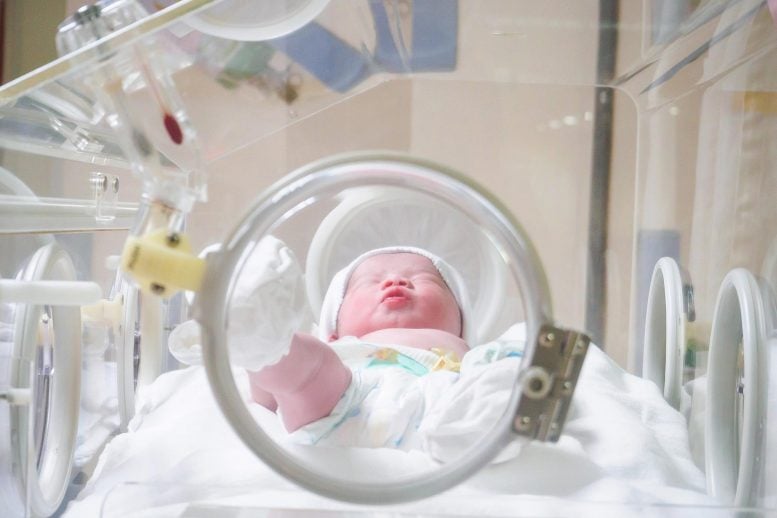
Study: Combination of 2 antibodies taken 30 hours after virus exposure prevents infection in baby monkeys.
A single dose of an antibody-based treatment can prevent HIV transmission from mother to baby, new nonhuman primate research suggests for the first time. The findings are being published in the journal Nature Communications.
When that single dose is given is key, however. The study found rhesus macaque newborns did not develop the monkey form of HIV, called SHIV, when they received a combination of two antibodies 30 hours after being exposed to the virus.
Delaying treatment until 48 hours, on the other hand, resulted in half of the baby macaques developing SHIV when they were given four smaller doses of the same antibody cocktail. In comparison, the study found macaques that received the current standard HIV treatment – antiretroviral drugs – remained SHIV-free when they started a three-week regimen of that therapy 48 hours after exposure.
“These promising findings could mean babies born to HIV-positive mothers can still beat HIV with less treatment,” said the study’s corresponding’s author, Nancy Haigwood, Ph.D., a professor of pathobiology and immunology in the Oregon Health & Science University School of Medicine, as well as the director at the Oregon National Primate Research Center at OHSU.
This is the first time a single dose of broadly neutralizing antibodies given after viral exposure has been found to prevent SHIV infection in nonhuman primate newborns. Previous research by Haigwood, Ann Hessell, Ph.D., and others showed four doses of antibodies started 24 hours after exposure prevented SHIV infection, with all 10 of the baby primates in that study not having any SHIV virus for six months. Both studies used a combination of two antibodies called PGT121 and VRC07-523.
The new study also suggests a much shorter course of antiretroviral therapy given after virus exposure could prevent HIV transmission to newborns. Human babies born from HIV-positive mothers typically take the drug cocktail – a personalized regimen of multiple drugs taken daily – for about six weeks before being re-tested. If the tests are then positive, they likely need to take HIV drugs for the rest of their lives. But this study showed nonhuman primate newborns didn’t have SHIV after undergoing antiretroviral therapy for just three weeks starting 48 hours after exposure.
HIV-positive women typically take antiretroviral therapy drugs during pregnancy for their own health, as well as to prevent passing the virus onto their developing child. But mother-to-baby transmission sometimes still happens. Children born to HIV-positive mothers also are given antiretroviral therapy to further prevent infection. However, this drug cocktail can have many negative side effects, involves making special liquid formulations for newborns, and researchers worry about antiretroviral therapy’s long-term consequences for development.
Antibodies, however, aren’t toxic and can be modified to last a long time in the body, which reduces treatment frequency. This has led researchers to explore their potential to replace or supplement antiretroviral therapy for newborns with HIV-positive mothers as well as for HIV-positive adults.
Next, Haigwood and colleagues plan to see if different antibodies, or a combination of antibodies and antiretroviral therapy, could be even more effective. They also want to determine if the antibodies they evaluate actually eliminate HIV, or only prevent it from replicating.
The research team has regularly shared their primate research findings with the scientific community, including those involved in the International Maternal Pediatric Adolescent AIDS Clinical Trials Network, which is currently leading two trials evaluating a single antibody to treat HIV-exposed newborns.
Reference: “Single-dose bNAb cocktail or abbreviated ART post-exposure regimens achieve tight SHIV control without adaptive immunity” by Mariya B. Shapiro, Tracy Cheever, Delphine C. Malherbe, Shilpi Pandey, Jason Reed, Eun Sung Yang, Keyun Wang, Amarendra Pegu, Xuejun Chen, Don Siess, David Burke, Heidi Henderson, Rebecca Lewinsohn, Miranda Fischer, Jeffrey J. Stanton, Michael K. Axthelm, Christoph Kahl, Byung Park, Anne D. Lewis, Jonah B. Sacha, John R. Mascola, Ann J. Hessell and Nancy L. Haigwood, 7 January 2020, Nature.
DOI: 10.1038/s41467-019-13972-y
This research was supported by the National Institutes of Health (grants R01 HD080459, U42 OD023038, U42 OD010426, P51 OD011092, T32 AI007472) and the intramural research program at the NIH’s Vaccine Research Center.
Never miss a breakthrough: Join the SciTechDaily newsletter.
Follow us on Google and Google News.