
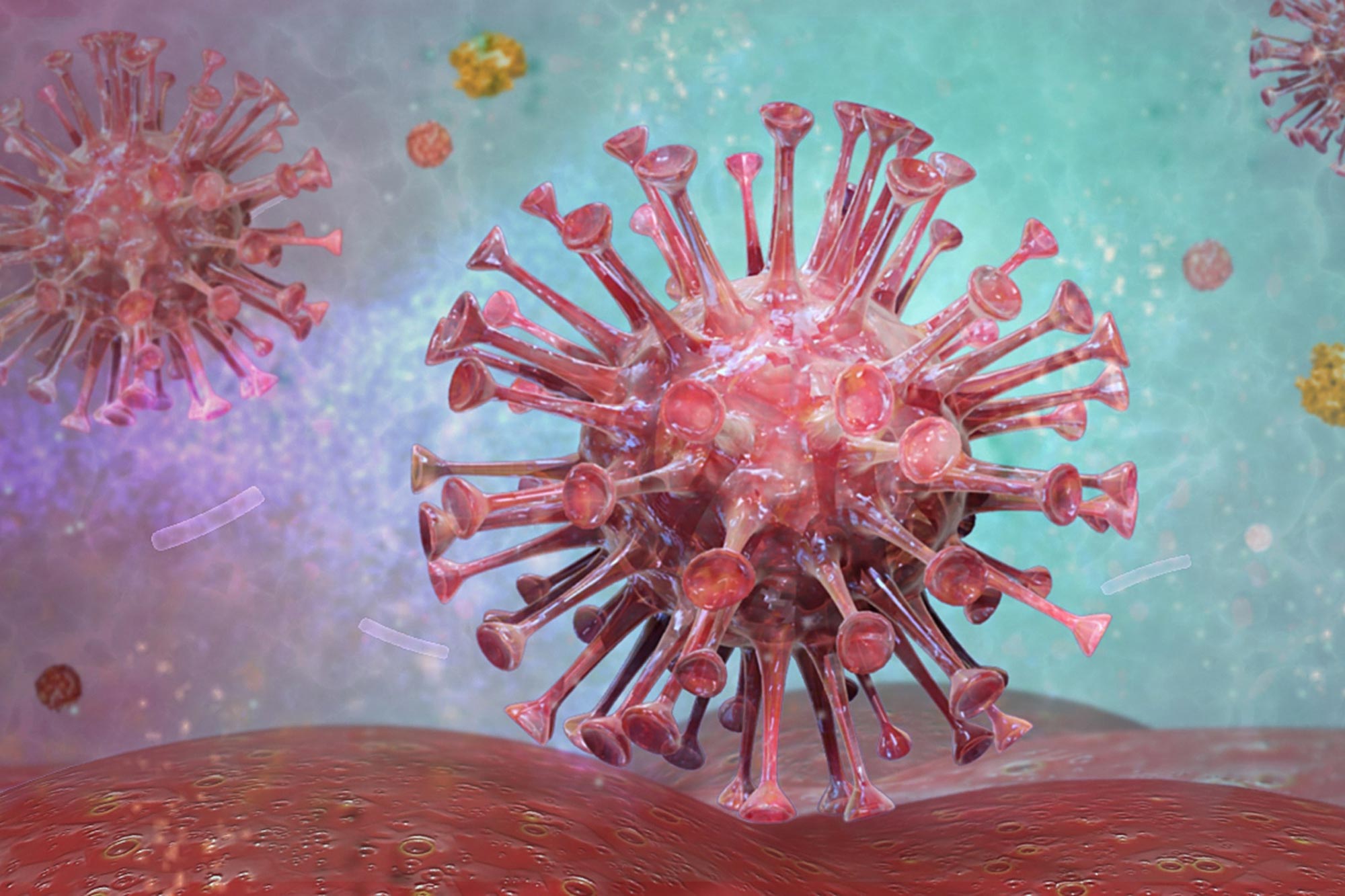
Lenacapavir, a new twice-yearly injection, offers 96% HIV prevention efficacy, surpassing daily oral PrEP.
For oral medications that prevent new HIV infections to be effective, patients must take specific steps, such as attending doctor’s visits every three months and, most importantly, maintaining consistent use.
These daily oral antiretrovirals, more commonly referred to as PrEP (pre-exposure prophylaxis), such as Truvada®, are extremely effective at HIV prevention, but only if they are taken daily as directed. Truvada’s efficacy is greatly compromised when taken inconsistently.
However, results from a recent Gilead-funded clinical trial (Purpose-2) led by physicians at Emory University and Grady Health System indicate that a twice-yearly injection of Lenacapavir offers a 96% reduced risk of infection overall, making the injection significantly more effective than the daily oral PrEP. The findings were recently published in the New England Journal of Medicine.
“Seeing these high levels of efficacy – at almost 100% — in an injectable that people only have to take every six months is incredible,” says Colleen Kelley, MD, lead author of the study and professor in the School of Medicine at Emory University. “This is a considerable and profound advancement in medicine, especially for people whose circumstances don’t allow them to take a daily oral medication, and for those among populations disproportionately impacted by HIV.”
Efficacy and Adherence: Injectable vs. Oral PrEP
In the randomized, double-blind, Phase III clinical trial comparing the efficacy of the two medications, 99% of the participants in the Lenacapavir group did not acquire an HIV infection. During the trial, only two participants in the Lenacapavir group, comprised of 2,179 people, acquired HIV. This compares to nine new HIV infections in the Truvada®group, which had 1,086 people. The trial showed that adherence to the injectable was higher than of the daily oral pill.
Kelley, also the co-director of the Emory Center for AIDS Research, and Associate Dean for Research for Emory at Grady adds that while PrEP is incredibly effective at preventing infection, part of what made the injection more effective in the clinical trial was the challenges associated with adherence to a daily oral pill.
“What we see over time is that about half of people who start taking daily oral PrEP stop within a year due to various factors,” says Kelley, referencing healthcare disparities in general. “Having an effective injectable that is only needed twice annually is very significant for people who have trouble accessing healthcare or staying adherent to daily, oral pills.”
The inclusion of racially, ethnically, and gender-diverse participants in the clinical trial was notable because it was representative of populations disproportionately impacted by HIV in real-time. For example, the trial groups were comprised of cisgender men and gender-diverse people at 88 sites in Peru, Brazil, Argentina, Mexico, South Africa, Thailand, and the U.S.
According to the study, the same populations that are disproportionately impacted by HIV are the same populations that have limited access to PrEP – or may have difficulty consistently taking the oral antiretroviral medication – ultimately highlighting the need for more options. The study also indicates that more than half of the new HIV infections nationwide in 2022 were among cisgender gay men, and 70% of those were among Black or Hispanic individuals.
Community-Centered Research and Equity
Valeria Cantos, MD, associate professor in the School of Medicine at Emory University, physician at Grady Memorial Hospital, and the principal investigator for the clinical trial at the Grady research site, emphasized the importance of having trials that include populations truly representative of the patients that Grady serves.
“At Grady, our focus is on increased representation of underserved and vulnerable populations, acknowledging and addressing the distrust towards research held by some community members due to prior abuses or neglect of these populations by research institutions in the past,” Cantos says. “Grady is an established, trusted research site because of its commitment to equity.”
At the Grady clinical trial site, medical materials were available in Spanish, and bilingual staff members recruited and enrolled trial participants who only spoke Spanish. Cantos also indicated that the site enrolled participants who are representative of the populations that would benefit the most from Lenacapavir. In addition to Grady, the Hope Clinic and Emory Midtown Hospital were among the 88 sites supporting the clinical trial.
“We are not reaching everyone we need to reach with our current HIV prevention interventions, such as those who are disproportionately impacted by HIV and health care disparities,” says Kelley. “For people that are unable to take the daily oral pills, the injectable agents can really give incredible efficacy and be a game changer in helping them stay HIV negative.”
Since the Phase III clinical trial has been completed and submitted by the FDA for consideration, Kelley is hopeful that Lenacapavir may be approved by 2025 for commercial use.
“The results of this study add to the armamentarium of novel tools for HIV prevention. Long-acting antiretrovirals offer new hope for those who are not able to take oral medications,” says Carlos del Rio, MD, chair of the Department of Medicine at Emory University School of Medicine. “The challenge is now to roll out and make these tools available and accessible in an equitable way— only then we will see new HIV infections dramatically decreased locally and globally,” adds del Rio, also co-director of the Emory Center for AIDS Research.
Reference: “Twice-Yearly Lenacapavir for HIV Prevention in Men and Gender-Diverse Persons” by Colleen F. Kelley, Maribel Acevedo-Quiñones, Allison L. Agwu, Anchalee Avihingsanon, Paul Benson, Jill Blumenthal, Cynthia Brinson, Carlos Brites, Pedro Cahn, Valeria D. Cantos, Jesse Clark, Meredith Clement, Cathy Creticos, Gordon Crofoot, Ricardo S. Diaz, Susanne Doblecki-Lewis, Jorge A. Gallardo-Cartagena, Aditya Gaur, Beatriz Grinsztejn, Shawn Hassler, Juan Carlos Hinojosa, Theo Hodge, Richard Kaplan, Marcus Lacerda, Anthony LaMarca, Marcelo H. Losso, José Valdez Madruga, Kenneth H. Mayer, Anthony Mills, Karam Mounzer, Nkosiphile Ndlovu, Richard M. Novak, Alma Perez Rios, Nittaya Phanuphak, Moti Ramgopal, Peter J. Ruane, Jorge Sánchez, Breno Santos, Patric Schine, Tanya Schreibman, LaShonda Y. Spencer, Olivia T. Van Gerwen, Ricardo Vasconcelos, Jose Gabriel Vasquez, Zwelethu Zwane, Stephanie Cox, Chris Deaton, Ramin Ebrahimi, Pamela Wong, Renu Singh, Lillian B. Brown, Christoph C. Carter, Moupali Das, Jared M. Baeten and Onyema Ogbuagu, 26 November 2024, New England Journal of Medicine.
DOI: 10.1056/NEJMoa2411858
Never miss a breakthrough: Join the SciTechDaily newsletter.
Follow us on Google and Google News.