
Close Menu
    Facebook X (Twitter) Instagram
    SciTechDaily
    • Biology
    • Chemistry
    • Earth
    • Health
    • Physics
    • Science
    • Space
    • Technology
    Facebook X (Twitter) Pinterest YouTube RSS
    SciTechDaily
    Home»Biology»Sleeping Longer On Weekends Doesn’t Erase Sleep Debt
    Biology

    Sleeping Longer On Weekends Doesn’t Erase Sleep Debt

    By SciTechDailySeptember 18, 20121 Comment2 Mins Read
    Facebook Twitter Pinterest Telegram LinkedIn WhatsApp Email Reddit
    Share
    Facebook Twitter LinkedIn Pinterest Telegram Email Reddit
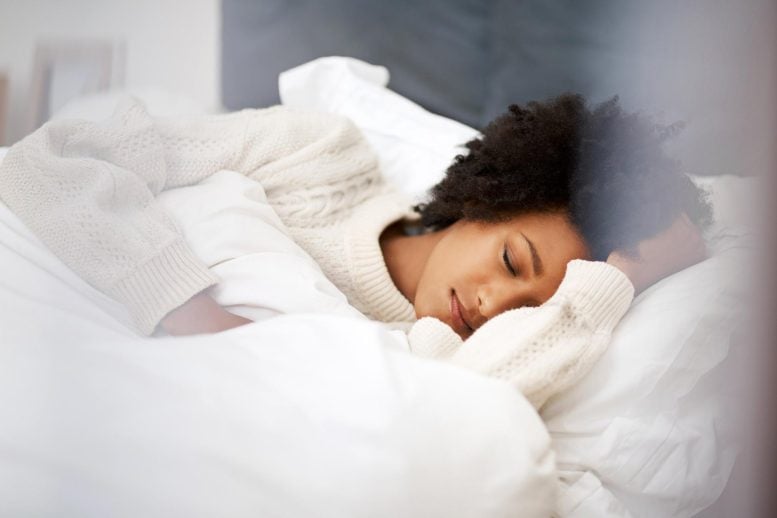
    Young Woman Sleeping Soundly
    A recent sleep study suggests that sleeping in on weekends can lead to increased sleepiness on Monday mornings.

    Unlike the popular belief that sleeping more on the weekends can help sleep-deprived people catch up on sleep, a new sleep study has shown that sleeping in on the weekends will make you sleepier come Monday morning.

    The scientists announced their findings through UT Southwestern. A great myth of sleep deprivation is that if we miss sleep over the course of the week, we need to catch up on an hour-by-hour basis on the weekend, states Gregory Carter, a sleep medicine specialist at the UT Southwestern Medical Center.

    The circadian cycle guides the body’s internal clock, and while people can delay their circadian clocks for up to one hour, the problem is that if they sleep in more on the weekends, the brain’s circadian clock can be delayed by up to two hours, making it challenging to fall asleep on Sundays and even more difficult when trying to wake up Monday mornings.

    Turning in earlier is more effective than sleeping later. Trying to balance any sleep debt from the work week can be accomplished by spending eight hours straight in bed. Once people are really sleepy, their brains rest more efficiently.

    In order to maintain the body’s internal clock, people should go to bed eight hours before their usual wake-up time. Many people have trouble with this, staying up later on Friday and Saturday nights, and choosing to sleep in on Saturdays and Sundays. When this pattern is combined with sleep-defeating actions, like alcohol consumption, late-night social networking, and emailing, it makes for a painful Monday morning.

    Never miss a breakthrough: Join the SciTechDaily newsletter.
    Follow us on Google and Google News.

    Circadian Rhythm Medicine Neuroscience Sleep Science
    Share. Facebook Twitter Pinterest LinkedIn Email Reddit

    Related Articles

    Clockwork Biology: cAMP Molecules Illuminate Circadian Rhythm Mysteries

    Scientists Discover Source of Jet Lag’s Harmful Health Consequences

    Scientists Discover How Behavioral Rhythms Are Fine-Tuned In the Brain

    Circadian Rhythm Research Could Turn Early Birds Into Night Owls – Or Vice Versa

    New Research Shows the Moon Influences Our Sleep

    Intense Brain Activity Drives Need for Sleep, Not Just How Long You’ve Been Awake

    Traumatic Memories Manipulated in Sleeping Mice

    PAPupuncture Offers Long-Lasting Pain Relief

    Scientists Find Cure for Neurocysticercosis, a Major Cause of Seizures

    1 Comment

    1. Ethan Green on February 2, 2013 7:43 am

      This is very true – even people who try to stick to a regular sleep schedule often make the mistake of thinking a lie-in at the weekend won’t disrupt the pattern. But if you are serious about tackling insomnia for example, you need to be tough on yourself and stick to regular times for going to bed and getting up 7 days a week. It’s not easy, but it’s the best way:-)

      Reply
    Leave A Reply Cancel Reply

    • Facebook
    • Twitter
    • Pinterest
    • YouTube

    Don't Miss a Discovery

    Subscribe for the Latest in Science & Tech!

    Trending News

    New Study Reveals Why Ozempic Works Better for Some People Than Others

    Climate Change Is Altering a Key Greenhouse Gas in a Way Scientists Didn’t Expect

    New Study Suggests Gravitational Waves May Have Created Dark Matter

    Scientists Discover Why the Brain Gets Stuck in Schizophrenia

    Scientists Engineer “Tumor-Eating” Bacteria That Devour Cancer From Within

    Even “Failed” Diets May Deliver Long-Term Health Gains, Study Finds

    NIH Scientists Discover Powerful New Opioid That Relieves Pain Without Dangerous Side Effects

    Collapsing Plasma May Hold the Key to Cosmic Magnetism

    Follow SciTechDaily
    • Facebook
    • Twitter
    • YouTube
    • Pinterest
    • Newsletter
    • RSS
    SciTech News
    • Biology News
    • Chemistry News
    • Earth News
    • Health News
    • Physics News
    • Science News
    • Space News
    • Technology News
    Recent Posts
    • This 15,000-Year-Old Discovery Changes What We Know About Early Human Creativity
    • 35-Million-Year-Old Mystery: Strange Arachnid Discovered Preserved in Amber
    • Revolutionary Gas Turbine Generates Power Without Air Compression
    • Is AI Really Just a Tool? It Could Be Altering How You See Reality
    • JWST Reveals a “Forbidden” Planet With a Baffling Composition
    Copyright © 1998 - 2026 SciTechDaily. All Rights Reserved.
    • Science News
    • About
    • Contact
    • Editorial Board
    • Privacy Policy
    • Terms of Use

    Type above and press Enter to search. Press Esc to cancel.