
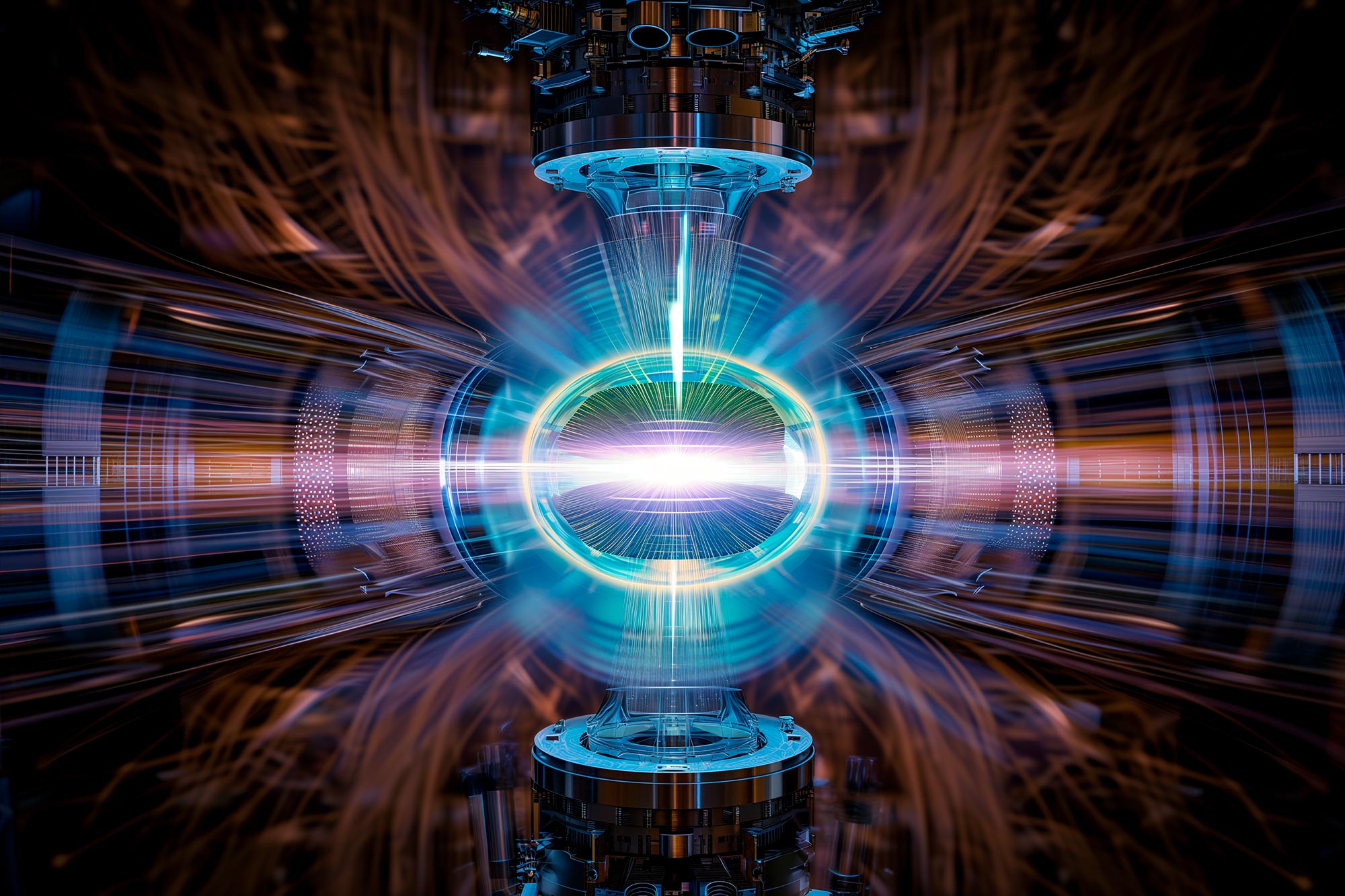
First plasma is coming soon to the University of Seville’s compact spherical tokamak called SMART.
PPPL and the University of Seville are innovating in fusion technology through the SMART Tokamak project, targeting enhanced plasma confinement and stability using unique geometric designs.
Fusion Energy Collaboration
Like atoms coming together to release their power, fusion scientists worldwide are joining forces to solve the world’s energy crisis. Harnessing the power of fusing plasma as a reliable energy source for the power grid is no easy task, requiring global contributions.
The Princeton Plasma Physics Laboratory (PPPL) — a U.S. national laboratory funded by the Department of Energy (DOE) — is leading several efforts on this front, including collaborating on the design and development of a new fusion device at the University of Seville in Spain. The SMall Aspect Ratio Tokamak (SMART) strongly benefits from PPPL computer codes as well as the Lab’s expertise in magnetics and sensor systems.

Pioneering the SMART Tokamak
“The SMART project is a great example of us all working together to solve the challenges presented by fusion and teaching the next generation what we have already learned,” said Jack Berkery, PPPL’s deputy director of research for the National Spherical Torus Experiment-Upgrade (NSTX-U) and principal investigator for the PPPL collaboration with SMART. “We have to all do this together or it’s not going to happen.”
Manuel Garcia-Munoz and Eleonora Viezzer, both professors at the Department of Atomic, Molecular and Nuclear Physics of the University of Seville as well as co-leaders of the Plasma Science and Fusion Technology Lab and the SMART tokamak project, said PPPL seemed like the ideal partner for their first tokamak experiment. The next step was deciding what kind of tokamak they should build.
“It needed to be one that a university could afford but also one that could make a unique contribution to the fusion landscape at the university scale,” said Garcia-Munoz. “The idea was to put together technologies that were already established: a spherical tokamak and negative triangularity, making SMART the first of its kind. It turns out it was a fantastic idea.”
Advancing Tokamak Design
Triangularity refers to the shape of the plasma relative to the tokamak. The cross-section of the plasma in a tokamak is typically shaped like the capital letter D. When the straight part of the D faces the center of the tokamak, it is said to have positive triangularity. When the curved part of the plasma faces the center, the plasma has negative triangularity.
Garcia-Munoz said negative triangularity should offer enhanced performance because it can suppress instabilities that expel particles and energy from the plasma, preventing damage to the tokamak wall. “It’s a potential game changer with attractive fusion performance and power handling for future compact fusion reactors,” he said. “Negative triangularity has a lower level of fluctuations inside the plasma, but it also has a larger divertor area to distribute the heat exhaust.”
The spherical shape of SMART should make it better at confining the plasma than it would be if it were doughnut shaped. The shape matters significantly in terms of plasma confinement. That is why NSTX-U, PPPL’s main fusion experiment, isn’t squat like some other tokamaks: the rounder shape makes it easier to confine the plasma. SMART will be the first spherical tokamak to fully explore the potential of a particular plasma shape known as negative triangularity.
Simulation and Diagnostics
PPPL has a long history of leadership in spherical tokamak research. The University of Seville fusion team first contacted PPPL to implement SMART in TRANSP, a simulation software developed and maintained by the Lab. Dozens of facilities use TRANSP, including private ventures such as in England.
“PPPL is a world leader in many, many areas, including fusion simulation; TRANSP is a great example of their success,” said Garcia-Munoz.
Mario Podesta, formerly of PPPL, was integral to helping the University of Seville determine the configuration of the neutral beams used for heating the plasma. That work culminated in a published in the journal Plasma Physics and Controlled Fusion.
Stanley Kaye, director of research for NSTX-U, is now working with Diego Jose Cruz-Zabala, EUROfusion Bernard Bigot Researcher Fellow, from the SMART team, using TRANSP “to determine the shaping coil currents necessary for attaining their design plasma shapes of positive triangularity and negative triangularity at different phases of operation.” The first phase, Kaye said, will involve a “very basic” plasma. Phase two will have neutral beams heating the plasma.
Separately, other computer codes were used for assessing the stability of future SMART plasmas by Berkery, former undergraduate intern John Labbate, who is, now a grad student at Columbia University, and former University of Seville graduate student Jesús Domínguez-Palacios, who has now moved to an American company. A in Nuclear Fusion by Domínguez-Palacios discusses this work.
A microwave-heated glow discharge runs in SMART as a test of the tokamak. Credit: University of Seville
Ensuring Long-Term Diagnostic Capabilities
The collaboration between SMART and PPPL also extended into and one of the Lab’s core areas of expertise: , which are devices with sensors to assess the plasma. Several such diagnostics are being designed by PPPL researchers. PPPL Physicists Manjit Kaur and Ahmed Diallo, together with Viezzer, are leading the design of the SMART’s Thomson scattering diagnostic, for example. This diagnostic will precisely measure the plasma electron temperature and density during fusion reactions, as detailed in published in the journal Review of Scientific Instruments. These measurements will be complemented with ion temperature, rotation and density measurements provided by diagnostics known as the charge exchange recombination spectroscopy suite developed by Alfonso Rodriguez-Gonzalez, graduate student at University of Seville, Cruz-Zabala and Viezzer.
“These diagnostics can run for decades, so when we design the system, we keep that in mind,” said Kaur. When developing the designs, it was important the diagnostic can handle temperature ranges SMART might achieve in the next few decades and not just the initial, low values, she said.

Kaur designed the Thomson scattering diagnostic from the start of the project, selecting and procuring its different subparts, including the laser she felt best fits the job. She was thrilled to see how well the laser tests went when Gonzalo Jimenez and Viezzer sent her photos from Spain. The test involved setting up the laser on a bench and shooting it at a piece of special parchment that the researchers call “burn paper.” If the laser is designed just right, the burn marks will be circular with relatively smooth edges. “The initial laser test results were just gorgeous,” she said. “Now, we eagerly await receiving other parts to get the diagnostic up and running.”
James Clark, a PPPL research engineer whose doctoral thesis focused on Thomson scattering systems, was later brought on to work with Kaur. “I’ve been designing the laser path and related optics,” Clark explained. In addition to working on the engineering side of the project, Clark has also helped with logistics, deciding how and when things should be delivered, installed and calibrated.
PPPL’s Head of Advanced Projects Luis Delgado-Aparicio, together with Marie Skłodowska-Curie fellow Joaquin Galdon-Quiroga and University of Seville graduate student Jesus Salas-Barcenas, are leading efforts to add two other kinds of diagnostics to SMART: a multi-energy, soft X-ray (ME-SXR) diagnostic and spectrometers. The ME-SXR will also measure the plasma’s electron temperature and density but using a different approach than the Thomson scattering system. The ME-SXR will use sets of small electronic components called diodes to measure X-rays. Combined, the Thomson scattering diagnostic and the ME-SXR will comprehensively analyze the plasma’s electron temperature and density.
By looking at the different frequencies of light inside the tokamak, the spectrometers can provide information about impurities in the plasma, such as oxygen, carbon and nitrogen. “We are using off-the-shelf spectrometers and designing some tools to put them in the machine, incorporating some fiber optics,” Delgado-Aparicio said. Another published in the Review of Scientific Instruments discusses the design of this diagnostic.
PPPL Research Physicist Stefano Munaretto worked on the magnetic diagnostic system for SMART with the field work led by University of Seville graduate student Fernando Puentes del Pozo Fernando. “The diagnostic itself is pretty simple,” said Munaretto. “It’s just a wire wound around something. Most of the work involves optimizing the sensor’s geometry by getting its size, shape and length correct, selecting where it should be located and all the signal conditioning and data analysis involved after that.” The design of SMART’s magnetics is detailed .
Munaretto said working on SMART has been very fulfilling, with much of the team working on the magnetic diagnostics made up of young students with little previous experience in the field. “They are eager to learn, and they work a lot. I definitely see a bright future for them.”
Delgado-Aparicio agreed. “I enjoyed quite a lot working with Manuel Garcia-Munoz, Eleonora Viezzer and all of the other very seasoned scientists and professors at the University of Seville, but what I enjoyed most was working with the very vibrant pool of students they have there,” he said. “They are brilliant and have helped me quite a bit in understanding the challenges that we have and how to move forward toward obtaining first plasmas.”
Researchers at the University of Seville have already run a test in the tokamak, displaying the pink glow of argon when heated with microwaves. This process helps prepare the tokamak’s inner walls for a far denser plasma contained at a higher pressure. While technically, that pink glow is from a plasma, it’s at such a low pressure that the researchers don’t consider it their real first tokamak plasma. Garcia-Munoz says that will likely happen in the fall of 2024.
Reference: “Design of a Thomson scattering diagnostic for the SMall Aspect Ratio Tokamak (SMART)
Special Collection: Proceedings of the 25th Topical Conference on High-Temperature Plasma Diagnostics” by M. Kaur, A. Diallo, B. LeBlanc, J. Segado-Fernandez, E. Viezzer, R. B. Huxford, A. Mancini, D. J. Cruz-Zabala, M. Podesta, J. W. Berkery and M. Garcia-Muñoz, 4 September 2024, Review of Scientific Instruments.
DOI: 10.1063/5.0219308
Support for this research comes from the DOE under contract number DE-AC02-09CH11466, European Research Council Grant Agreements 101142810 and 805162, the Euratom Research and Training Programme Grant Agreement 101052200 — EUROfusion, and the Junta de Andalucía Ayuda a Infraestructuras y Equipamiento de I+D+i IE17-5670 and Proyectos I+D+i FEDER Andalucía 2014-2020, US-15570.
Never miss a breakthrough: Join the SciTechDaily newsletter.
Follow us on Google and Google News.
1 Comment
While technically, that pink glow is from a plasma, it’s at such a low pressure that the researchers don’t consider it their real first tokamak plasma.
Ask the researcher:
1. What is the theoretical basis of the first tokamak plasma?
2. How do you explain the physical phenomena you observed in the experiment?
Scientific research guided by correct theories can help people avoid detours, failures, and exaggeration. The physical phenomena observed by researchers in experiments are always appearances, never the natural essence of things. The natural essence of things needs to be extracted and sublimated based on mathematical theories via appearances , rather than being imagined arbitrarily.
Everytime scientific revolution, the scientific research space brought by the new paradigm expands exponentially. Physics should not ignore the analyzable physical properties of topological vortices.
(1) Traditional physics: based on mathematical formalism, experimental verification and arbitrary imagination.
(2) Topological Vortex Theory: Although also based on mathematics (such as topology), it focuses more on non intuitive geometry and topological structures, challenging traditional physical intuition.
Extension of the Standard Model: Topological Vortex Theory points out the limitations of the Standard Model in describing the large-scale structure of the universe, proposes the need to consider non-standard model components such as dark matter and dark energy, and suggests that topological vortex fields may be key to understanding these phenomena.
Topological vortex theory heralds innovative technologies such as topological electronics, topological smart batteries, topological quantum computing, etc., which may bring low-energy electronic components, almost inexhaustible currents, and revolutionary computing platforms, etc.
Topology tells us that topological vortices and antivortices can form new spacetime structures via the synchronous effect of superposition, deflection, or twisting of them. In fact, mathematics does not tell us that there must be God particles, ghost particles, fermions, or bosons present. When physics and mathematics diverge, arbitrary imagination will make physics no different from theology. Topological vortex research reflections on the philosophy and methodology of science help us understand the nature essence of science and the limitations of scientific methods. This not only has guiding significance for scientific research itself, but also has important implications for science education and popularization.
Today, so-called official (such as PRL, Nature, Science, PNAS, etc.) in physics stubbornly believes that two sets of cobalt-60 rotating in opposite directions can become two sets of objects that mirror each other, is a typical case that pseudoscience is rampant and domineering. Please witness the exemplary collaboration between theoretical physicists and experimentalists (https://scitechdaily.com/microscope-spacecrafts-most-precise-test-of-key-component-of-the-theory-of-general-relativity/#comment-854286).
Let us continue to witness together the dirtiest and ugliest era in the scientific and humanistic history of human society. The laws of nature will not change due to misleading of so-called academic publications.