
Close Menu
    Facebook X (Twitter) Instagram
    SciTechDaily
    • Biology
    • Chemistry
    • Earth
    • Health
    • Physics
    • Science
    • Space
    • Technology
    Facebook X (Twitter) Pinterest YouTube RSS
    SciTechDaily
    Home»Space»Solar Orbiter Spacecraft Prepares for Festive Venus Flyby
    Space

    Solar Orbiter Spacecraft Prepares for Festive Venus Flyby

    By European Space Agency (ESA)December 23, 2020No Comments3 Mins Read
    Facebook Twitter Pinterest Telegram LinkedIn WhatsApp Email Reddit
    Share
    Facebook Twitter LinkedIn Pinterest Telegram Email Reddit
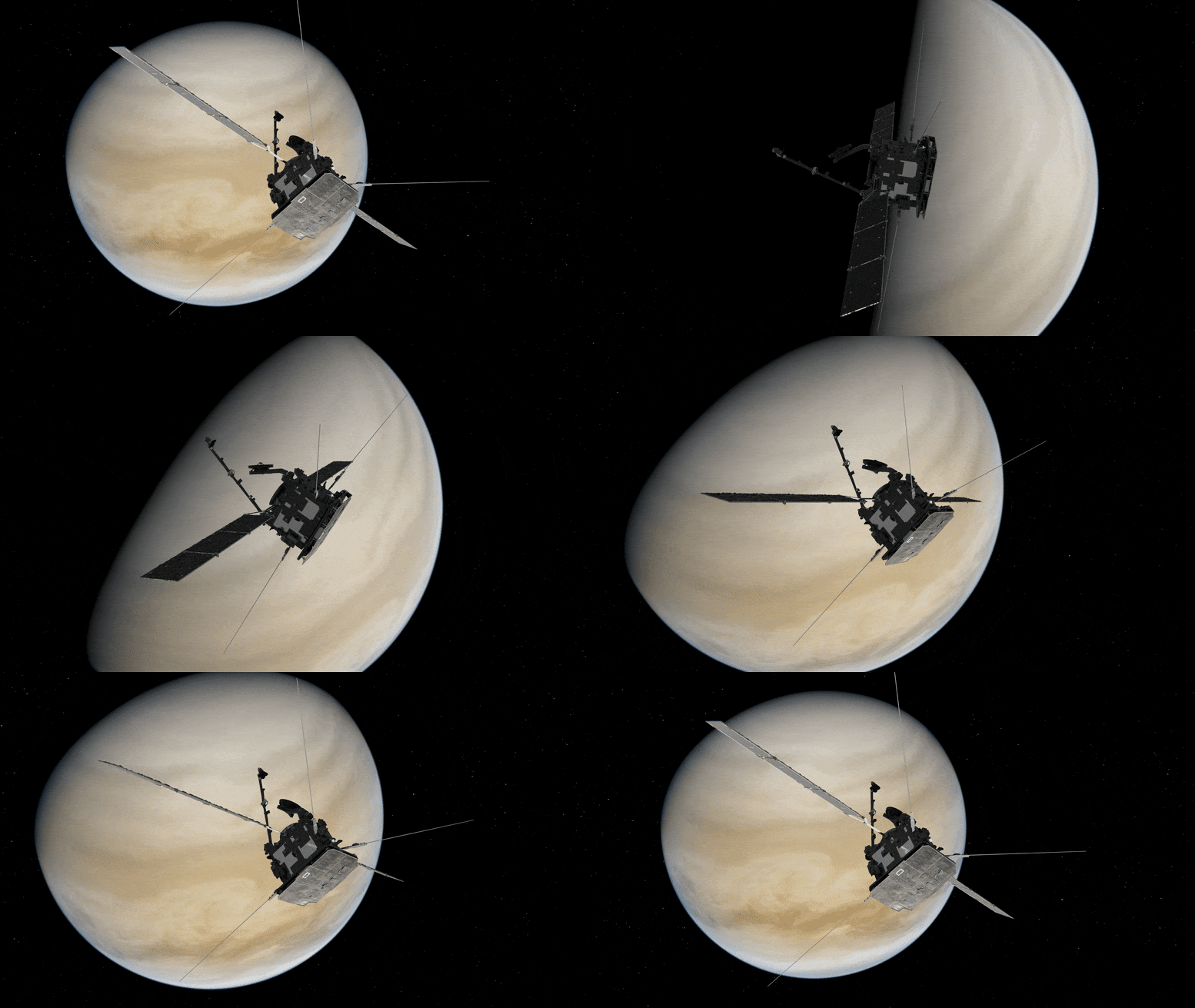
    Solar Orbiter Venus Flyby
    The artist’s illustration of Solar Orbiter Venus flyby.

    Solar Orbiter is getting ready for the first of many gravity-assist flybys of Venus on December 27, to start bringing it closer to the Sun and tilting its orbit in order to observe our star from different perspectives.

    Just as the majority of us will remain safely at home under various COVID-19 pandemic lockdown measures during what is traditionally a holiday period, the flyby – a routine event in the world of flying spacecraft – will also be monitored by the spacecraft operations managers remotely as well.

    The closest approach will take place at 12:39 UTC (13:39 CET) on December 27, and will see the spacecraft fly some 7,500 km from the Venus cloud tops. Later flybys, from 2025, will see much closer encounters of just a few hundred kilometers.

    During the upcoming flyby, several in-situ science instruments – MAG, RPW, and some sensors of EPD – will be switched on to record the magnetic, plasma, and particle environment around the spacecraft as it encounters Venus. (It is not possible to take images of Venus during the flyby because the spacecraft must remain facing the Sun.)
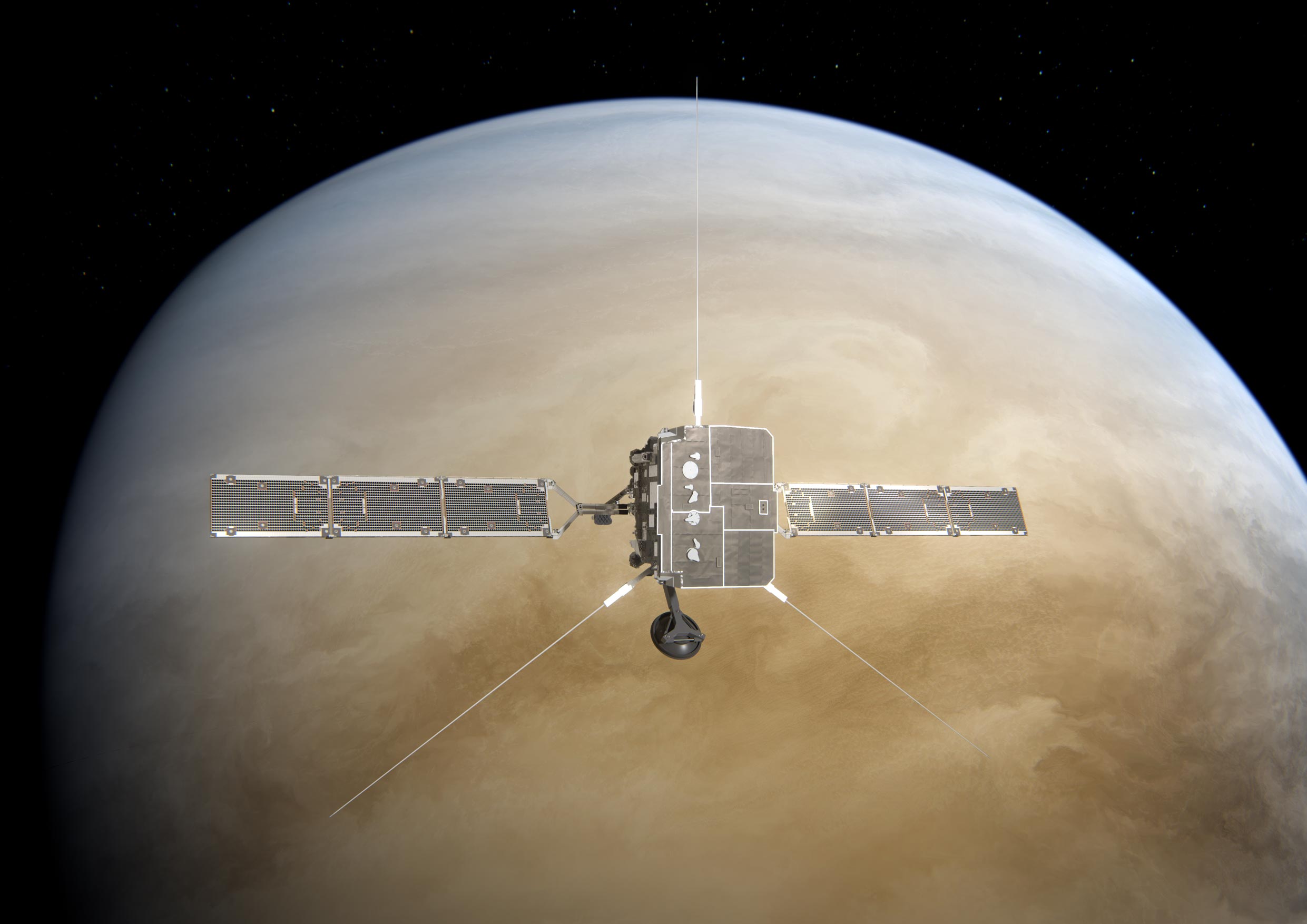
    Solar Orbiter Venus Flyby
    Artist’s impression of Solar Orbiter making a flyby at Venus. Credit: ESA/ATG medialab

    In order to properly line up for the flyby, specialists from ESA’s ground stations and flight dynamics teams conducted a so-called ‘Delta-DOR’ campaign, using an advanced technique – Delta-Differential One-Way Ranging – to precisely determine the spacecraft’s position in space, and its trajectory.

    In Delta-DOR, a set of widely separated ground stations on Earth are used to receive the spacecraft’s radio signals, giving a first result for its location. Then, this result is compared to locations of known stellar radio sources previously mapped by other missions, resulting in a corrected and ultra-precise final plot. The Delta-DOR technique allows operators to determine where a spacecraft is to within a few hundred meters, even at a distance of 100 million km.

    Ultra-Precise Deep-Space Navigation
    Ultra-Precise Deep-Space Navigation. Credit: ESA

    As of December 17, Solar Orbiter is 235 million kilometers (146 million miles) from Earth, and about 10.5 million kilometers (6.5 million miles)from Venus. It takes about 13 minutes for signals to travel to (or from) the spacecraft.

    Solar Orbiter’s path around the Sun has been chosen to be ‘in resonance’ with Venus, which means that it will return to the planet’s vicinity every few orbits and can again use the planet’s gravity to alter or tilt its orbit. The next encounter will be in August 2021, which is also within a few days of BepiColombo’s next Venus gravity assist. Initially, Solar Orbiter will be confined to the same plane as the planets, but each encounter of Venus will increase its orbital inclination. By 2025 it will make its first solar pass at 17º inclination, increasing to 33º by the end of the decade, bringing even more of the polar regions into direct view. This will result in the spacecraft being able to take the first ever images of the Sun’s polar regions, crucial for understanding how the Sun ‘works’, for investigating the Sun-Earth connection and how we can better predict periods of stormy space weather.

    Solar Orbiter is a space mission of international collaboration between ESA and NASA.

    Track the location of the Solar Orbiter using this interactive chart.

    Never miss a breakthrough: Join the SciTechDaily newsletter.
    Follow us on Google and Google News.

    European Space Agency Popular Solar Orbiter Venus
    Share. Facebook Twitter Pinterest LinkedIn Email Reddit

    Related Articles

    Double Venus Flyby! Solar Orbiter and BepiColombo Set To Make Space History

    Solar Orbiter Snaps Closest Pictures Ever of the Sun – Reveals New “Campfires” Phenomena

    Watch NASA/ESA Solar Orbiter Mission First Image Release – Closer to Sun That Any Spacecraft in History

    Solar Orbiter Made First Close Approach to the Sun Today [Video]

    Expect the Unexpected: Solar Orbiter to Pass Through the Tails of Comet ATLAS

    ESA Planetary Defence Catches Final Glimpse of Solar Orbiter

    Solar Orbiter Blasts Off, Taking Solar Science to New Heights

    Solar Orbiter Will Encounter Intense Heat and Radiation – Here’s How It’s Protected

    Mysterious Cold Layer Discovered in the Atmosphere of Venus

    Leave A Reply Cancel Reply

    • Facebook
    • Twitter
    • Pinterest
    • YouTube

    Don't Miss a Discovery

    Subscribe for the Latest in Science & Tech!

    Trending News

    AI Could Detect Early Signs of Alzheimer’s in Under a Minute – Far Before Traditional Tests

    What if Dark Matter Has Two Forms? Bold New Hypothesis Could Explain a Cosmic Mystery

    This Metal Melts in Your Hand – and Scientists Just Discovered Something Strange

    Beef vs. Chicken: Surprising Results From New Prediabetes Study

    Alzheimer’s Breakthrough: Scientists Discover Key Protein May Prevent Toxic Protein Clumps in the Brain

    Quantum Reality Gets Stranger: Physicists Put a Lump of Metal in Two Places at Once

    Scientists May Have Found the Key to Jupiter and Saturn’s Moon Mystery

    Scientists Uncover Brain Changes That Link Pain to Depression

    Follow SciTechDaily
    • Facebook
    • Twitter
    • YouTube
    • Pinterest
    • Newsletter
    • RSS
    SciTech News
    • Biology News
    • Chemistry News
    • Earth News
    • Health News
    • Physics News
    • Science News
    • Space News
    • Technology News
    Recent Posts
    • Asthma and Depression Don’t Mix the Way Scientists Expected
    • Why Promising Cancer Drugs Failed: Scientists Uncover the Missing Piece
    • Popular Sweetener Linked to DNA Damage – “It’s Something You Should Not Be Eating”
    • Ancient “Rock” Microbes May Reveal How Complex Life Began
    • Hidden “Trade Winds” Inside Cells Could Explain Cancer Spread
    Copyright © 1998 - 2026 SciTechDaily. All Rights Reserved.
    • Science News
    • About
    • Contact
    • Editorial Board
    • Privacy Policy
    • Terms of Use

    Type above and press Enter to search. Press Esc to cancel.