
Close Menu
    Facebook X (Twitter) Instagram
    SciTechDaily
    • Biology
    • Chemistry
    • Earth
    • Health
    • Physics
    • Science
    • Space
    • Technology
    Facebook X (Twitter) Pinterest YouTube RSS
    SciTechDaily
    Home»Technology»New Technology Peers at the Electrical Signals Inside Cells – May Inspire New Fields of Research
    Technology

    New Technology Peers at the Electrical Signals Inside Cells – May Inspire New Fields of Research

    By Sheila Evans , University of ChicagoDecember 23, 2020No Comments3 Mins Read
    Facebook Twitter Pinterest Telegram LinkedIn WhatsApp Email Reddit
    Share
    Facebook Twitter LinkedIn Pinterest Telegram Email Reddit
    Inside Cell
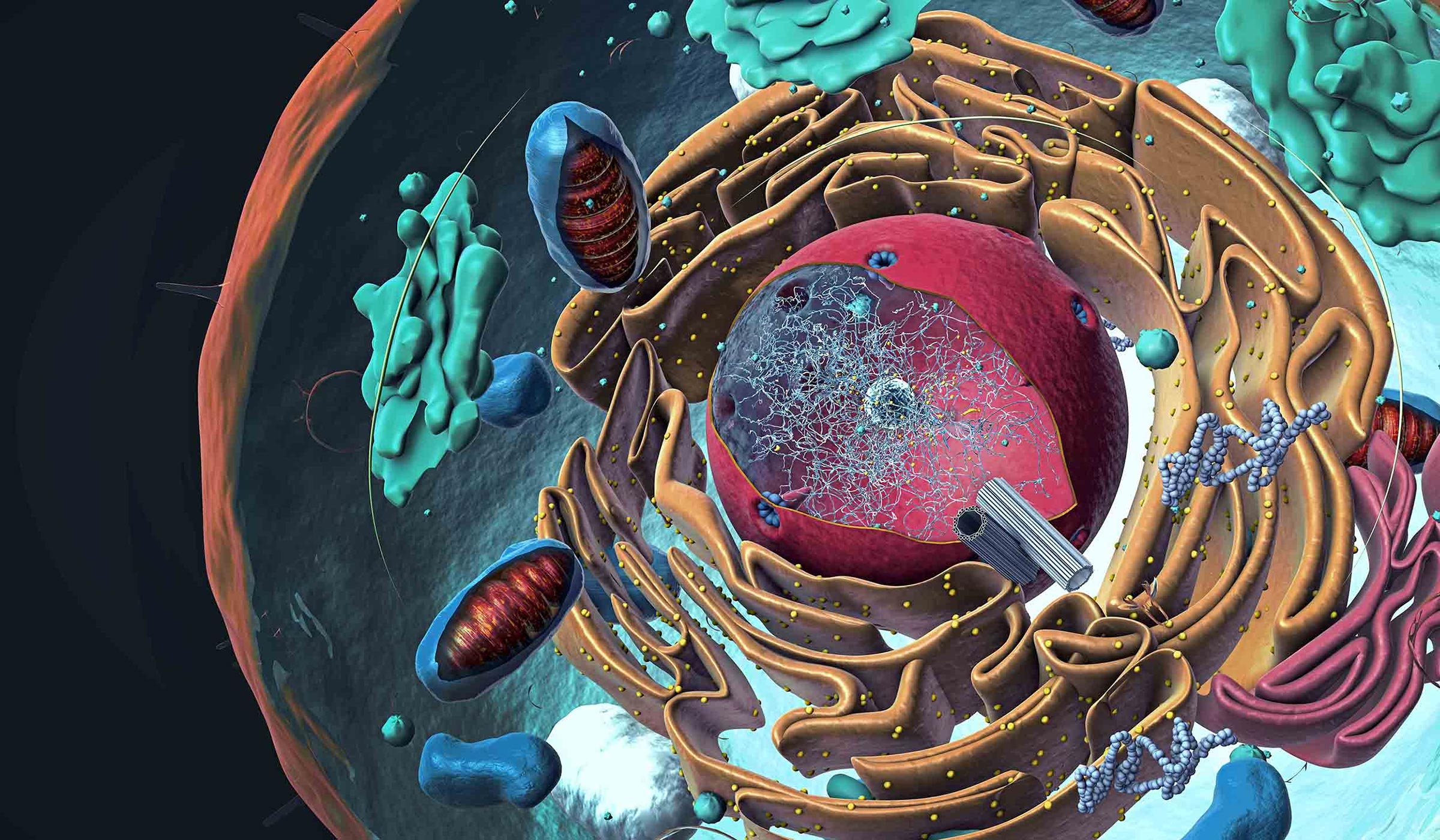
    The complex dance of electrical signals inside a cell holds the key to many questions about diseases and disorders, but has been difficult to understand—so a team of UChicago scientists invented a way to listen in.

    University of Chicago scientists pioneer new method of measuring electricity in cells.

    Electricity is a key ingredient in living bodies. We know that voltage differences are important in biological systems; they drive the beating of the heart and allow neurons to communicate with one another. But for decades, it wasn’t possible to measure voltage differences between organelles—the membrane-wrapped structures inside the cell—and the rest of the cell.

    A pioneering technology created by UChicago scientists, however, allows researchers to peer into cells to see how many different organelles use voltages to carry out functions.

    “Scientists had noticed for a long time that charged dyes used for staining cells would get stuck in the mitochondria,” explained graduate student Anand Saminathan, the first author for the paper, which was published in Nature Nanotechnology. “But little work has been done to investigate the membrane potential of other organelles in live cells.”

    The Krishnan lab at UChicago specializes in building tiny sensors to travel inside cells and report back on what’s happening, so that researchers can understand how cells work—and how they break down in disease or disorders. Previously, they have built such machines to study neurons and lysosomes, among others. 

    In this case, they decided to use the technique to investigate the electric activities of the organelles inside live cells.

    In the membranes of neurons, there are proteins called ion channels which act as gateways for charged ions to enter and exit the cell. These channels are essential for neurons to communicate. Previous research had shown that organelles have similar ion channels, but we weren’t sure what roles they played.

    The researchers’ new tool, called Voltair, makes it possible to explore this question further. It works as a voltmeter measuring the voltage difference of two different areas inside a cell. Voltair is constructed out of DNA, which means it can go directly into the cell and access deeper structures. 

    In their initial studies, the researchers looked for membrane potentials—a difference in voltage inside an organelle versus outside. They found evidence for such potentials in several organelles, such as trans-Golgi networks and recycling endosomes, that were previously thought not to have membrane potentials at all.

    “So I think the membrane potential in organelles could play a larger role—maybe it helps organelles communicate,” said Prof. Yamuna Krishnan, an expert in nucleic acid-based molecular devices. 

    Their studies are only the beginning, the authors said; Voltair offers a way for researchers in many fields to answer questions they’ve never even been able to ask. It can even be used in plants.

    “This new development will at least start conversations, and may even inspire a new field of research,” said Saminathan.

    Reference: “A DNA-based voltmeter for organelles” by Anand Saminathan, John Devany, Aneesh Tazhe Veetil, Bhavyashree Suresh, Kavya Smitha Pillai, Michael Schwake and Yamuna Krishnan, 2 November 2020, Nature Nanotechnology.
    DOI: 10.1038/s41565-020-00784-1

    Funding: National Institutes of Health, University of Chicago Women’s Board, Searle Funds at The Chicago Community Trust

    Never miss a breakthrough: Join the SciTechDaily newsletter.
    Follow us on Google and Google News.

    Biotechnology Cell Biology DNA Nanotechnology University of Chicago
    Share. Facebook Twitter Pinterest LinkedIn Email Reddit

    Related Articles

    Innovative “Nano-Robot” Built Entirely From DNA To Explore Microscopic Biological Processes

    New DNA Sensor Quickly Determines Whether Viruses Are Infectious

    New DNA-Based Microfluidic Chip Can Be Programmed To Solve Complex Math Problems

    Avalanching Nanoparticles Break Barriers to Imaging Cells in Real Time

    A New Twist on DNA Origami: Meta-DNA Structures Transform the DNA Nanotechnology World

    DARPA Invisible Man: Human Cells Engineered With Squid-Like Transparency

    Nanodevices Track Cells From the Inside, Show How They Develop With Time

    Transforming Nanofiber Membranes Into Complex 3D Shapes for Biomedical Applications

    Single-Stranded DNA and RNA Origami That Can Autonomously Fold Into Defined Structures

    Leave A Reply Cancel Reply

    • Facebook
    • Twitter
    • Pinterest
    • YouTube

    Don't Miss a Discovery

    Subscribe for the Latest in Science & Tech!

    Trending News

    Just a Few Breathless Minutes a Day Could Slash Your Risk of 8 Major Diseases

    This Simple Habit Could Cut Your Risk of Dementia by 30%

    Scientists Debunk Rattlesnake Myth That Fooled Hikers and Doctors for Decades

    Scientists Discover Plants Can “Count” – and May Be Smarter Than We Thought

    New Research Reveals Ancient Mars May Have Been Warm, Wet – and Possibly Alive

    This Surprising Daily Habit Could Cut Dementia Risk by 35%

    Just 10 Minutes a Day: Scientists Say This Ancient Chinese Practice Shows Powerful Blood Pressure Benefits

    Scientists Say This Popular Food Could Help Your Body Get Rid of Microplastics

    Follow SciTechDaily
    • Facebook
    • Twitter
    • YouTube
    • Pinterest
    • Newsletter
    • RSS
    SciTech News
    • Biology News
    • Chemistry News
    • Earth News
    • Health News
    • Physics News
    • Science News
    • Space News
    • Technology News
    Recent Posts
    • A Simple Nose Swab Could Detect Alzheimer’s Years Before Symptoms Appear
    • Scientists Warn: Vaping Likely Causes Cancer
    • Irregular Bedtimes Could Double Your Risk of Heart Attack and Stroke
    • Scientists Just Rewrote the Timeline of Complex Life on Earth
    • 160,000 Years Ago, Hominins in China Were Far More Advanced Than We Thought
    Copyright © 1998 - 2026 SciTechDaily. All Rights Reserved.
    • Science News
    • About
    • Contact
    • Editorial Board
    • Privacy Policy
    • Terms of Use

    Type above and press Enter to search. Press Esc to cancel.