
Researchers Propose Using Lunar Dust To Block Sunlight and Combat Climate Change
On a cold winter day, the warmth of the sun is welcome. Yet as humanity emits more and more greenhouse gases, the Earth’satmosphere traps more and more of the sun’s energy and steadily increases the Earth’s temperature. One strategy for reversing this trend is to intercept a fraction of sunlight before it reaches our planet. For decades, scientists have considered using screens, objects, or dust particles to block just enough of the sun’s radiation—between 1 or 2%—to mitigate the effects of global warming.
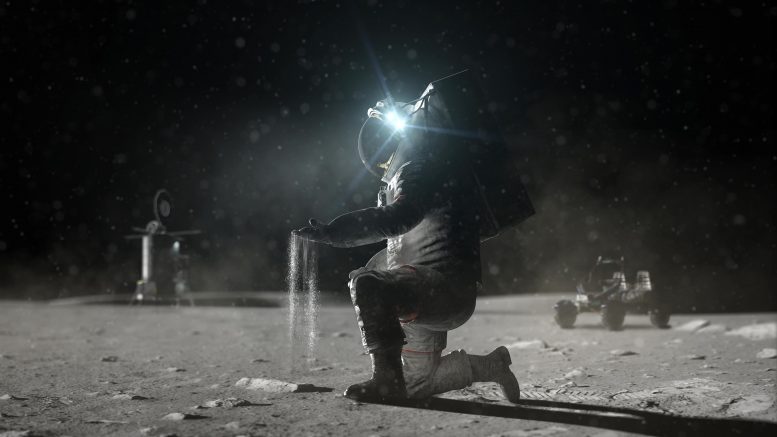
A University of Utah-led study explored the potential of using dust to shield sunlight. They analyzed different properties of dust particles, quantities of dust, and the orbits that would be best suited for shading Earth. The authors found that launching dust from Earth to a way station at the “Lagrange Point” between Earth and the sun (L1) would be most effective but would require astronomical cost and effort. An alternative is to use moondust. The authors argue that launching lunar dust from the moon instead could be a cheap and effective way to shade the Earth.
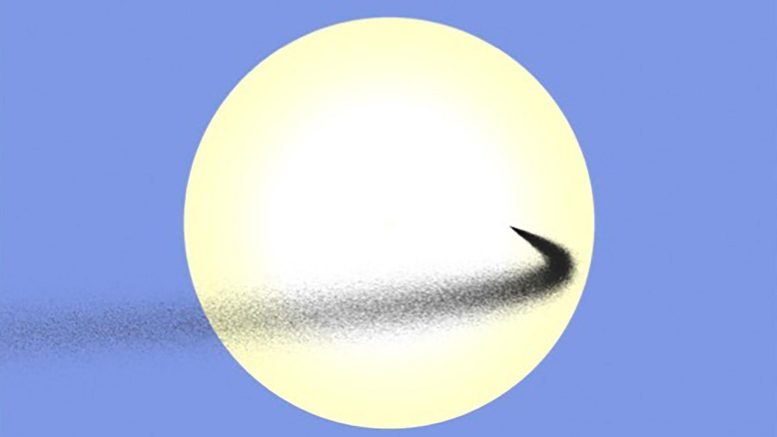
The team of astronomers applied a technique used to study planet formation around distant stars, their usual research focus. Planet formation is a messy process that kicks up lots of astronomical dust that can form rings around the host star. These rings intercept light from the central star and re-radiate it in a way that we can detect it on Earth. One way to discover stars that are forming new planets is to look for these dusty rings.
“That was the seed of the idea; if we took a small amount of material and put it on a special orbit between the Earth and the sun and broke it up, we could block out a lot of sunlight with a little amount of mass,” said Ben Bromley, professor of physics and astronomy and lead author of the study.
“It is amazing to contemplate how moon dust—which took over four billion years to generate—might help slow the rise in Earth’s temperature, a problem that took us less than 300 years to produce,” said Scott Kenyon, co-author of the study from the Center for Astrophysics | Harvard & Smithsonian.
The paper was published recently in the journal PLOS Climate.
Casting a Shadow
A shield’s overall effectiveness depends on its ability to sustain an orbit that casts a shadow on Earth. Sameer Khan, undergraduate student and the study’s co-author, led the initial exploration into which orbits could hold dust in position long enough to provide adequate shading. Khan’s work demonstrated the difficulty of keeping dust where you need it to be.
“Because we know the positions and masses of the major celestial bodies in our solar system, we can simply use the laws of gravity to track the position of a simulated sunshield over time for several different orbits,” said Khan.
Two scenarios were promising. In the first scenario, the authors positioned a space platform at the L1 Lagrange point, the closest point between Earth and the sun where the gravitational forces are balanced. Objects at Lagrange points tend to stay along a path between the two celestial bodies, which is why the James Webb Space Telescope (JWST) is located at L2, a Lagrange point on the opposite side of the Earth.
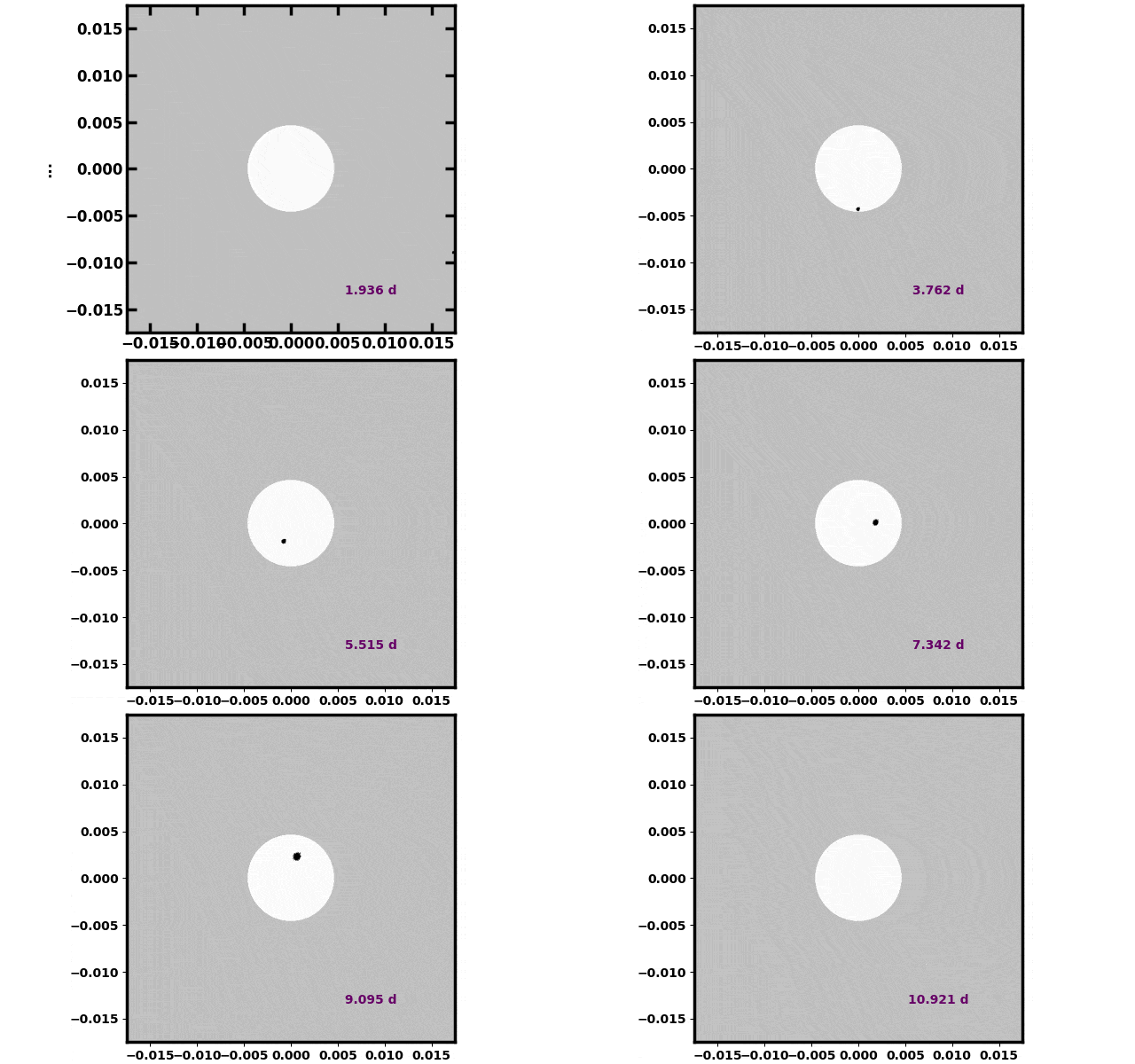
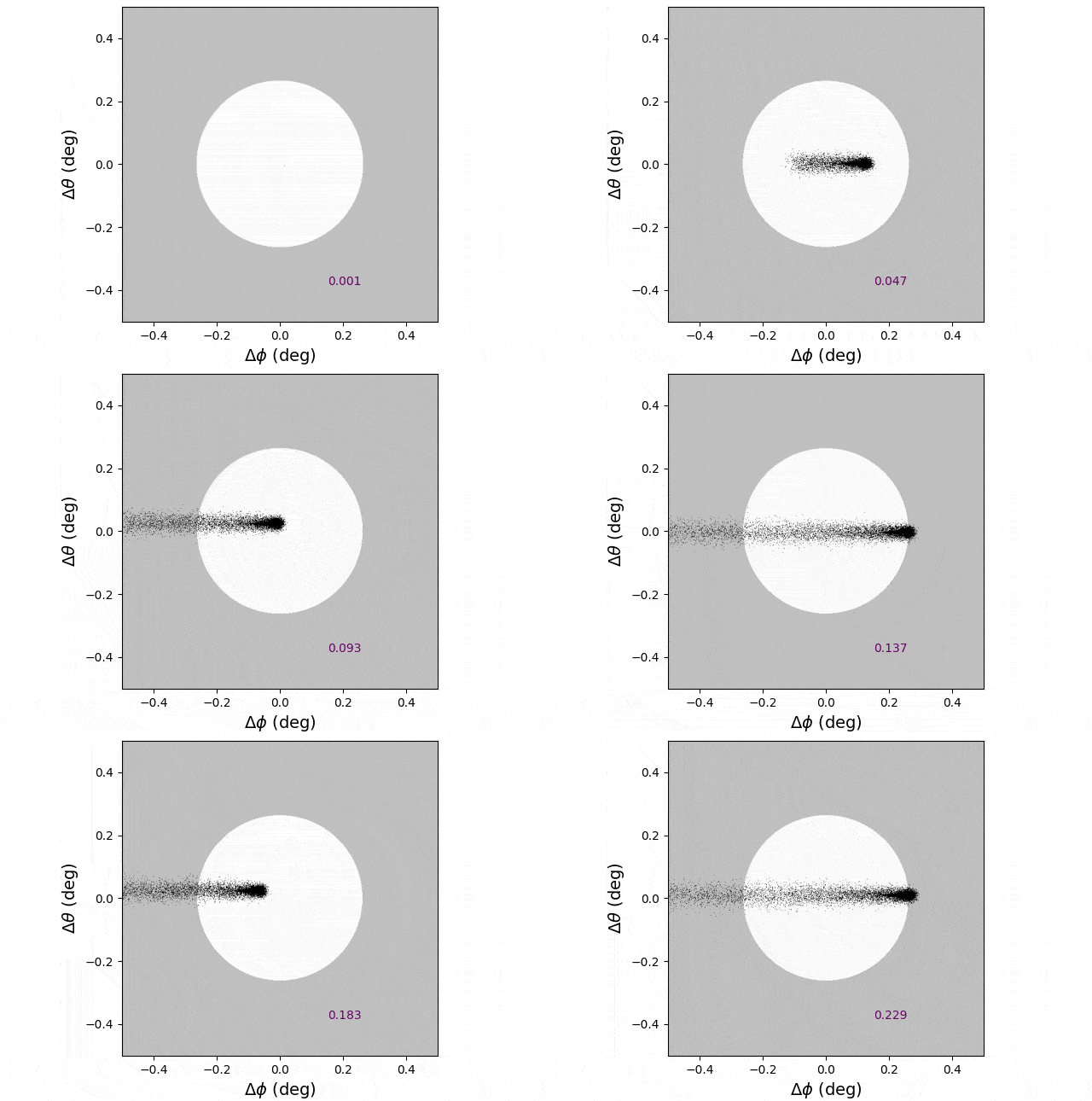
In computer simulations, the researchers shot test particles along the L1 orbit, including the position of Earth, the sun, the moon, and other solar system planets, and tracked where the particles scattered. The authors found that when launched precisely, the dust would follow a path between Earth and the sun, effectively creating shade, at least for a while. Unlike the 13,000-pound JWST, the dust was easily blown off course by the solar winds, radiation, and gravity within the solar system. Any L1 platform would need to create an endless supply of new dust batches to blast into orbit every few days after the initial spray dissipates.
“It was rather difficult to get the shield to stay at L1 long enough to cast a meaningful shadow. This shouldn’t come as a surprise, though, since L1 is an unstable equilibrium point. Even the slightest deviation in the sunshield’s orbit can cause it to rapidly drift out of place, so our simulations had to be extremely precise,” Khan said.
In the second scenario, the authors shot lunar dust from the surface of the moon towards the sun. They found that the inherent properties of lunar dust were just right to effectively work as a sun shield. The simulations tested how lunar dust scattered along various courses until they found excellent trajectories aimed toward L1 that served as an effective sun shield. These results are welcome news, because much less energy is needed to launch dust from the moon than from Earth. This is important because the amount of dust in a solar shield is large, comparable to the output of a big mining operation here on Earth. Furthermore, the discovery of the new sun-shielding trajectories means delivering the lunar dust to a separate platform at L1 may not be necessary.
Just a Moonshot?
The authors stress that this study only explores the potential impact of this strategy, rather than evaluate whether these scenarios are logistically feasible.
“We aren’t experts in climate change, or the rocket science needed to move mass from one place to the other. We’re just exploring different kinds of dust on a variety of orbits to see how effective this approach might be. We do not want to miss a game changer for such a critical problem,” said Bromley.
One of the biggest logistical challenges—replenishing dust streams every few days—also has an advantage. Eventually, the sun’s radiation disperses the dust particles throughout the solar system; the sun shield is temporary and shield particles do not fall onto Earth. The authors assure that their approach would not create a permanently cold, uninhabitable planet, as in the science fiction story, “Snowpiercer.”
“Our strategy could be an option in addressing climate change,” said Bromley, “if what we need is more time.”
Reference: “Dust as a solar shield” by Benjamin C. Bromley, Sameer H. Khan and Scott J. Kenyon, 8 February 2023, PLOS Climate.
DOI: 10.1371/journal.pclm.0000133
Never miss a breakthrough: Join the SciTechDaily newsletter.
Follow us on Google and Google News.
7 Comments
Such grand experiments are irresponsible because it would be impossible to undo the results if anything went wrong. While anthropogenic warming is a popular meme that gets a lot of publicity, there are many bright, well-educated scientists and engineers that disagree with the claim. Before anything like this is tried, there should be open, public debates on the evidence supporting the claim. So far, those advocating global warming caused by humans have shown a reluctance to discuss the subject publicly in an open forum. That should be a Red Flag!
“We’re just exploring different kinds of dust on a variety of orbits to see how effective this approach might be.”
If there is an upside to this research, it may be that they have learned what NOT to do.
Just because one CAN do something doesn’t mean that they should.
There’s an article that just complained about light pollution from Starlink and other satellites. A dust cloud would be the ultimate light pollution, blocking most stars from view for as long as it’s used. Brilliant. Just brilliant (or rather dim, just DIM!). Add to that the unknown of blocking too much sunlight (crops fail, population starves and burns ever more fossil fuels to stay warm all summer-that-is-winter long) and you have the ULTIMATE in BRILLIANT ideas…. What could possibly go wrong?
What’s next? Turn down the temperature of the sun by injecting space garbage to slow fusion (say push Mercury into the sun)? That ought to do it. Venus might seem livable by the time they’re done by comparison. What’s truly odd is the 8 BILLION PLUS humans living on the planet never gets mentioned by ANYONE. There’s your REAL cause of heating and yet no one wants to suggest we should have fewer children or sterilize murderers and/or other criminal types as an alternate punishment instead of long-term incarceration. No, that wouldn’t be “humane” yet suggesting we make all humans eat bugs or give up car/plane travel or go without electricity is FAR MORE HUMANE, right? And sorry, but the Pandemic for all the media blustering and loss of freedom and other rights didn’t even make a tiny DENT in the number. But someone made money from that; oh yes they did….
+1
Ironically, I’ve been doing this for years, only in reverse on the surface. In the 1950s, I discovered a buoyant inexpensive black mineral, and invented the only dispersant that can emulsify it. I found that if 500lb of the mineral is placed in the ocean at strategic locations, the surface currents disperse it across the Earth’s oceans in virtually undetectable levels. By floating, it absorbs energy, increasing surface temperatures, however it absorbs visible light too, causing a global dimming that has been detected. If you want to combat climate change, you’ll need the dispersant, which is secret. Please send 17 American cents with an unsealed self-addressed stamped envelope to to my lair, and I will send everyone the formula for the dispersant once the ransom collected reaches one million dollars.
Do these climate engineers not understand that fossil fuels will be required for all of the transportation required? The net result should be more CO2 into the atmosphere, not less. All of these ideas to “save the planet:” suffer from this misunderstanding.
How could you control the dust in space?moon dust and regolit has valuable stuff like oxygen and H3 how could you make them pure??