
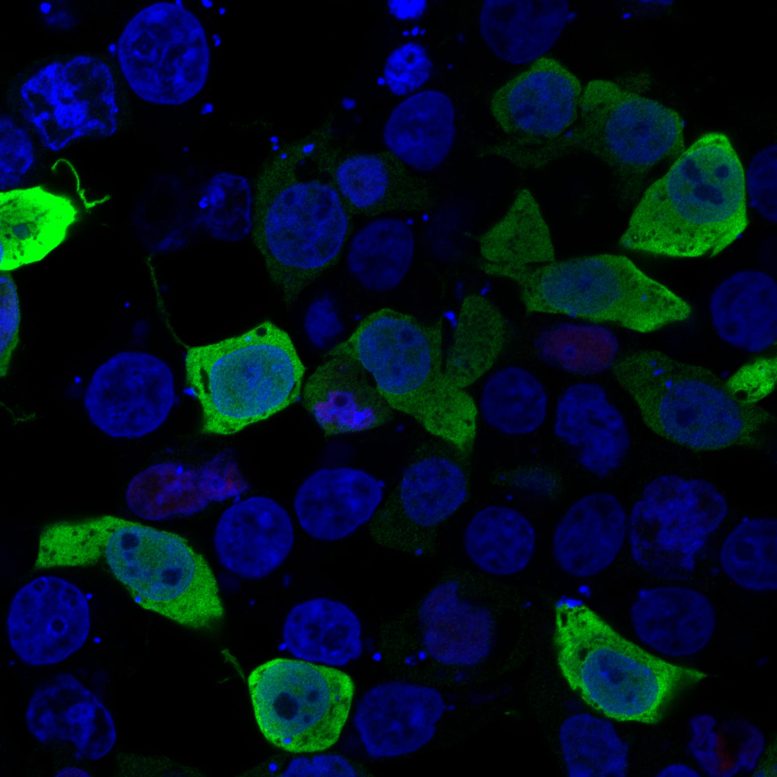
Researchers at Mount Sinai have created a computational method that enables the identification of previously unknown genetic causes for primary lymphedema, thoracic aortic aneurysm disease, and congenital deafness.
Researchers from the Icahn School of Medicine at Mount Sinai, along with their colleagues, have discovered new genetic causes for three rare conditions – primary lymphedema, thoracic aortic aneurysm disease, and congenital deafness – using a novel computational approach they developed to analyze extensive genetic datasets from rare disease cohorts.
The project was a collaborative effort that involved researchers from various parts of the world, including the University of Bristol in the UK, KU Leuven in Belgium, the University of Tokyo, the University of Maryland, Imperial College London, and others.
The newly acquired knowledge about the roles played by genes associated with these and other disorders may provide a foundation for developing potential treatments. The results have been published in the journal Nature Medicine.
Rare diseases affect approximately 1 in 20 people, but only a minority of patients receive a genetic diagnosis. Fewer than half of the 10,000 recorded rare diseases have a known genetic cause. Genome sequencing of large cohorts of rare disease patients provides a route toward discovering the genetic causes that remain unknown. However, large genetic datasets are challenging to work with, slowing down research significantly, say the investigators.
“While rare diseases are individually rare, collectively they are quite common. It is important for our understanding of human biology and for the development of diagnostics and therapeutics that the remaining causes are found,” said senior study author Ernest Turro, Ph.D., Associate Professor of Genetics and Genomics Sciences at Icahn Mount Sinai. “Many people with a rare disease struggle for many years to obtain a genetic diagnosis. By developing and applying statistical methods and computational approaches to find new causes of rare diseases, we hope to expand knowledge of the underlying causes of these diseases, hasten the time to diagnosis for patients, and pave the way for the development of treatments.”
Gene Associations with Rare Conditions
The investigators studied a collection of 269 rare disease classes using data from 77,539 participants in the 100,000 Genomes Project, one of the largest datasets of phenotyped and whole-genome-sequenced rare disease patients. The researchers identified 260 associations between genes and rare disease classes, including 19 associations previously absent from the literature. Through an international academic collaboration, the authors validated the three most plausible novel associations by identifying additional cases in other countries and through experimental and bioinformatic approaches.
“We hope that our computational framework will help accelerate the discovery of the remaining unknown etiologies of rare diseases across the board. For now, we expect that a genetic diagnosis will be attainable for certain families with previously unexplained primary lymphedema, thoracic aortic aneurysm disease, and deafness,” said Daniel Greene, Ph.D., a postdoctoral fellow at Icahn Mount Sinai and lead author of the study. “We also plan to apply our methods in novel ways and in other datasets, with the aim of continuing to unravel the genetic causes of rare diseases.”
Reference: “Genetic association analysis of 77,539 genomes reveals rare disease etiologies” by Daniel Greene, Genomics England Research Consortium, Daniela Pirri, Karen Frudd, Ege Sackey, Mohammed Al-Owain, Arnaud P. J. Giese, Khushnooda Ramzan, Sehar Riaz, Itaru Yamanaka, Nele Boeckx, Chantal Thys, Bruce D. Gelb, Paul Brennan, Verity Hartill, Julie Harvengt, Tomoki Kosho, Sahar Mansour, Mitsuo Masuno, Takako Ohata, Helen Stewart, Khalid Taibah, Claire L. S. Turner, Faiqa Imtiaz, Saima Riazuddin, Takayuki Morisaki, Pia Ostergaard, Bart L. Loeys, Hiroko Morisaki, Zubair M. Ahmed, Graeme M. Birdsey, Kathleen Freson, Andrew Mumford and Ernest Turro, 16 March 2023, Nature Medicine.
DOI: 10.1038/s41591-023-02211-z
Never miss a breakthrough: Join the SciTechDaily newsletter.
Follow us on Google and Google News.