
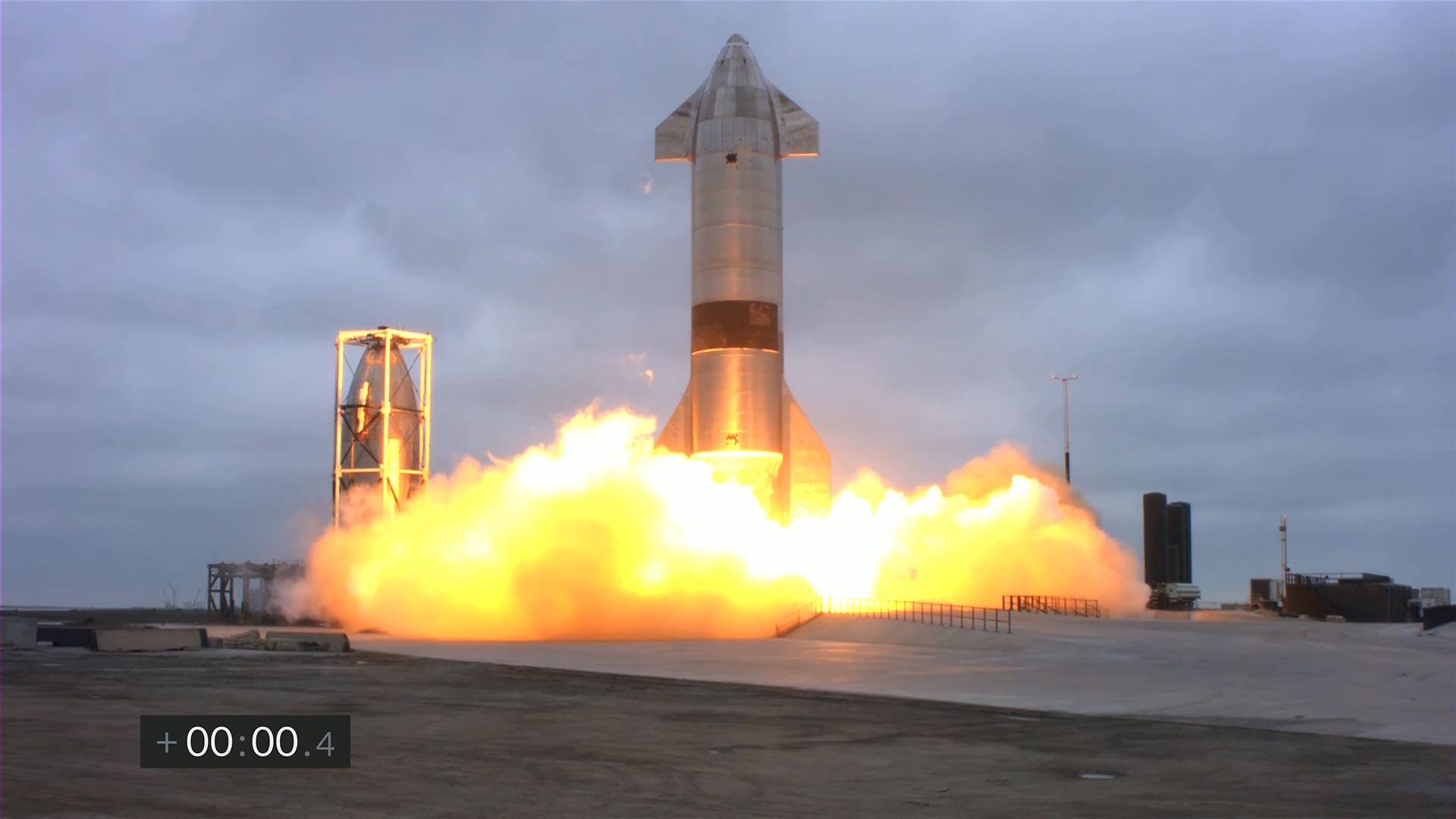
On the afternoon of May 5th, 2021, at 05:24 PM local time, SpaceX made its fifth attempt at a high-altitude test flight and soft landing with a Starship prototype. Given the outcomes of the previous test, this event had many people on the edge of their seats. In all four attempts, the prototypes managed to reach their maximum altitude and pull off the bellyflop maneuver, but then exploded during landing (or shortly thereafter).
Would the fifteenth iteration of the Starship prototype (SN15) succeed where the others had failed? As of 05:30 P.M. local time (06:30 P.M. EDT; 03:30 P.M. PDT), the answer to that question is, “WITH GUSTO!” On their fifth attempt, the SN15 not only managed to reach its target altitude of 10 km (6.2 mi) and pull off the belly-flop and controlled descent, it also stuck the landing and suffered no mishaps afterward.
In other words, COMPLETE SUCCESS!
Given how much of SpaceX’s future hinges on the success of the Starship and Super Heavy launch system, this is certainly good news. This goes beyond replacing their Falcon rocket family with Starships to transport everything from crews and cargo to Low Earth Orbit (LEO), it also includes SpaceX’s hopes for fulfilling its recently awarded contract with NASA to develop a reusable lunar lander.
The flight began at 05:24:10 P.M. CDT (06:24:10 P.M. EDT; 03:24:10 P.M. PDT) amid foggy conditions, similar to what the SN11 flight experienced a few weeks ago. As in all previous cases, the Starship reached its apogee, shut down its three Raptor engines (one by one), and then reoriented itself for its descent (the “belly-flop” maneuver). But this time around, the Starship experienced no problems as it reignited two of its Raptor engines and descended the last few meters.
Then, 6 minutes and 8 seconds after launch, the SN15 touched down on the landing pad and emerged unscathed. In the first two attempts, the SN8 and SN9 prototypes came in too hot or over-rotated and exploded upon landing. During the third, the SN10 suffered a slight malfunction with its landing legs that caused it to land too hard on one side, which caused a propellant leak that triggered a fire and an explosion.
Then there was the SN11 high-altitude flight that exploded while descending, raining debris all over the landing pad. This brought the total to four explosions in less than four months, something which Blue Origin and Dynetics were sure to mention when filing complaints with NASA. You see, in between all this testing, SpaceX was awarded a lucrative contract worth $2.9 billion to develop a Human Landing System (HLS) for NASA.
As part of the Artemis Program, SpaceX was one of three companies competing to secure the right to build the lander that will transport the Artemis III astronauts to the lunar surface in 2024 – the others being Blue Origin and Dynetics. For their proposal, SpaceX offered a modified version of the Starship that would carry a crew of six astronauts all the way from Earth to the Moon and allow for EVAs on the surface.
Shortly after NASA awarded the Option A contract to SpaceX, the two companies filed complaints with NASA, citing a lack of proper consultation. As Dynetics stated more than once in the 61-page complaint they filed to the Government Accountability Office (which was co-signed by Blue Origin), in the original solicitation, NASA indicated that it was committed to fostering an environment of competition.
This included selecting two candidates for Option A contract, something NASA went against in the end, citing budget constraints and scheduling issues. In addition, the legal team representing Dynetics also drew attention to the “high and unacceptable risk” that SpaceX’s approach entails. In case there was any ambiguity in what they were getting at, Dynetics spelled it out in their complaint:
“[T]he Source Selection Statement is devoid of any mention let alone consideration of the inherent risks associated with the fact that four SpaceX Starship prototypes have exploded in the last four months alone. Landing people on the Moon requires a great deal of space systems engineering, in order to identify and reduce the inherent and considerable risks of human spaceflight, and NASA has given SpaceX a pass on its demonstrable lack of such systems engineering.”
To summarize, both Blue Origin and Dynetics complained that NASA failed to let them know in advance that they would be going with just one contractor. Second, they felt that said contractor should have a better safety record that doesn’t include exploding prototypes. While legal matters are not generally known for being kind and gentle, the nature of Dynetics’s complaint does come off as a little jagged.
Perhaps Musk’s impotence joke, aimed at Bezos, had something to do with that. Regardless, NASA issued a statement through an official spokesperson last week, saying: “Pursuant to the GAO protests, NASA instructed SpaceX that progress on the HLS (human landing system) contract has been suspended until GAO resolves all outstanding litigation related to this procurement.”
This successful test of the SN15 is therefore a bit of a double whammy. On the one hand, it puts SpaceX closer to creating a totally reusable heavy launch system that can make regular trips to orbit, the Moon, Mars, and (someday) beyond. On the other hand, SpaceX’s participation in the Artemis Program is being challenged in part based on their record of success and failure with the Starship prototypes.
By demonstrating that their system can perform all the crucial maneuvers safely and effectively, SpaceX has undermined the competition’s challenge. There’s no way of knowing if this will influence NASA’s decision vis-a-vis their stop-work order they placed on the HLS. But for SpaceX and Musk, it’s got to feel like the icing on what was already a big win for the company.
All things considered, it must feel pretty good to be Elon Musk right now!
Adapted from an article originally published on Universe Today.
Never miss a breakthrough: Join the SciTechDaily newsletter.
Follow us on Google and Google News.