

Close Menu
    Facebook X (Twitter) Instagram
    SciTechDaily
    • Biology
    • Chemistry
    • Earth
    • Health
    • Physics
    • Science
    • Space
    • Technology
    Facebook X (Twitter) Pinterest YouTube RSS
    SciTechDaily
    Home»Health»Speak for Just 10 Seconds: Scientists Unveil New Way To Detect Diabetes
    Health

    Speak for Just 10 Seconds: Scientists Unveil New Way To Detect Diabetes

    By Klick Applied SciencesOctober 21, 2023No Comments4 Mins Read
    Facebook Twitter Pinterest Telegram LinkedIn WhatsApp Email Reddit
    Share
    Facebook Twitter LinkedIn Pinterest Telegram Email Reddit
    Diabetes Illustration
    A new study reveals that analyzing a few seconds of a person’s voice using AI can determine if they have Type 2 diabetes with up to 89% accuracy. This non-intrusive method has the potential to revolutionize diabetes screening by eliminating current detection barriers like time, cost, and travel.

    Scientists at Klick Labs Identify Voice Technology as a Potential Breakthrough in Detecting Type 2 Diabetes

    Identifying if someone has diabetes might soon be as simple as them uttering a few phrases into their smartphone, suggests a pioneering study from Klick Labs. This research merges voice recognition technology and artificial intelligence, marking a significant advancement in the field of diabetes identification.

    The new study, published in Mayo Clinic Proceedings: Digital Health, outlines how scientists used six to 10 seconds of people’s voice, along with basic health data, including age, sex, height, and weight, to create an AI model that can distinguish whether that individual has Type 2 diabetes. The model has 89 percent accuracy for women and 86 percent for men.

    For the study, Klick Labs researchers asked 267 people (diagnosed as either non- or Type 2 diabetic) to record a phrase into their smartphone six times daily for two weeks. From more than 18,000 recordings, scientists analyzed 14 acoustic features for differences between non-diabetic and Type 2 diabetic individuals.

    “Our research highlights significant vocal variations between individuals with and without Type 2 diabetes and could transform how the medical community screens for diabetes,” said Jaycee Kaufman, first author of the paper and research scientist at Klick Labs. “Current methods of detection can require a lot of time, travel, and cost. Voice technology has the potential to remove these barriers entirely.”
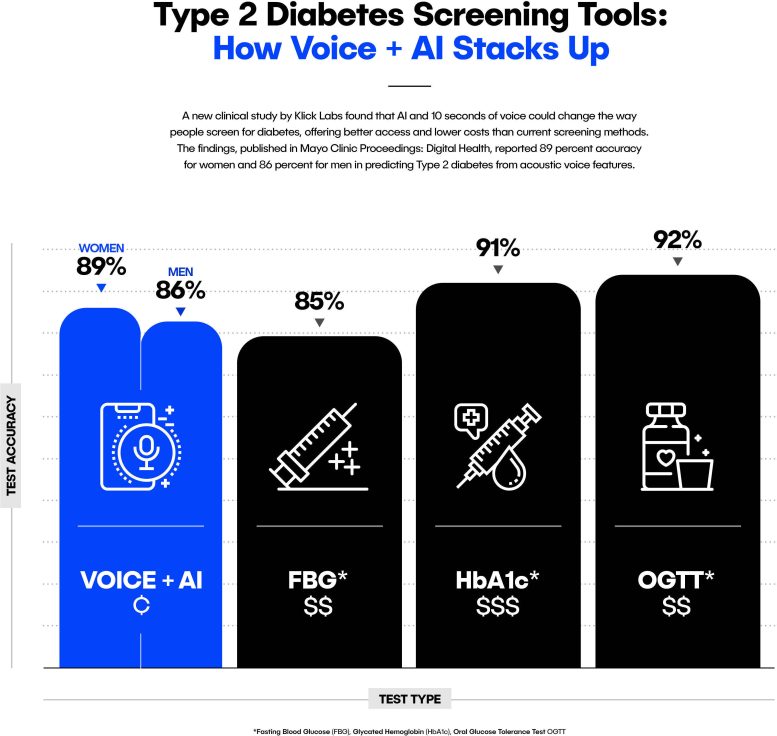
    Type 2 Diabetes Screening Tools
    A new clinical study by Klick Labs found that AI and 10 seconds of voice could change the way people screen for diabetes, offering better access and lower costs than current screening methods. The findings, published in Mayo Clinic Proceedings: Digital Health, reported 89 percent accuracy for women and 86 percent for men in predicting Type 2 diabetes from acoustic voice features. Credit: Klick Labs

    The team at Klick Labs looked at a number of vocal features, like changes in pitch and intensity that can’t be perceived by the human ear. Using signal processing, scientists were able to detect changes in the voice caused by Type 2 diabetes. Surprisingly, those vocal changes manifested in different ways for males and females, Kaufman said.

    A Potential New Screening Tool for Undiagnosed Diabetes

    Almost one in two, or 240 million adults living with diabetes worldwide are unaware they have the condition and nearly 90 percent of diabetic cases are Type 2 diabetes, according to the International Diabetes Federation. The most frequently used diagnostic tests for prediabetes and Type 2 diabetes include the glycated hemoglobin (A1C), along with the fasting blood glucose (FBG) test and the OGTT–all of which include a trip to a healthcare provider for patients.

    Yan Fossat, vice president of Klick Labs and principal investigator of this study, said Klick’s non-intrusive and accessible approach offers the potential to screen vast numbers of people and help identify the large percentage of undiagnosed people with Type 2 diabetes.

    “Our research underscores the tremendous potential of voice technology in identifying Type 2 diabetes and other health conditions,” Fossat said. “Voice technology could revolutionize healthcare practices as an accessible and affordable digital screening tool.”

    Fossat said next steps will be to replicate the study and expand their research using voice as a diagnostic in other areas such as prediabetes, women’s health, and hypertension.

    Reference: “Acoustic Analysis and Prediction of Type 2 Diabetes Mellitus Using Smartphone-Recorded Voice Segments” by Jaycee M. Kaufman, Anirudh Thommandram and Yan Fossat, 17 October 2023, Mayo Clinic Proceedings: Digital Health.
    DOI: 10.1016/j.mcpdig.2023.08.005

    Never miss a breakthrough: Join the SciTechDaily newsletter.
    Follow us on Google and Google News.

    Artificial Intelligence Diabetes Modeling Popular
    Share. Facebook Twitter Pinterest LinkedIn Email Reddit

    Related Articles

    Researchers Develop a New Ultrafast Insulin for Management of Blood Sugar in Diabetes

    Potential Treatment for Obesity Discovered: Drug Prevents Weight Gain and Reduces Blood Sugar

    Yale Researchers Find Keto Diet Can Be Healthful or Harmful, Depending on the Timing

    New Ketone Supplement Drink May Control Blood Sugar by Mimicking Ketogenic Diet

    Eating Watermelon May Help Counter Detrimental Effects of an Unhealthy Diet

    Artificial Sweeteners Doing More Harm Than Good – More Likely to Gain Weight

    Secret Behind Metformin’s Weight Loss and Anti-Aging Benefits Revealed

    New Method Uses Vitamin D to Treat Diabetes and Protect β Cells

    Researchers Reverse Diabetes in a Mouse Model Using Modified Stem Cells

    Leave A Reply Cancel Reply

    • Facebook
    • Twitter
    • Pinterest
    • YouTube

    Don't Miss a Discovery

    Subscribe for the Latest in Science & Tech!

    Trending News

    The Universe Is Expanding Too Fast and Scientists Can’t Explain Why

    “Like Liquid Metal”: Scientists Create Strange Shape-Shifting Material

    Early Warning Signals of Esophageal Cancer May Be Hiding in Plain Sight

    Common Blood Pressure Drug Shows Surprising Power Against Deadly Antibiotic-Resistant Superbug

    Scientists Uncover Dangerous Connection Between Serotonin and Heart Valve Disease

    Scientists Discover a “Protector” Protein That Could Help Reverse Hair Loss

    Bone-Strengthening Discovery Could Reverse Osteoporosis

    Scientists Uncover Hidden Trigger Behind Stem Cell Aging

    Follow SciTechDaily
    • Facebook
    • Twitter
    • YouTube
    • Pinterest
    • Newsletter
    • RSS
    SciTech News
    • Biology News
    • Chemistry News
    • Earth News
    • Health News
    • Physics News
    • Science News
    • Space News
    • Technology News
    Recent Posts
    • Scientists Overcome Major Quantum Bottleneck, Potentially Transforming Teleportation and Computing
    • Quantum Physics’ Strangest Problem May Hold the Key to Time Itself
    • Scientists Create “Liquid Gears” That Spin Without Touching
    • The Simple Habit That Could Help Prevent Cancer
    • Forgotten Medicinal Plant Shows Promise in Fighting Dangerous Superbugs
    Copyright © 1998 - 2026 SciTechDaily. All Rights Reserved.
    • Science News
    • About
    • Contact
    • Editorial Board
    • Privacy Policy
    • Terms of Use

    Type above and press Enter to search. Press Esc to cancel.