
Close Menu
    Facebook X (Twitter) Instagram
    SciTechDaily
    • Biology
    • Chemistry
    • Earth
    • Health
    • Physics
    • Science
    • Space
    • Technology
    Facebook X (Twitter) Pinterest YouTube RSS
    SciTechDaily
    Home»Space»Spiral Galaxy MCG+01-02-015 – The Loneliest of Galaxies
    Space

    Spiral Galaxy MCG+01-02-015 – The Loneliest of Galaxies

    By SciTechDailyNovember 9, 20155 Comments2 Mins Read
    Facebook Twitter Pinterest Telegram LinkedIn WhatsApp Email Reddit
    Share
    Facebook Twitter LinkedIn Pinterest Telegram Email Reddit
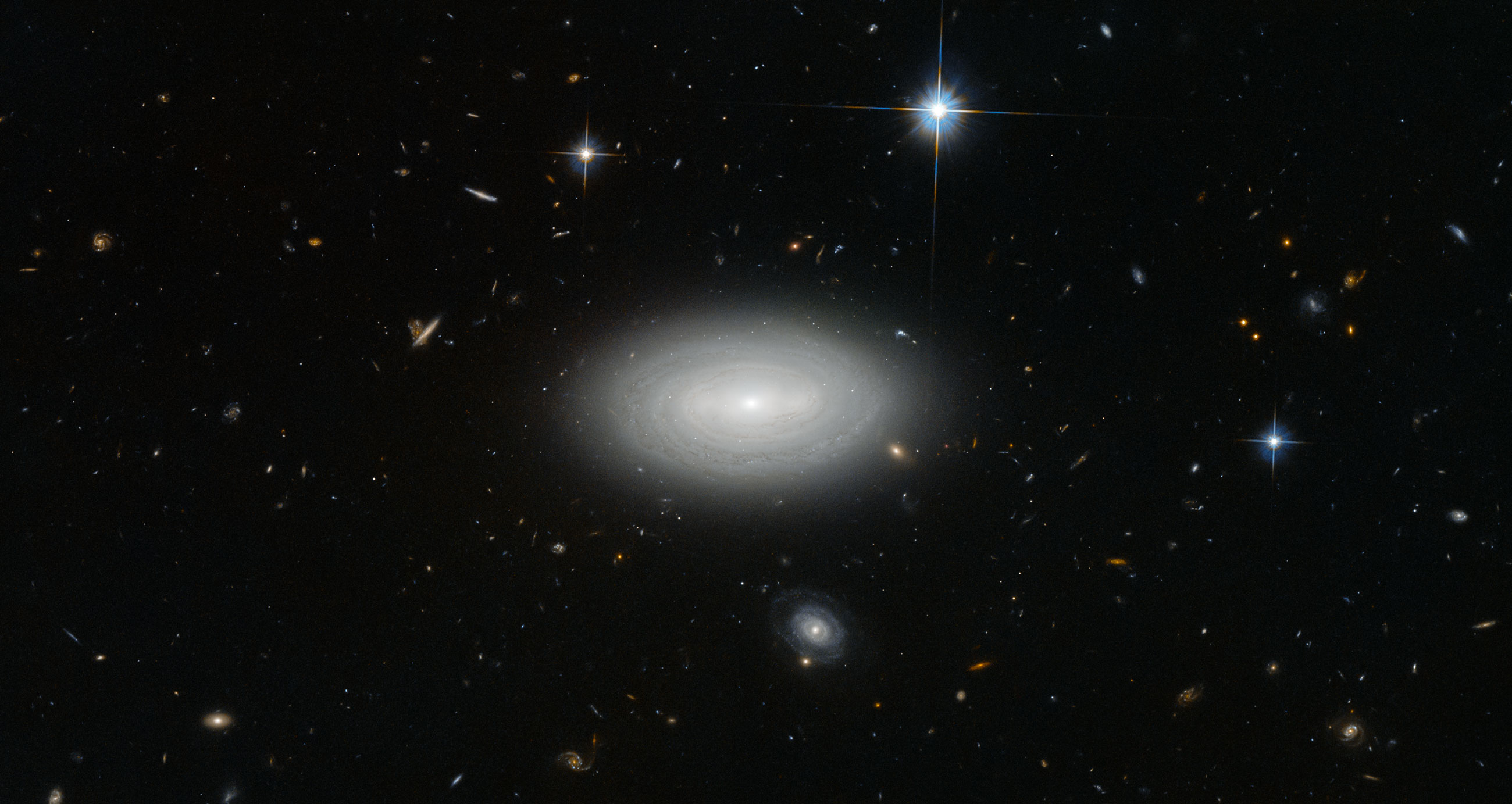
    Hubble Views Spiral Galaxy MCG+01-02-015
    Spiral galaxy MCG+01-02-015. Credit: ESA/Hubble & NASA and N. Gorin (STScI); Acknowledgement: Judy Schmidt

    This newly released Hubble image shows spiral galaxy MCG+01-02-015.

    Only three local stars appear in this image, quartered by right-angled diffraction spikes. Everything besides them is a galaxy; floating like a swarm of microbes in a drop of water, and brought into view here not by a microscope, but by the Advanced Camera for Surveys on the Hubble Space Telescope.

    In the foreground, the spiral arms of MCG+01-02-015 seem to wrap around one another, cocooning the galaxy. The scene suggests an abundance of galactic companionship for MCG+01-02-015, but this is a cruel trick of perspective. Instead, MCG+01-02-015’s unsentimental naming befits its position within the cosmos: It is a void galaxy, the loneliest of galaxies.

    The vast majority of galaxies are strung out along galaxy filaments — thread-like formations that make up the large-scale structure of the Universe — drawn together by the influence of gravity into sinuous threads weaving through space. Between these filaments stretch shallow but immense voids; the Universe’s wastelands, where, outside of the extremely rare presence of a galaxy, there is very little matter — about one atom per cubic meter. One such desolate stretch of space is what MCG+01-02-015 reluctantly calls home. The galaxy is so isolated that if our galaxy, the Milky Way, were to be situated in the same way, we would not have known of the existence of other galaxies until the 1960s.


    Never miss a breakthrough: Join the SciTechDaily newsletter.
    Follow us on Google and Google News.

    Astronomy Hubble Space Telescope NASA Popular
    Share. Facebook Twitter Pinterest LinkedIn Email Reddit

    Related Articles

    The Great Escape: NASA’s Hubble and MAVEN Help Solve Mystery of Mars’ Vanishing Water

    Webb and Hubble Unite: A Breathtaking 3D Journey Through the Pillars of Creation

    Stellar Sleuths: Citizen Scientists and AI Uncover Hidden Asteroids With Hubble

    Stellar Fireworks: Hubble Revisits a Strange Star’s 40-Year Nova Mystery

    Cosmic Geode: Hubble Captures the Birth of a Sun-like Star

    Hubble Celebrates 34th Anniversary With a Spectacular View of the Little Dumbbell Nebula

    Jupiter Unveiled: Hubble Captures the Giant’s Roaring Storms and Volcanic Moon Io

    Galaxies Collide, Stars Awaken: Hubble’s Stunning Revelation

    Hubble Spots Water Vapor in Small Exoplanet’s Atmosphere

    5 Comments

    1. Avo Vill on November 9, 2015 10:42 am

      How many light years out is it?

      Reply
      • Staff on November 9, 2015 4:15 pm

        Roughly 330 million light-years away. z=0.024 (redshift)

        Reply
    2. Face the fact on November 9, 2015 7:32 pm

      How far is the galaxy? Could it be the ghost of our universe before all matter settle down to form the galaxies we see today after the Bang?

      Reply
    3. Harold Miller on November 9, 2015 9:02 pm

      Given where it is, this galaxy will never be involved in a galactic collision like happens in most parts of the Universe.

      Reply
    4. Forever Alone on November 10, 2015 2:25 am

      The forever alone galaxy. Aww its cute.

      Reply
    Leave A Reply Cancel Reply

    • Facebook
    • Twitter
    • Pinterest
    • YouTube

    Don't Miss a Discovery

    Subscribe for the Latest in Science & Tech!

    Trending News

    Scientists Warn That This Common Pet Fish Can Wreck Entire Ecosystems

    Scientists Make Breakthrough in Turning Plastic Trash Into Clean Fuel Using Sunlight

    This Popular Supplement May Interfere With Cancer Treatment, Scientists Warn

    Scientists Finally Solved One of Water’s Biggest Mysteries

    Could This New Weight-Loss Pill Disrupt the Entire Market? Here’s What You Should Know About Orforglipron

    Earth’s Crust Is Tearing Open in Africa, and It Could Form a New Ocean

    Breakthrough Bowel Cancer Trial Leaves Patients Cancer-Free for Nearly 3 Years

    Natural Compound Shows Powerful Potential Against Rheumatoid Arthritis

    Follow SciTechDaily
    • Facebook
    • Twitter
    • YouTube
    • Pinterest
    • Newsletter
    • RSS
    SciTech News
    • Biology News
    • Chemistry News
    • Earth News
    • Health News
    • Physics News
    • Science News
    • Space News
    • Technology News
    Recent Posts
    • Kratom Use Explodes in the US, With Life-Changing Consequences
    • Scientists Uncover Fatal Weakness in “Zombie Cells” Linked to Cancer
    • World-First Study Reveals Human Hearts Can Regenerate After a Heart Attack
    • Why Your Dreams Feel So Real Sometimes and So Strange Other Times
    • Scientists Debunk 100-Year-Old Belief About Brain Cells, Rewriting Textbooks
    Copyright © 1998 - 2026 SciTechDaily. All Rights Reserved.
    • Science News
    • About
    • Contact
    • Editorial Board
    • Privacy Policy
    • Terms of Use

    Type above and press Enter to search. Press Esc to cancel.