
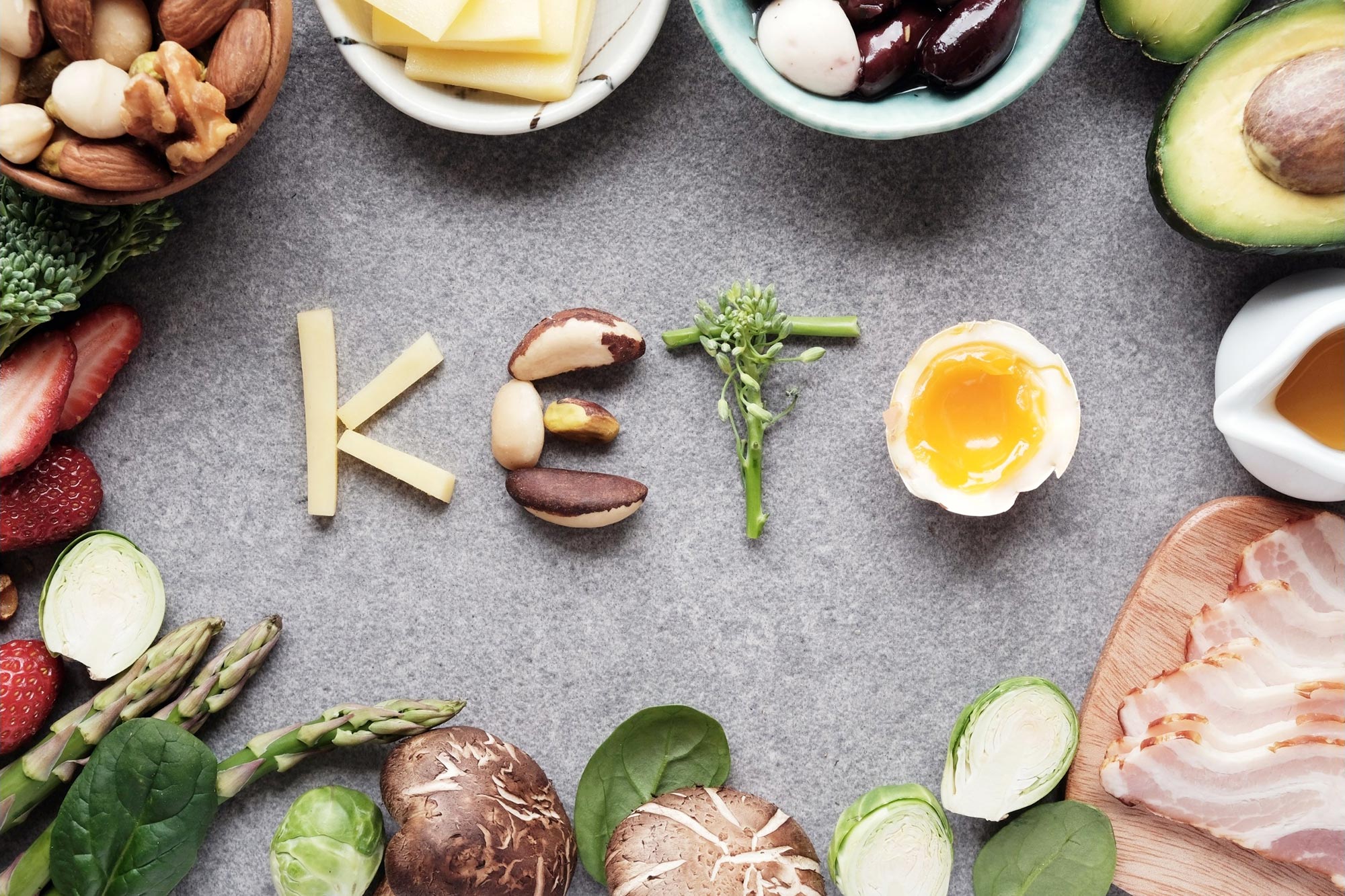
A Stanford-led team discovered a new ketosis pathway involving BHB-amino acids, shedding light on its effects like appetite suppression and offering new avenues for research and therapy.
The ketogenic diet, commonly known as “keto,” and intermittent fasting have gained widespread popularity, attracting everyone from casual fitness enthusiasts to endurance athletes. Both approaches aim to leverage ketosis — a metabolic state in which the body burns fat for energy instead of carbohydrates. Proponents highlight a range of benefits, including weight loss and enhanced brain health.
A collaborative research team is now tackling the unanswered questions surrounding ketosis.
Rather than adding to the growing, and often confusing, literature on the effects of ketogenic diets, the team — led by Jonathan Long, an associate professor of pathology at Stanford Medicine and institute scholar at Sarafan ChEM-H, and co-led by Yong Xu, professor of pediatrics at Baylor College of Medicine — are focused on the underlying chemistry of ketones themselves.
Their discovery — a previously unknown metabolic pathway and a family of “keto” metabolites — could rewrite our understanding of how ketosis influences metabolism, including in the brain.
“It turns out ketosis is not a monolithic state,” said Long. “There’s a lot more complexity and nuance in how the body processes ketone molecules, and this could explain some of its more intriguing effects.”
The research — published November 12, 2024 in Cell — was made possible by research grants from the Knight Initiative for Brain Resilience at Stanford’s Wu Tsai Neurosciences Institute, and the Stanford Wu Tsai Human Performance Alliance agility project, alongside other funding sources (see below for details).
A new chapter in metabolic science
When deprived of glucose — its primary energy source — the body shifts gears, breaking down fat to produce ketones as an alternative fuel. Central to this process is beta-hydroxybutyrate (BHB), the most abundant ketone body.
Until now, scientists believed ketosis followed two main biochemical pathways: ketogenesis, which produces BHB in the liver, and ketolysis (or ketone oxidation) which consumes BHB for energy throughout the body. These pathways were thought to tell the whole story.
Long and his team weren’t so sure. They decided to take another look at what ketones, particularly BHB, were doing in the body. Rather than diving into the already contentious literature on the ketogenic diet’s downstream effects — such as its potential benefits for cognition or metabolic health — they decided to take a step back.
“Let’s just step away from all the purported effects and focus on the chemistry of these metabolites,” Long explained. “Where do they come from? Where do they go?”
In a series of experiments on mice and humans, the researchers manipulated the availability of BHB to explore how it influences metabolism and energy balance. What they found was a previously unknown metabolic “shunt pathway,” where enzymes attach BHB to amino acids, producing a family of compounds they dubbed BHB-amino acids.
“If pathways are like the highway system, shunts are the off-ramps,” Long explained. “What we’re saying is, this is not the main pathway that’s directing traffic, but it gets you somewhere very interesting and unusual off the main road.”
Ketones in the brain
The discovery of this ketone shunt suggests that ketones have additional, previously unrecognized roles in the body’s metabolic landscape. The critical question remained: Are they inert byproducts, or do they actively influence the body’s response to ketosis?
To answer these questions, Long and his collaborators zeroed in on the brain — a focus driven by a well-documented phenomenon: when people are in ketosis, their hunger often decreases.
“When I’m fasting or losing weight, I don’t feel as hungry,” said Long. “That’s a well-established aspect of ketosis, tied to the neurobiology of feeding and energy balance.”
Further, the team noticed that the metabolites they were studying chemically resembled another molecule recently discovered by Long and colleagues that is known to regulate hunger and appetite: Lac-Phe. Lac-Phe is produced in the body after sprint exercise, and functions to reduce appetite. This chemical resemblance guided their investigation, raising the question: Could these ketone metabolites play an active role in appetite suppression and weight regulation under ketosis conditions?
The researchers found that BHB-amino acids suppress feeding behaviors and promote weight loss, revealing a potent link between ketosis and energy regulation. “This third, shunt pathway turns out to be important for the regulation of appetite and ketosis-associated weight loss,” said Long.
Implications for Therapy and Research
By uncovering this previously unknown pathway, the researchers have created an opportunity to revisit longstanding questions about the mechanisms behind the ketogenic diet’s purported benefits.
Until now, “our basic understanding [of ketosis] was actually incomplete,” said Long. “Now, we can revisit all these phenomena through a new lens.”
For instance, while it’s well established that the ketogenic diet is uniquely effective in controlling seizures in children with drug-resistant epilepsy, it remains unclear whether other benefits, such as improved cognition or metabolic health, are real — and, if so, how they work. The identification of these metabolites offers a new framework for investigating these effects systematically.
What’s Next?
In fact, Long and his collaborators are already revisiting epilepsy with support from the Wu Tsai Neurosciences Institute.
Collaborating with Dr. Juliette Knowles, a clinical expert in epilepsy at Stanford, Long is investigating whether the newly identified shunt pathway and its metabolites play a role in seizure control. If so, this could open the door to novel treatments that replicate the benefits of ketosis without requiring a strict dietary regimen.
As the team continues to probe the fundamental biology of ketosis, their work could pave the way for a deeper understanding of its therapeutic potential — not just for epilepsy but for a range of metabolic and neurological conditions.
“Now that we have a better understanding of these pathways, we can ask much better questions about how and why these products might work — and what risks or limitations they might carry,” said Long.
Reference: “A β-hydroxybutyrate shunt pathway generates anti-obesity ketone metabolites” by Maria Dolores Moya-Garzon, Mengjie Wang, Veronica L. Li, Xuchao Lyu, Wei Wei, Alan Sheng-Hwa Tung, Steffen H. Raun, Meng Zhao, Laetitia Coassolo, Hashim Islam, Barbara Oliveira, Yuqin Dai, Jan Spaas, Antonio Delgado-Gonzalez, Kenyi Donoso, Aurora Alvarez-Buylla, Francisco Franco-Montalban, Anudari Letian, Catherine P. Ward, Lichao Liu, Katrin J. Svensson, Emily L. Goldberg, Christopher D. Gardner, Jonathan P. Little, Steven M. Banik, Yong Xu and Jonathan Z. Long, 12 November 2024, Cell.
DOI: 10.1016/j.cell.2024.10.032
This work was supported by the NIH (DK124265 and DK130541 to J.Z.L.; DK125260, DK111916, and P30DK116074 to K.J.S.; GM113854 to V.L.L.; HD112123 to M.W.; K99AR081618 to M.Z.; T32HL161270 to C.P.W.; R00AG058801 to E.L.G.; and T32GM136631 to A.S.-H.T.), the Phil & Penny Knight Initiative for Brain Resilience at the Wu Tsai Neurosciences Institute (research grant to J.Z.L.), the Ono Pharma Foundation (research grant to J.Z.L.), the Stanford Wu Tsai Human Performance Alliance (research grant to J.Z.L. and fellowship to X.L. and M.D.M.-G.), the Stanford Bio-X (SIGF graduate student fellowship to V.L.L.), the Jacob Churg Foundation (research grants to J.Z.L. and K.J.S.), the American Heart Association (fellowship #905674 to M.Z.), the Stanford School of Medicine (Dean’s postdoctoral fellowship to L.C.), the Independent Research Fund Denmark (2030-00007A to S.H.R.), the Lundbeck Foundation (R380-2021-1451 to S.H.R.), the American Heart Association (24POST1196199 to W.W.), the CIHR (PJ9-166217 and PJT-169116 to J.P.L.), the Ovarian Cancer Research Alliance (MIG-2023-2-1015 to A.D.-G.), the Fundación Alfonso Martin Escudero (fellowship to M.D.M.-G. and A.D.-G.), and USDA/CRIS (51000-064-01S to Y.X.).
A provisional patent application has been filed by Stanford University on BHB-amino acids for the treatment of cardiometabolic disease.
Never miss a breakthrough: Join the SciTechDaily newsletter.
Follow us on Google and Google News.
13 Comments
“it remains unclear whether other benefits, such as improved cognition or metabolic health, are real…”
This article is well-written in leaving open the claims of improved mental performance, a factor somewhat hyped-up by questionable self-reported evidence in humans—amplified by those peddling the claims and leading to social positive feedback loops in the keto community—and rat-based actual clinical evidence typically involving improved maze-performance; a decided distanced metric from the higher-level business of getting better grades in college.
I would expect glucose/carb-challenged rats to do better at mazes, as that’s a sort of real-world emulation of finding carb-sources better in the wild, and for the human analog, finding the candy-bars in a grocery superstore. My own experience with keto has been, irrespective of brain-health (I may or may not have a healthier p h y s i c a l brain), has been inferior mental clarity and a sense of mild confusion. I’ve never tried it, but perhaps I would indeed do better at finding candy in a superstore, having found parking faster outside the store. The incentive would be real, but not show any improvement in resolving the Dark Matter vs Modified Gravity question in astrophysics.
There are plenty of ‘It ‘could’ be real.’ peddlers receiving massive paychecks. When it comes to status though, the ‘dietitians’ are the bank robbers and the astrophysicists are the art thieves.
I had the ears to hear Dr.Atkins in the 70’S! Our health problems began l-o-n-g ago ,with consumption, and grown! We need to rise above our LOWER nature, of lust, greed and hedonism!and learn to honor the gifts we have,with awe and reverence! Only then can we move forward and advance!!!!
So much talking and so little of it focused on the findings and implications. Couldn’t care less about the process, thoughts or previous theories.
Cover the science and save the chatting for dinner.
Huh?!
You should never again attempt to read, comprehend, and interpret anything beyond porn. You’re even an embarrassment to that crowd.
Irrespective of anecdotes or pop-culture, here’s plenty in the peer-reviewed medical literature on ketones and ketogenic diets. A search for “ketogenic” in PubMed gives >4500 results from the past 10 years. Based on my own personal research on the matter, the metabolic health impacts (also, anti-inflammatory and neuroprotective aspects) seem pretty well-supported. As for improved cognition? I’ve seen less evidence. Of course, there’s so much bio-individuality and so much that is unknown – at the end of the day, people should do what improves their own quality of life rather than try to extrapolate from (often contradictory) translational, small scale or even general population studies.
As for the types of intelligence that might improve at an energy deficit (not quite the same if your brain is being provided adequate energy via ketones and GNG; keyword search: ketone brain metabolism), there’s this interesting paper:
Ridder, Denise de, Floor Kroese, Marieke Adriaanse, and Catharine Evers. “Always Gamble on an Empty Stomach: Hunger Is Associated with Advantageous Decision Making.” PLoS ONE 9, no. 10 (October 23, 2014).
Please put it in a summary
This might be science without an agenda. Wow.
I was low carb for many years because at 22 was diagnosed as prediabetic and the good dr. Prescribed more protein less carbs, especially in the morning.
I am now 64 and have been living a keto lifestyle for ten years.
My blood sugar is stable. I remain at a healthy weight. If I get sick (cold) I recover very well. All tests come back with great numbers except cholesterol which is in my entire family even my vegan uncle. I’m not worried about it!
Brain fog goes away after the first month but you can help with a bit of Celtic salt in water and I do take a shot of MCT in the morning.
“Both approaches aim to leverage ketosis — a metabolic state in which the body burns fat for energy instead of carbohydrates.”
Ketosis is about the body creating ketones to power the brain when there is insufficient glucose in the diet to run the brain. It is true that people in ketosis burn quite a bit of fat, but people who eat a lot of fat can also burn quite a bit of fat – assuming they are insulin sensitive.
When deprived of glucose — its primary energy source — the body shifts gears
A question we might ask, is why is glucose our primary energy source ??? Having consumed a literally carnivore diet for over a year, I have deduced it doesn’t have to be our primary diet.
Diet is a choice. I have regular blood tests and Hba1c has lowered dramatically as have Triglyceride levels.
Other benefits are no floaters (the eye kind, not those others 😉 GR8 reduction in dental staining, improved skin condition, no dry knees etc. and actually many more.
This diet was used a 100 years ago to successfully treat epilepsy in children. All done away with due to the influence of John Harvey Kellog, and Ancel Keys. But look up Dr Unwin, Dr ken Berry and this diet is finding its way again.
“When deprived of glucose — its primary energy source — the body shifts gears”
This sentence is very biased and inaccurate.
In the wild the homo sappiens would rarely find carbohydrates. Why would carbohydrates be our PRIMARY source of energy?
“Because it prefers it to ketones. When you eat carbs, your body kicks out of ketosis to glucolysis.”
That’s also nonsense. According to this flawed idea, our prefered source of energy is alcohol, since alcohol stops glucolisis to perform alcoholisis…
Glucose is oxidised in priority because it’s damaging every organs if left in the blood stream…
It’s a defense mechanism, NOT a prefered fuel type of situation…