
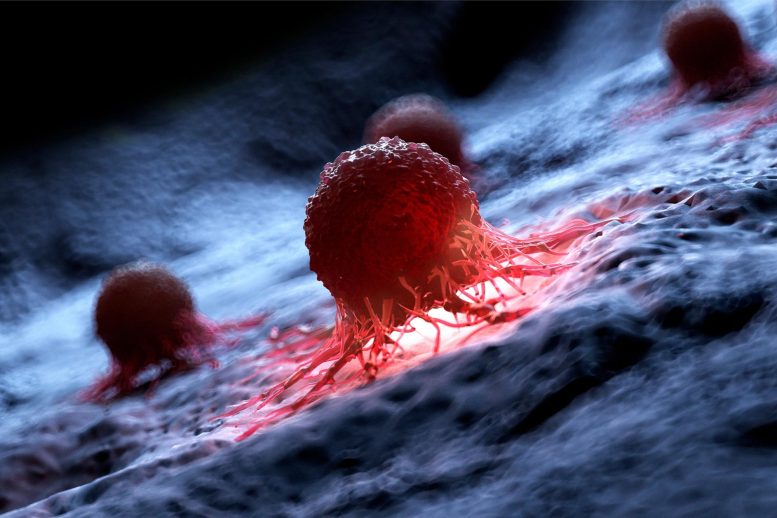
Researchers have identified trends and risk factors contributing to an increase in the prevalence of early-onset cancers worldwide.
Adults under the age of 50 have been diagnosed with cancer at an increasing rate in recent decades. According to a study by Brigham and Women’s Hospital researchers, the incidence of early-onset cancers, or those diagnosed before age 50, has sharply risen globally beginning around 1990. This sharp increase includes cancers of the breast, colon, esophagus, kidney, liver, and pancreas among others.
In order to understand why so many younger people are being diagnosed with cancer, scientists conducted comprehensive analyses of existing data in the literature and online, including information on early life exposures that may have contributed to this trend. These findings were recently published in the journal Nature Reviews Clinical Oncology.
Birth Cohort Effect and Rising Cancer Risk
“From our data, we observed something called the birth cohort effect. This effect shows that each successive group of people born at a later time (e.g., decade-later) have a higher risk of developing cancer later in life, likely due to risk factors they were exposed to at a young age,” explained Shuji Ogino, MD, Ph.D., a professor and physician-scientist in the Department of Pathology at the Brigham.
“We found that this risk is increasing with each generation. For instance, people born in 1960 experienced higher cancer risk before they turn 50 than people born in 1950 and we predict that this risk level will continue to climb in successive generations.”
To conduct this research, Ogino and lead author Tomotaka Ugai, MD, Ph.D., also of the Department of Pathology, and their colleagues first evaluated worldwide data describing the incidence of 14 distinct cancer types in individuals under the age of 50 from 2000 to 2012.
The researchers then looked for studies that examined trends of potential risk factors, such as early life exposures, in general populations. Finally, the team examined the literature describing clinical and biological tumor characteristics of early-onset cancers compared to later-onset cancers diagnosed after age 50.
Changes in Lifestyle, Diet, and the Microbiome
In an extensive review, the team found that the early life exposome, which encompasses one’s diet, lifestyle, weight, environmental exposures, and microbiome, has changed substantially in the last several decades. Thus, they hypothesized that factors like the westernized diet and lifestyle may be contributing to the early-onset cancer epidemic. The team acknowledged that this increased incidence of certain cancer types is, in part, due to early detection through cancer screening programs.
They couldn’t precisely measure what proportion of this growing prevalence could solely be attributed to screening and early detection. However, they noted that the increased incidence of many of the 14 cancer types is unlikely solely due to enhanced screening alone.
Possible risk factors for early-onset cancer included alcohol consumption, sleep deprivation, smoking, obesity, and eating highly processed foods. Surprisingly, researchers found that while adult sleep duration hasn’t drastically changed over the past several decades, children are getting far less sleep today than they were decades ago. Risk factors such as highly processed foods, sugary beverages, obesity, type 2 diabetes, sedentary lifestyle, and alcohol consumption have all significantly increased since the 1950s, which researchers speculate has accompanied an altered microbiome.
Impact of Diet and Microbiome on Digestive Cancers
“Among the 14 cancer types on the rise that we studied, eight were related to the digestive system. The food we eat feeds the microorganisms in our gut,” said Ugai. “Diet directly affects microbiome composition and eventually these changes can influence disease risk and outcomes.”
One limitation of this study is that researchers did not have an adequate amount of data from low- and middle-income countries to identify trends in cancer incidence over the decades. Going forward, Ogino and Ugai hope to continue this research by collecting more data and collaborating with international research institutes to better monitor global trends. They also explained the importance of conducting longitudinal cohort studies with parental consent to include young children who may be followed up for several decades.
“Without such studies, it’s difficult to identify what someone having cancer now did decades ago or when one was a child,” explained Ugai,
“Because of this challenge, we aim to run more longitudinal cohort studies in the future where we follow the same cohort of participants over the course of their lives, collecting health data, potentially from electronic health records, and biospecimen at set time points. This is not only more cost-effective considering the many cancer types needed to be studied, but I believe it will yield us more accurate insights into cancer risk for generations to come.”
Reference: “Is early-onset cancer an emerging global epidemic? Current evidence and future implications” by Tomotaka Ugai, Naoko Sasamoto, Hwa-Young Lee, Mariko Ando, Mingyang Song, Rulla M. Tamimi, Ichiro Kawachi, Peter T. Campbell, Edward L. Giovannucci, Elisabete Weiderpass, Timothy R. Rebbeck and Shuji Ogino, 6 September 2022, Nature Reviews Clinical Oncology.
DOI: 10.1038/s41571-022-00672-8
The study was funded by the National Institutes of Health, a Cancer Research UK Cancer Grand Challenge Award, the Prevent Cancer Foundation, the Japan Society for the Promotion of Science, and the Mishima Kaiun Memorial Foundation.
Never miss a breakthrough: Join the SciTechDaily newsletter.
Follow us on Google and Google News.