
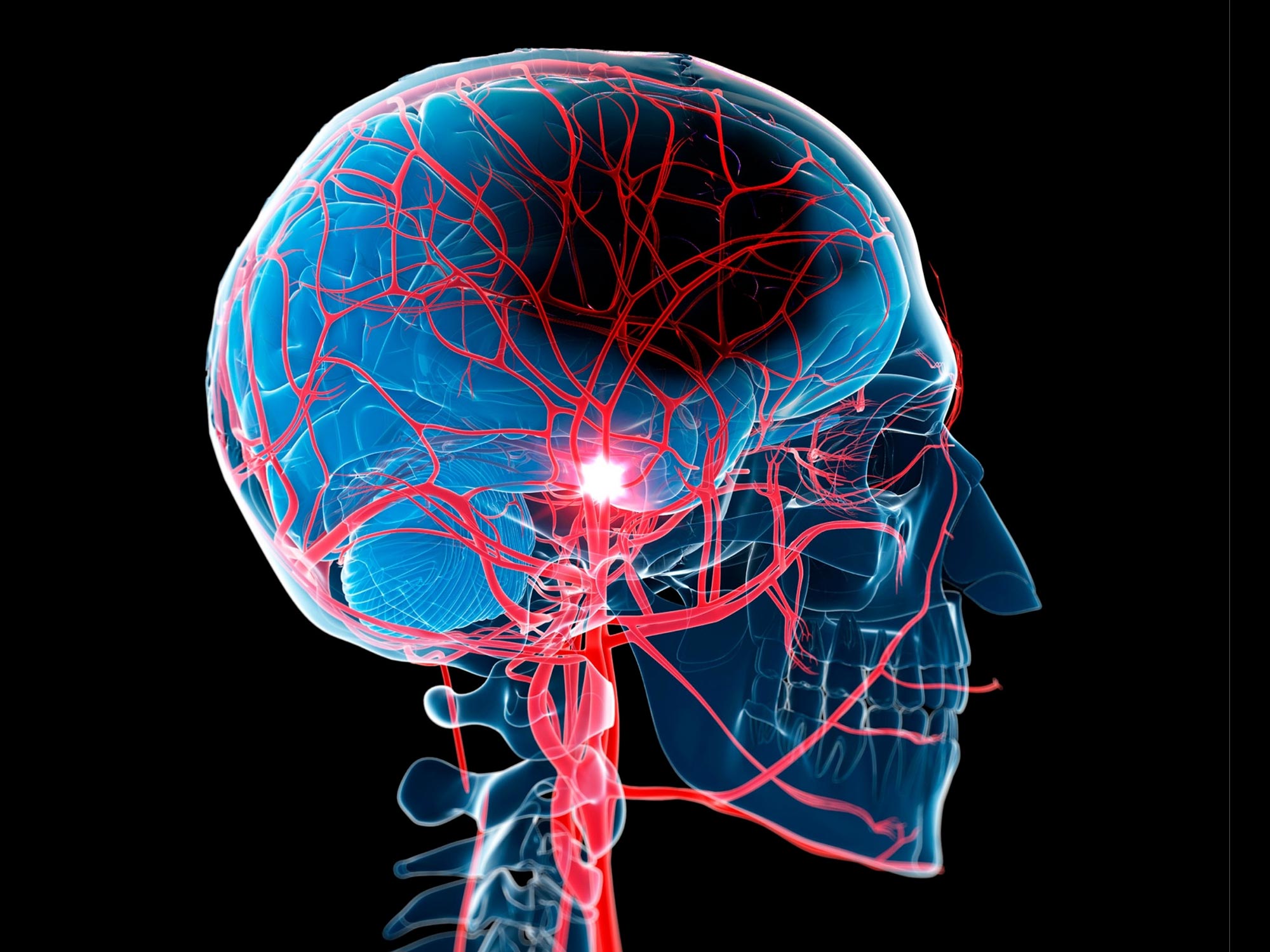
Frequent consumption of fizzy drinks, fruit juice, or excessive coffee increases stroke risk, while tea, particularly black and green varieties, lowers it.
New global research studies, co-led by the University of Galway in collaboration with McMaster University in Canada and an international network of stroke researchers, have found that regular consumption of fizzy drinks or fruit juice is linked to a higher risk of stroke.
The research also found that drinking more than four cups of coffee per day also increases the risk of stroke.
The findings come from two analyses of the INTERSTROKE research project that have been published – the effects of fizzy drinks, fruit juice/drink, and water were reported in the Journal of Stroke and the findings related to tea and coffee in the International Journal of Stroke.
Understanding Stroke
Stroke occurs when the blood supply to part of the brain is cut off and damages brain cells – it can either be ischemic stroke, which is usually due to a blood clot, or when there intracerebral hemorrhage, which is bleeding into the brain tissue.
INTERSTROKE is one of the largest international studies of risk factors for stroke, involving almost 27,000 people, in 27 countries, including almost 13,500 people who experienced their first stroke.
Those who took part in the study came from a broad range of geographical and ethnic backgrounds, with different cardiovascular risk profiles, including Ireland and the UK.
The study which focused on people’s consumption of fizzy drinks and fruit juice found:
- Fizzy drinks, including both sugar-sweetened and artificially sweetened such as diet or zero sugar, were linked with a 22% increased chance of stroke, and the risk increased sharply with two or more of these drinks a day
- The link between fizzy drinks and the chance of stroke was greatest in Eastern/Central Europe and Middle East, Africa, and South America
- The research noted that many products marketed as fruit juice are made from concentrates and contain added sugars and preservatives, which may offset the benefits usually linked with fresh fruit, and actually increase stroke risk
- Fruit juice drinks were linked with a 37% increase in the chance of stroke due to bleeding (intracranial hemorrhage). With two of these drinks a day, the risk triples
- Women show the greatest increased chance of stroke due to bleeding (intracranial hemorrhage) linked to fruit juice/drinks
- Drinking more than 7 cups of water a day was linked with reduced odds of stroke caused by a clot
Expert Insights on Fizzy Drinks and Juice
Lead researcher on both studies Professor Andrew Smyth, Professor of Clinical Epidemiology at the University of Galway and Consultant Physician at Galway University Hospitals, said: “Not all fruit drinks are created equal – freshly squeezed fruit juices are most likely to bring benefits, but fruit drinks made from concentrates, with lots of added sugars and preservatives, may be harmful. Our research also shows that the chance of stroke increases the more often someone consumes fizzy drinks.”
He continues, “As a doctor and as someone who has researched the risk of stroke, we would encourage people to avoid or minimize their consumption of fizzy and fruit drinks, and to consider switching to water instead.”
The study which focused on people’s consumption of coffee and tea found:
- Drinking more than four cups of coffee a day increased the chance of stroke by 37%, but not associated with stroke risk for lower intakes
- Drinking tea was linked with a reduced chance of stroke by 18-20%
- Drinking 3-4 cups per day of black tea – including Breakfast and Earl Grey teas, but not green tea or herbal teas – was linked with a 29% lower chance of stroke
- Drinking 3-4 cups per day of green tea was linked with a 27% lower chance of stroke
- Adding milk may reduce or block the beneficial effects of antioxidants that can be found in tea. The reduced chance of stroke from drinking tea was lost for those who added milk
- There were important geographical differences in the findings – tea was linked with a lower chance of stroke in China and South America but a higher chance of stroke in South Asia
Professor Martin O’Donnell, Executive Dean of College of Medicine, Nursing and Health Sciences at University of Galway and Consultant Stroke Physician at Galway University Hospitals, co-leads the INTERSTROKE study in partnership with Professor Salim Yusuf of the Population Health Research Institute at McMaster University, Canada.
Professor O’Donnell said: “A key goal of the INTERSTROKE study is to provide usable information on how to reduce one’s risk of stroke. While hypertension is the most important risk factor, our stroke risk can also be lowered through healthy lifestyle choices in diet and physical activity. The current study adds further information on what constitutes healthy choices on daily intake of beverages.”
References:
“Carbonated Beverage, Fruit Drink, and Water Consumption and Risk of Acute Stroke: the INTERSTROKE Case-Control Study” by Andrew Smyth, Graeme J. Hankey, Albertino Damasceno, Helle Klingenberg Iversen, Shahram Oveisgharan, Fawaz Alhussain, Peter Langhorne, Dennis Xavier, Patricio Lopez Jaramillo, Aytekin Oguz, Clodagh McDermott, Anna Czlonkowska, Fernando Lanas, Danuta Ryglewicz, Catriona Reddin, Xingyu Wang, Annika Rosengren, Salim Yusuf and Martin O’Donnell, 27 September 2024, Journal of Stroke.
DOI: 10.5853/jos.2024.01543
“Tea and coffee consumption and risk of acute stroke: The INTERSTROKE Study” by Andrew Smyth, Graeme J Hankey, Peter Langhorne, Catriona Reddin, Danuta Ryglewicz, Annika Rosengren, Dennis Xavier, Michelle Canavan, Shahram Oveisgharan, Xingyu Wang, Patricio Lopez Jaramillo, Albertino Damasceno, Anna Czlonkowska, Helle Klingenberg Iversen, Fernando Lanas, Salim Yusuf and Martin O’Donnell, 30 July 2024, International Journal of Stroke.
DOI: 10.1177/17474930241264685
A series of findings have been released as part of the wider INTERSTROKE project and can be accessed here.
Never miss a breakthrough: Join the SciTechDaily newsletter.
Follow us on Google and Google News.
14 Comments
What is the suspected mechanism for these beverages to cause increased risk of stroke?
It’s interesting that this study is released shortly after a study showing increased risk of fake sweeteners for these same things. Many people use these in coffee as well.
My thoughts exactly Hans .
While the authors may speculate on the contribution of beverage carbohydrates (e.g. “sugar”) to the risk of stroke, one context that these beverages have in common is that we consume coffee, fizzy drinks, and black tea in larger amounts when we feel “tired”. These products are successfully marketed world-wide as “pick-me-up” solutions to workplace fatigue. Consumers may feel better, but caffeine and calories does not prevent chronic stress, sleep deprivation and untreated sleep disorders from eroding their health. The pathophysiology is complicated, but the outcome is unequivocal.
I am a medical anthropologist researcher and author. This study is poorly done, despite the long list of contributors. If you read the study, which is here (https://www.j-stroke.org/upload/pdf/jos-2024-01543.pdf) you will see that they determined variables like hypertension and diabetes by asking the participants if they have these problems, with no medical records or tests done to confirm. “Self-reported items included medical history, physical activity, diet (assessed using a healthy eating index, with a higher score indicating better diet quality), smoking, and psy- chological factors. Hypertension was defined as a self-reported history of hypertension or blood pressure ≥140/90 mm Hg (including adjusted admission blood pressure, as previously described). Diabetes mellitus was defined as self-reported history of diabetes or HbA1c ≥6.5%.” This means that if nobody had a diagnosis of hypertension or diabetes then they will report that they don’t have that, even if they really do.
Drinks that are “fizzy” included soft drinks, tonic water, and more, without knowing the quantity consumed, and equating these beverages, which is not accurate since they have different additives. “Carbonated beverages were defined as cola, non-cola beverages (sweetened and unsweetened), tonic water, or instant iced tea.” Lots of other problems, too, which helps explain the mixed results found in different cultures. ”
One big problem is that they ignored sleep position, which is known to affect stroke risk. Sleeping too flat increases brain pressure, and can cause a stroke. In fact, when people have a stroke they are advised to elevate the head of the bed to reduce brain pressure. Actually, raising the head of the bed, as you do with a wedge for GERD, will prevent a stroke. Since this study was done internationally, there are many different sleep position differences that need to be included in a stroke study, since cultures have different ways of sleeping and different sleep durations.
In fact, I performed research into sleep position and found that elevating the head of the bed eliminates migraines, too. It also is known to prevent and treat sleep apnea and glaucoma, both associated with increased brain pressure. It also helps improve brain circulation to elevate the head of the bed 10-30 degrees, possibly preventing and treating dementia. It certainly makes your brain sharper in the morning. I suggest you try this and see how it makes you feel. The results are immediate. People report being able to breathe easier in the morning, with less stuffiness, and they awaken from sleep easier and are more mentally alert. See my article, Heads Up! The Way You are Sleeping can be Killing You! https://www.academia.edu/1483361/Heads_Up_The_Way_You_Are_Sleeping_May_Be_Killing_You_
Yeah, self-reports turn out to be the bane of many a research that seem legit at the first glance
Thank you for your analysis. If the pre-publication peer review system was working properly, there wouldn’t be a need for it.
I just read that “THAT COFFEE LOWERS THE RISK OF CANCER “, now it’s has risks ????????
Scientists will find risk in everything if they’re funded to look hard enough.
Basically, ANYTHING you consume will cause problems in some people.
This study is hokey!
We need AI’s to look over ALL research that scientists do and keep them on the straight and narrow.
Studies have already shown that approximately half of all medical research cannot be replicated. If the AI ‘bot you recommend is trained on fallacious studies, it won’t be much help.
Check this article out:
———-
AI begins its ominous split away from human thinking
By Loz Blain
September 29, 2024
AIs have a big problem with truth and correctness – and human thinking appears to be a big part of that problem. A new generation of AI is now starting to take a much more experimental approach that could catapult machine learning way past humans.
…
https://newatlas.com/ai-humanoids/ai-rl-human-thinking/
I sincerely believe that everything we eat maybe good for us but also with their accompanied bad effects, why don’t we then just eat everything anyways?
Every thing made in America, Canada and UK is cancer…. they have no culture, their cusine is factory food from Costco and Walmart.