
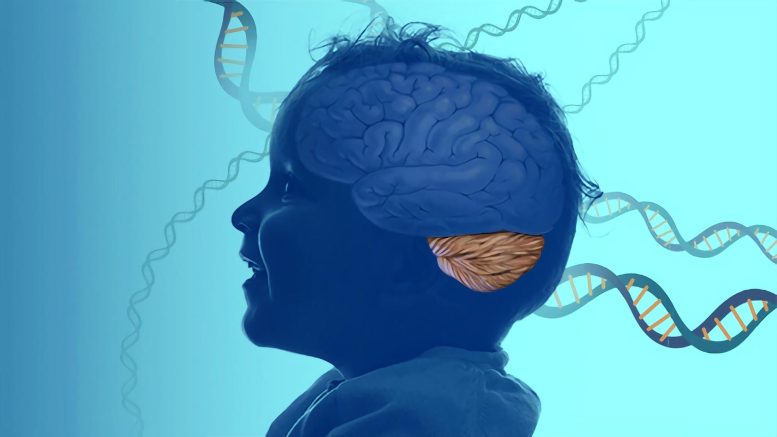
The rare new disease could provide insights into how the cell’s recycling system contributes to a healthy brain.
Three children with the condition, two siblings and an unrelated child, were identified by scientists from NIH’s National Human Genome Research Institute (NHGRI) and Undiagnosed Diseases Program (UDP). The three children all had issues with motor coordination and speech, and one child had abnormalities in the cerebellum, the part of the brain involved in complex movement among other functions. Additionally, the children all had mutations in both copies of the ATG4D gene.
ATG4D aids in the cellular housekeeping process called autophagy, which cells use to break down and recycle damaged proteins and other defective pieces of the cell to stay healthy. Autophagy is a fundamental process used by cells throughout the body, but neurons are particularly dependent on autophagy for survival. However, little is known about how ATG4D contributes to healthy neurons.
Lagotto Romagnolo Dogs and ATG4D Research
The first inclination of ATG4D’s effects on brain health came from a 2015 study in which researchers identified a genetic neurological disease among Lagotto Romagnolo dogs, an Italian breed known for their fluffy coats and truffle-hunting abilities. The affected dogs had abnormal behavior, atrophy of the cerebellum, issues with motor coordination and eye movement, and ATG4D mutations.
While this 2015 study invigorated research interest in ATG4D’s role in the brain, scientists had yet to connect ATG4D to any neurological disease in humans.
“Among genetic diseases, we’ve solved many of the lower-hanging fruits,” said May Christine Malicdan, M.D., Ph.D., NHGRI staff scientist and senior author of the study. “Now, we’re reaching for the higher fruits — genes like ATG4D that are more difficult to analyze — and we have the genomic and cellular tools to do so.”
Computational analyses predicted that the three children’s ATG4D mutations would produce dysfunctional proteins. However, three other genes in the human genome serve very similar roles to ATG4D, and in some cells, these other genes may compensate for a loss of ATG4D.
While all cells in the body share the same genome, some genes are more important for certain cells. When the researchers studied the children’s ATG4D mutations in skin cells, the variants did not affect the cells’ recycling process, but this may not be true in the brain.
“The brain is so complex, and neurons have very specialized functions. To fit those functions, different neurons use different genes, so changes in redundant genes can have major impacts in the brain,” said Malicdan.
Experimental Insights into ATG4D Functionality
To simulate cells that rely more heavily on ATG4D, the researchers deleted the similar genes in cells grown in the laboratory and then inserted the children’s ATG4D mutations. The researchers determined the cells with the children’s ATG4D mutations could not carry out the necessary steps for autophagy, indicating that the children’s symptoms are likely caused by insufficient cellular recycling.
Still, much about ATG4D remains unknown. “We have only a bird’s eye view of many important cellular processes like autophagy,” said Malicdan. A rare disease that involves changes in one gene can help tease apart how that gene acts in a broadly important cellular process.
Other components of autophagy are involved in common neurological disorders, such as Alzheimer’s disease. Knowledge of this rare neurological disorder could lead to new avenues of research about ATG4D’s involvement in more common conditions.
“That’s the million-dollar question in rare disease research,” said Malicdan. “Rare diseases can help us understand biological pathways, so we can better understand how those pathways contribute to other rare and common conditions.”
NIH researchers and clinicians continue to work with the children in this study, and the researchers are aiming to identify more patients. Treatments are many steps away, but by learning more about ATG4D and autophagy, researchers may be able to develop new treatments for this condition and others involving autophagy pathways.
Reference: “Bi-allelic ATG4D variants are associated with a neurodevelopmental disorder characterized by speech and motor impairment” by Marie Morimoto, Vikas Bhambhani, Nour Gazzaz, Mariska Davids, Paalini Sathiyaseelan, Ellen F. Macnamara, Jennifer Lange, Anna Lehman, Patricia M. Zerfas, Jennifer L. Murphy, Maria T. Acosta, Camille Wang, Emily Alderman, Undiagnosed Diseases Network, Sara Reichert, Audrey Thurm, David R. Adams, Wendy J. Introne, Sharon M. Gorski, Cornelius F. Boerkoel, William A. Gahl, Cynthia J. Tifft and May Christine V. Malicdan, 10 February 2023, npj Genomic Medicine.
DOI: 10.1038/s41525-022-00343-8
Funding: NIH/National Human Genome Research Institute
Never miss a breakthrough: Join the SciTechDaily newsletter.
Follow us on Google and Google News.