
Close Menu
    Facebook X (Twitter) Instagram
    SciTechDaily
    • Biology
    • Chemistry
    • Earth
    • Health
    • Physics
    • Science
    • Space
    • Technology
    Facebook X (Twitter) Pinterest YouTube RSS
    SciTechDaily
    Home»Space»Still out There: NASA Detects Carrier Signal From Voyager 2 Amid Communication Blackout
    Space

    Still out There: NASA Detects Carrier Signal From Voyager 2 Amid Communication Blackout

    By NASAAugust 1, 2023No Comments2 Mins Read
    Facebook Twitter Pinterest Telegram LinkedIn WhatsApp Email Reddit
    Share
    Facebook Twitter LinkedIn Pinterest Telegram Email Reddit
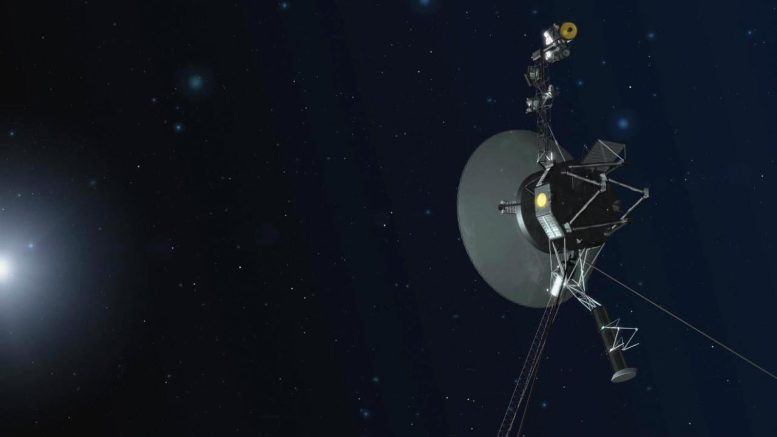
    NASA's Twin Voyager Spacecraft
    Despite communication disruption with Voyager 2, NASA’s DSN has received a carrier signal from the spacecraft, confirming its operational status and trajectory. An early attempt to restore full communication will be made before the automatic antenna readjustment scheduled for October. Credit: NASA/JPL-Caltech

    Update: NASA’s facility in Australia successfully reoriented Voyager 2, receiving science and telemetry data confirming the spacecraft’s normal operation and expected trajectory.

    Following our previous report on NASA’s Voyager 2 spacecraft, which lost its ability to transmit data or receive commands due to a minor misalignment of its antenna, there’s been a significant development. The NASA Deep Space Network (DSN), utilizing multiple antennas, has picked up a carrier signal from the wayward spacecraft.

    A carrier signal serves as the conduit through which the spacecraft sends data back to Earth. Even though the detected signal is too faint to extract any meaningful data, its detection confirms that Voyager 2 is still functioning. Moreover, the spacecraft remains on its expected trajectory.
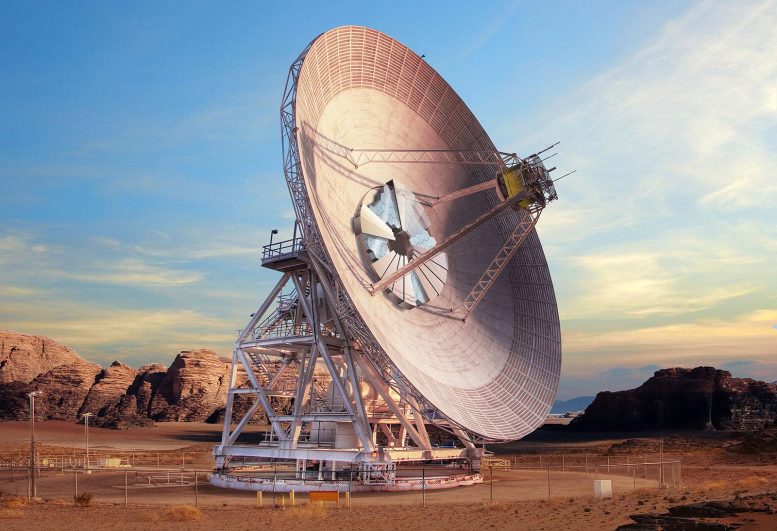
    Deep Space Station 23 Dish
    This artist’s concept shows what Deep Space Station-23, a new antenna dish at the Deep Space Network’s complex in Goldstone, California. Credit: NASA/JPL-Caltech

    While the spacecraft’s antenna is scheduled to automatically readjust towards Earth in mid-October, the team isn’t leaving any stone unturned. They plan to make an earlier attempt to command Voyager 2, even while its antenna is still directed away from Earth. This will involve using a DSN antenna to amplify (“shout”) the command to the spacecraft to reorient its antenna.

    This interim attempt may not yield the desired outcome. If that proves to be the case, the team will revert to the original plan, awaiting the spacecraft’s automatic reset of its orientation in October.

    Never miss a breakthrough: Join the SciTechDaily newsletter.
    Follow us on Google and Google News.

    NASA Voyager
    Share. Facebook Twitter Pinterest LinkedIn Email Reddit

    Related Articles

    NASA Powers Down Voyager 1 Instrument As It Fights To Survive Deep Space

    Voyager 1 Presents the “Sounds” of Interstellar Space

    NASA’s Voyager 1 Explores the Outer Limits of Our Heliosphere

    Fly Along With the Voyager Spacecraft As They Head Towards Interstellar Space

    Voyager Spacecraft Poised to Make New Discoveries

    Voyager 1 Reports a Rapid Increase in High-Energy Cosmic Ray Particles

    NASA’s Voyager 1 at the Final Frontier

    Voyager May Become the First Human-Made Object to Enter Interstellar Space

    NASA’s Voyager 1 in “Cosmic Purgatory”

    Leave A Reply Cancel Reply

    • Facebook
    • Twitter
    • Pinterest
    • YouTube

    Don't Miss a Discovery

    Subscribe for the Latest in Science & Tech!

    Trending News

    Long COVID Brain Scans Reveal Damage to Dopamine Neurons

    Scientists Warn a Silent Oxygen Crisis Is Spreading Through Earth’s Waters

    James Webb Telescope Discovers Hidden Giant Planet in Famous Star System

    Scientists Build the First 3D Cloak That Makes Objects Invisible To Heat

    Common Food Additive Linked To Gut Inflammation

    Black Hole Collisions May Follow a Surprisingly Simple Rule

    The Eye Has a Hidden Cleanup System and Scientists Just Discovered It

    The Truth About Vikings Is More Complicated Than Museums Admit

    Follow SciTechDaily
    • Facebook
    • Twitter
    • YouTube
    • Pinterest
    • Newsletter
    • RSS
    SciTech News
    • Biology News
    • Chemistry News
    • Earth News
    • Health News
    • Physics News
    • Science News
    • Space News
    • Technology News
    Recent Posts
    • NASA Astronaut Comes Home After 3,856 Orbits of Earth
    • A Rare and Deadly Cancer May Have an Unexpected New Vulnerability
    • Sleep Disorders Don’t Just Exhaust You. New Research Shows They Change Your Brain
    • THC-CBD Treatment Dramatically Reduces Agitation in Dementia Trial
    • Rare 8,000-Year-Old Rock Shelter Captures a Turning Point in Human History
    Copyright © 1998 - 2026 SciTechDaily. All Rights Reserved.
    • Science News
    • About
    • Contact
    • Editorial Board
    • Privacy Policy
    • Terms of Use

    Type above and press Enter to search. Press Esc to cancel.