
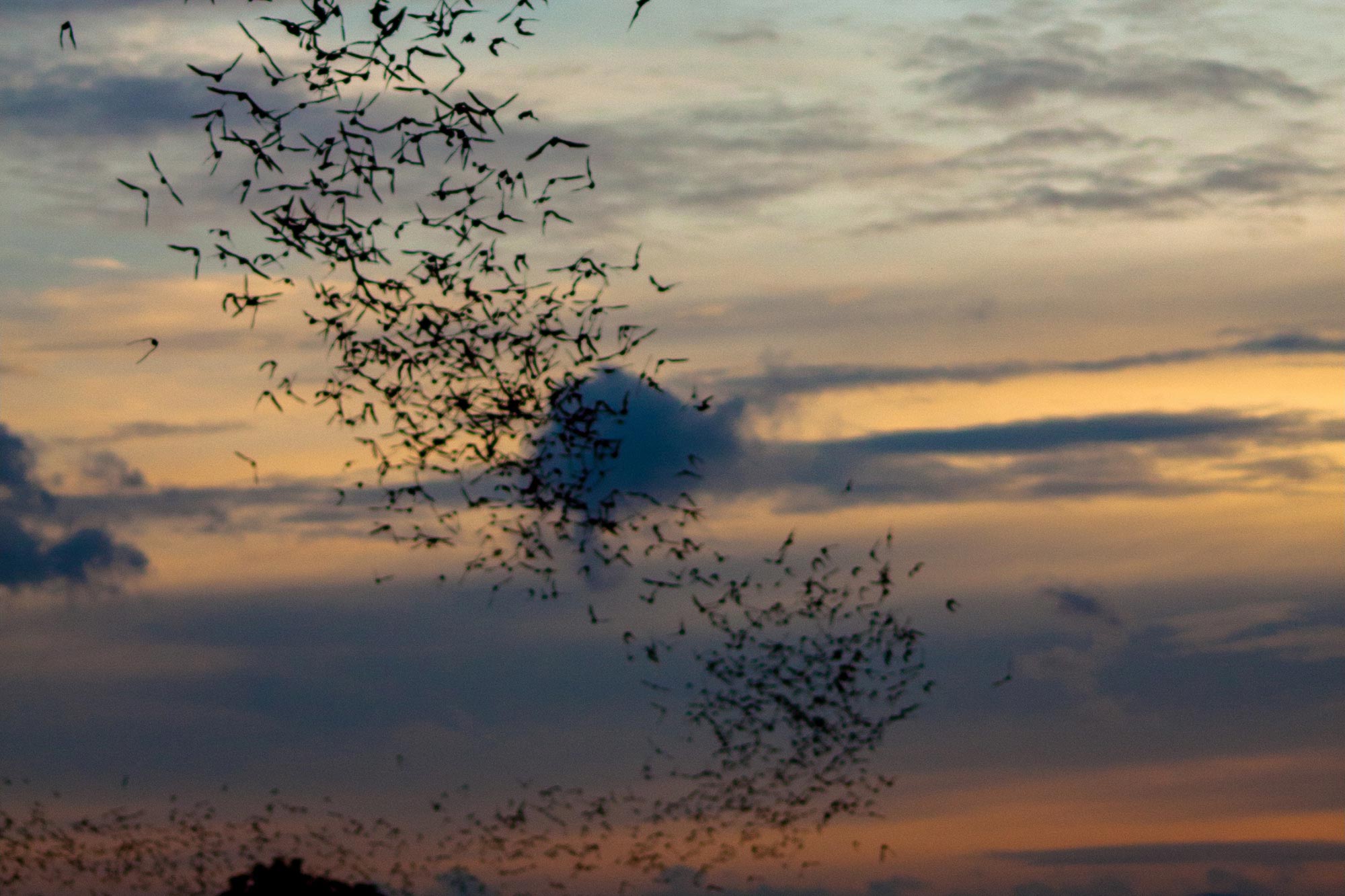
Scientists used ultra-light sensors connected “like cell phones” across Europe to study how bats migrate over the continent.
Birds may dominate the skies when it comes to long-distance travel, but they’re not the only masters of epic journeys. A select few bat species also migrate thousands of kilometers across continents in North America, Europe, and Africa. This rare and elusive behavior has long puzzled scientists. However, researchers from the Max Planck Institute of Animal Behavior (MPI-AB) recently studied 71 common noctule bats during their spring migration across Europe, offering groundbreaking insights. Using ultra-lightweight, advanced sensors, they discovered that these bats “surf” warm storm fronts, allowing them to travel farther with less energy. The findings, published in Science, reveal a fascinating new aspect of bat migration.
Bat Migration Mysteries
“The sensor data are amazing!” says Edward Hurme, a postdoctoral researcher at MPI-AB and the Cluster of Excellence Collective Behaviour at the University of Konstanz and first author of the new study. “We don’t just see the path that bats took, we also see what they experienced in the environment as they migrated. It’s this context that gives us insight into the crucial decisions that bats made during their costly and dangerous journeys.”
Using innovative sensor technology, the study tracked part of the noctule bats’ migration, estimated to span approximately 1,600 kilometers. “We are still far from observing the complete yearly cycle of long-distance bat migration,” Hurme explains. “The behavior is still a black box, but at least we have a tool that has shed some light.”
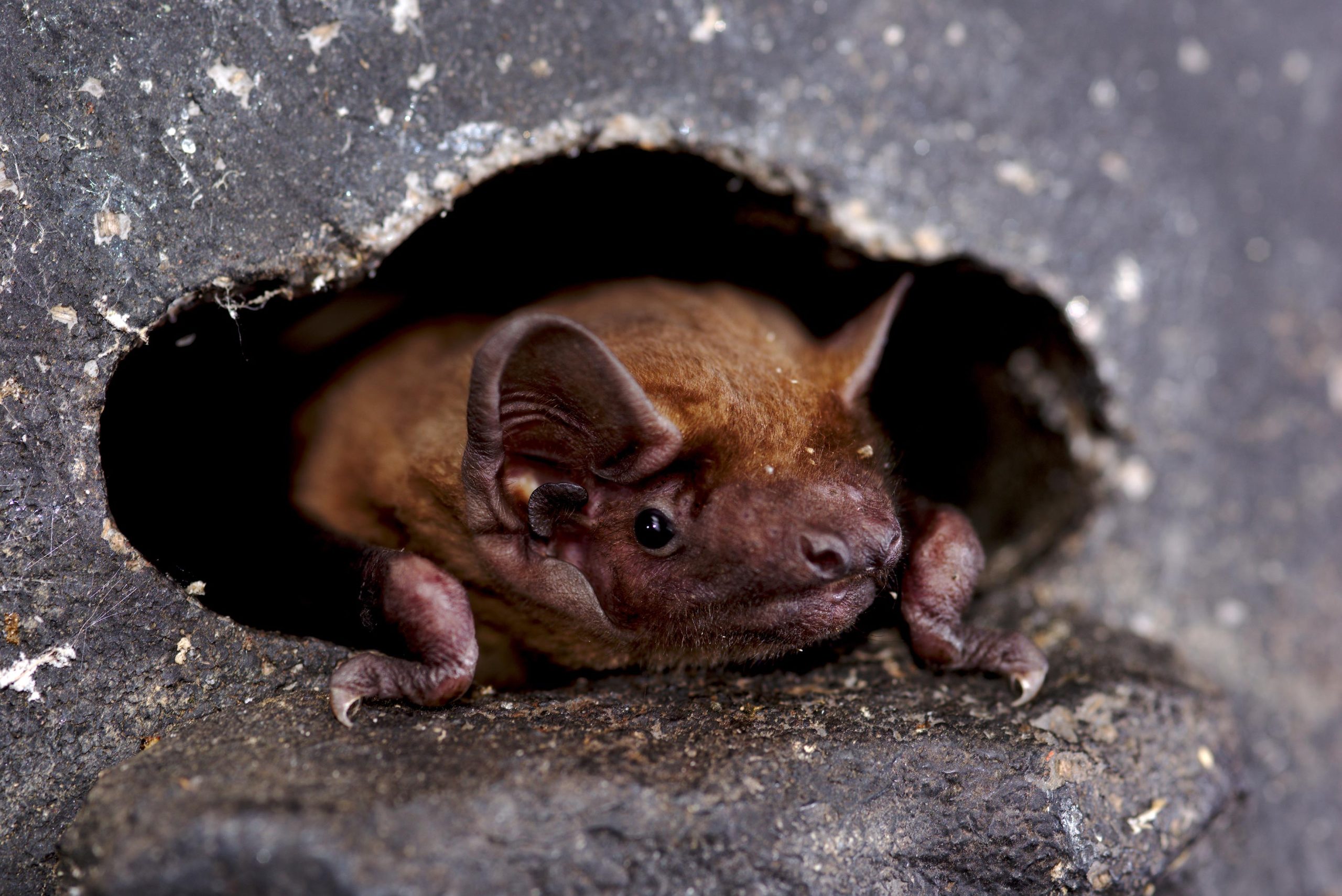
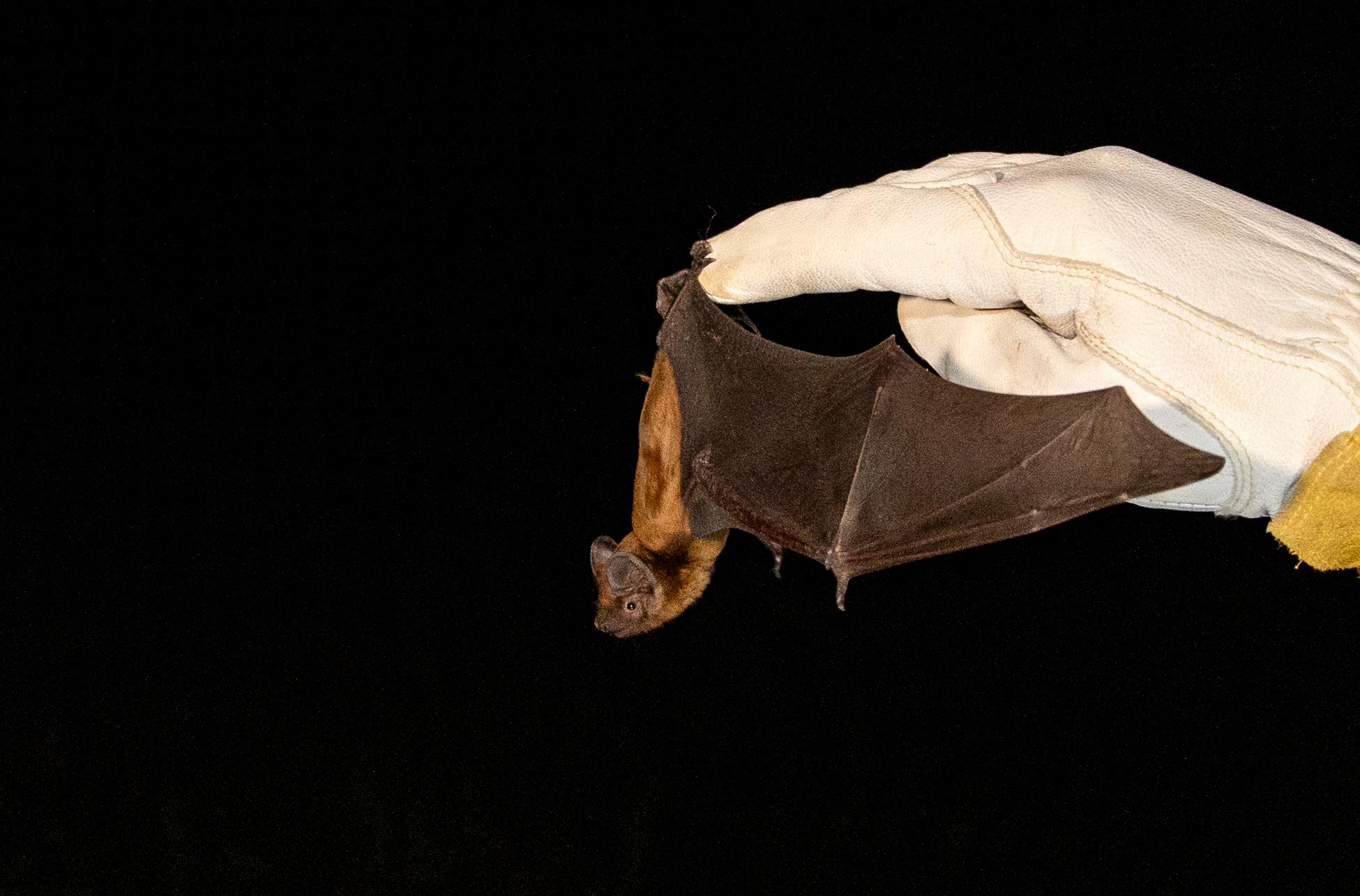
The study’s tracking devices, developed by engineers at MPI-AB, weigh just 5% of a bat’s body mass and feature multiple sensors to measure activity levels and air temperature. Unlike conventional trackers requiring close proximity to retrieve data, these tags compress 1,440 daily sensor readings into a compact 12-byte message. The data is transmitted via a novel long-range network, allowing real-time monitoring from anywhere in Europe.
“The tags communicate with us from wherever the bats are because they have coverage across Europe much like a cell phone network,” says senior author Timm Wild, who led the development of the ICARUS-TinyFoxBatt tag in his Animal-borne Sensor Networks group at MPI-AB.
Bat movement over three days shows how many individuals departed on a night of lower air pressure before an incoming storm front.
Tagging and Tracking Female Noctules
The team deployed the tags on common noctules, a bat that is widespread in Europe and one of only four bat species known to migrate across the continent. Every spring for three years, the scientists attached tags on common noctules in Switzerland, focusing exclusively on females which are more migratory than males. Females spend summers in northern Europe and winters in a range of southerly locations where they hibernate until spring.
The tags collected data for up to four weeks as the female noctules migrated back northeast, revealing trajectories far more variable than previously thought. “There is no migration corridor,” says senior author Dina Dechmann from MPI-AB. “We had assumed that bats were following a unified path, but we now see they are moving all over the landscape in a general northeast direction.”
Analyzing Migratory Patterns and Environmental Impact
The scientists teased apart the data to distinguish hour-long feeding flights from the much longer migratory flights, finding that noctules can migrate almost 400 kilometers in a single night—breaking the known record for the species. Bats alternated their migratory flights with frequent stops, likely because they needed to feed continuously. “Unlike migratory birds, bats don’t gain weight in preparation for migration,” says Dechmann. “They need to refuel every night, so their migration has a hopping pattern rather than a straight shot.”
The authors then detected a striking pattern. “On certain nights, we saw an explosion of departures that looked like bat fireworks,” says Hurme. “We needed to figure out what all these bats were responding to on those particular nights.”
They found that these migration waves could be explained by changes in weather. Bats left on nights when air pressure dropped and temperature spiked; in other words, the bats left before incoming storms. “They were riding storm fronts, using the support of warm tailwinds,” says Hurme. The tag’s sensors that measured activity levels further showed that bats used less energy flying on these nights of warm wind, confirming that the tiny mammals were harvesting invisible energy from the environment to power their continental flights. “It was known that birds use wind support during migration, and now we see that bats do too,” he adds.
The implications of these findings go beyond biological insight into this understudied behavior. Migratory bats are threatened by human activity, in particular wind turbines which are the cause of frequent collisions. Knowing where bats will be migrating, and when, could help to prevent deaths.
“Before this study, we didn’t know what triggered bats to start migrating,” says Hurme. “More studies like this will pave the way for a system to forecast bat migration. We can be stewards of bats, helping wind farms to turn off their turbines on nights when bats are streaming through. This is just a small glimpse of what we will find if we all keep working to open that black box.”
Reference: “Bats surf storm fronts during spring migration” by Edward Hurme, Ivan Lenzi, Martin Wikelski, Timm A. Wild and Dina K. N. Dechmann, 2 January 2025, Science.
DOI: 10.1126/science.ade7441
Never miss a breakthrough: Join the SciTechDaily newsletter.
Follow us on Google and Google News.