
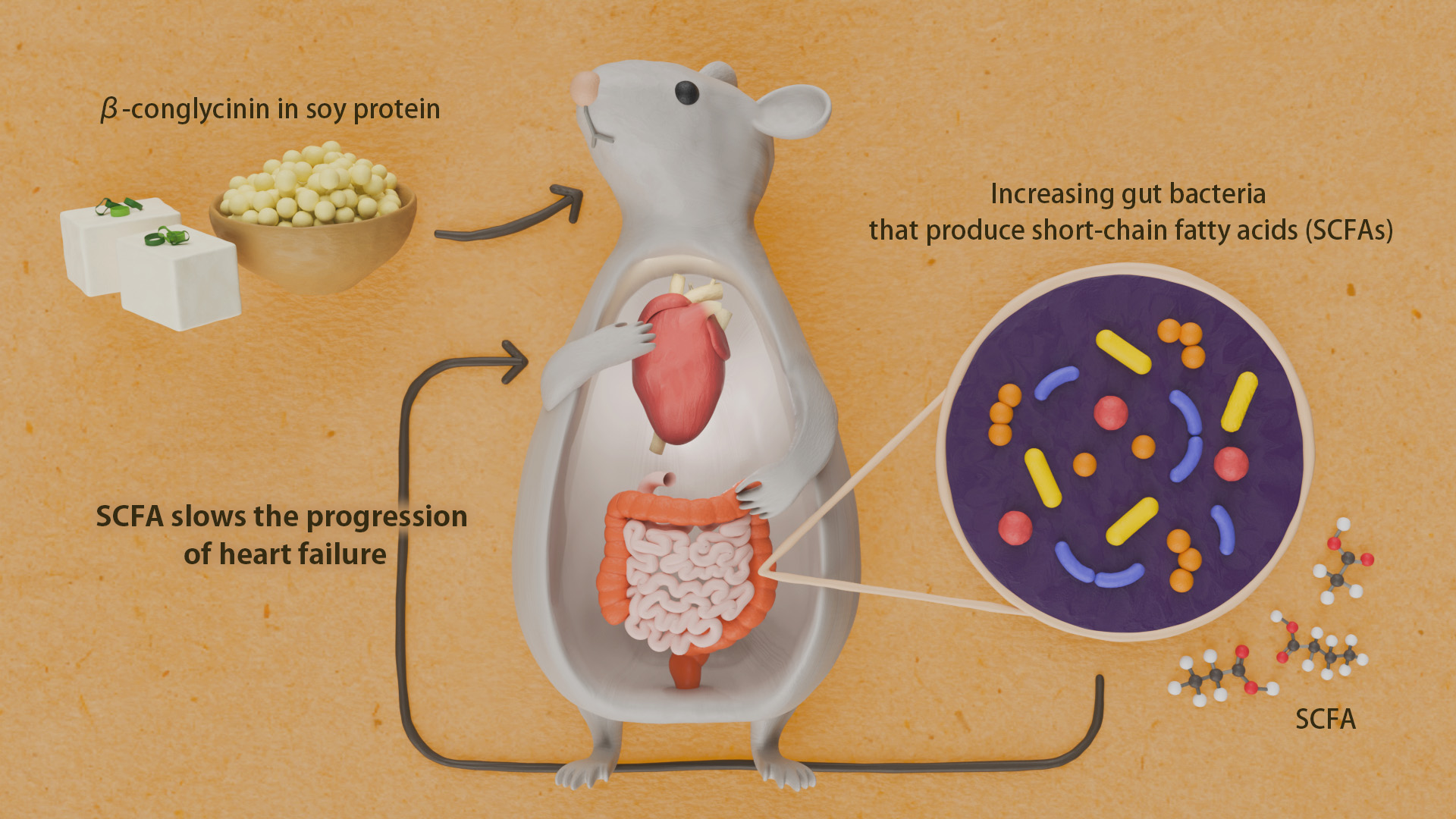
Soy protein β-CG helps prevent heart failure in mice by boosting SCFA-producing gut bacteria. SCFAs improve heart function and reduce tissue damage, suggesting a potential dietary approach to heart health.
A research team at Nagoya University Graduate School of Medicine has found a promising method to slow heart failure progression in mice. By providing a diet enriched with the soybean protein β-conglycinin (β-CG), they observed benefits to heart health linked to its impact on gut bacteria.
Their analysis revealed that the soybean protein rich diet increased the production of the short-chain fatty acids (SCFAs) in the intestine that play a role in protecting the heart. Their findings were published in Clinical Nutrition.
Many people with heart problems try to eat a nutritious diet to reduce their risk of disease. As part of a healthy diet, soybeans have long been recognized for their antioxidant and anti-inflammatory properties. Based on this, the researchers suspected that proteins in soy may help prevent heart damage.
Dr. Nozomi Furukawa and colleagues fed the soy-derived protein β-CG to mice prone to heart failure and investigated its effects on the heart. The mice showed improved heart function, less muscle thickening, and reduced scarring of the heart tissue, common problems associated with the progression of heart disease.
Analysis of bacteria in the gut identified an increase in three types of SCFA-producing bacteria (Butyricimonas, Marvinbryantia, and Anaerotruncus) as well as concentrations of SCFAs that maintain gut health (acetic acid, butyric acid, and propionic acid).
SCFAs and Cardiovascular Protection
These findings suggest that β-CG helps prevent heart damage, at least in part, by promoting the growth of SCFA-producing bacteria in the intestine.
Bacteria produce SCFAs in the large intestine during the digestion of fiber and other foods. SCFAs are known to have anti-inflammatory properties and to play a role in maintaining intestinal health. However, their findings suggest they may also help protect the heart from damage caused by high blood pressure.
“An important aspect of this study is that functional soy components showed beneficial effects on the heart,” Furukawa said. “Previously, effects on obesity have been shown, but the effects on cardiovascular disease were not known. Importantly, β-CG intake increases major SCFAs and their producing bacteria as a change in the gut microbiota. These SCFAs may inhibit the progression of heart failure.”
The Role of Gut Microbiota
When the researchers used antibiotics to reduce the population of these SCFA-producing microbes in mice, the protective effects of β-CG disappeared. This suggested that the gut microbiota is crucial for β-CG’s heart-protective action. To confirm this, they administered sodium propionate, one of the SCFAs, to the mice and found that it had similar effects to feeding the mice β-CG, reinforcing the idea that SCFAs are a key part in reducing heart damage.
Although the researchers performed this study on mice, the findings suggest that similar mechanisms may help treat heart failure in humans. β-CG or its derivatives could potentially be developed into therapeutic agents that help prevent or slow the progression of heart failure, offering a more natural solution to a major health problem.
“Of course, soy and its components, such as β-CG, may not be effective for all people, especially those with allergies,” Furukawa explained. “In the future, our team will focus on the structure within β-CG and investigate the detailed molecular mechanism of the increase in short-chain fatty acids that show cardioprotective effects, with the aim of developing new treatment and prevention methods.”
The researchers hope that it leads to new ways to treat heart disease through diet and gut health, highlighting the connection between what we eat and how our bodies, particularly our hearts, respond. With heart failure being one of the leading causes of death worldwide, these findings could have a lasting impact on how we maintain a healthy heart.
Reference: “Soy protein β-conglycinin ameliorates pressure overload-induced heart failure by increasing short-chain fatty acid (SCFA)-producing gut microbiota and intestinal SCFAs” by Nozomi Furukawa, Miku Kobayashi, Mikako Ito, Hiroki Matsui, Koji Ohashi, Toyoaki Murohara, Jun-ichi Takeda, Jun Ueyama, Masaaki Hirayama and Kinji Ohno, 1 October 2024, Clinical Nutrition.
DOI: 10.1016/j.clnu.2024.09.045
Never miss a breakthrough: Join the SciTechDaily newsletter.
Follow us on Google and Google News.