
Adopting forage fish diet would be especially helpful in the Global South, say researchers.
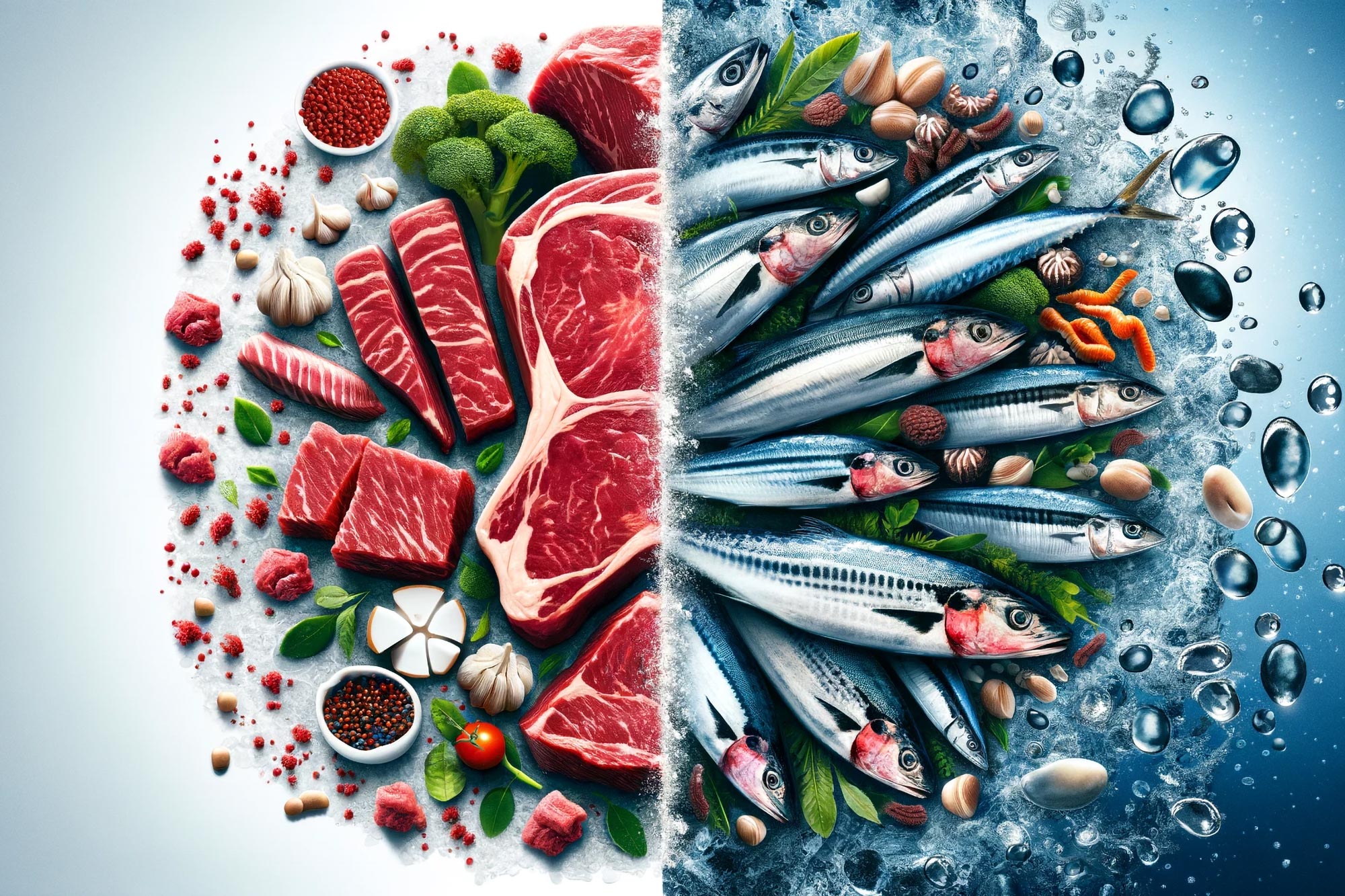
Swapping red meat for ‘forage fish’, such as herring, sardines, and anchovies, could save up to 750,000 lives a year in 2050 and significantly reduce the prevalence of disability as a result of diet-related disease, suggests a data analysis published in the open access journal BMJ Global Health.
Adopting this type of diet would be especially helpful for low and middle-income countries, where these fish are cheap and plentiful, and where the toll taken by heart disease, in particular, is high, say the researchers.
The Risks of Red Meat and Potential of Forage Fish
Mounting evidence links red and processed meat consumption with heightened risks of non-communicable disease, which accounted for around 70% of all deaths globally in 2019, explain the researchers.
Of these, coronary heart disease, stroke, diabetes, and bowel cancer made up nearly half (44%) of this toll, with coronary artery disease taking the lion’s share.
Marine forage fish, which are predated by larger fish, are rich in omega-3 long-chain polyunsaturated fatty acids (DHA and EPA), the intake of which may prevent coronary heart disease, as well as being abundant in calcium and vitamin B12. They also have the lowest carbon footprint of any animal food source, note the researchers.
But currently, three-quarters of the forage fish catch, including a significant amount caught off the coasts of countries enduring food insecurity and malnutrition in the Global South, is ground into fishmeal and fish oil—products that are mostly used for fish farming, destined for high-income consumers, the researchers add.
While several studies have revealed the potential nutritional and environmental benefits of forage fish, it’s not clear to what extent they might cut the global burden of disease if substituted for red meat.
Research Findings and Policy Implications
In a bid to plug this knowledge gap, the researchers created 4 different scenarios, each representing a different pattern of forage fish allocation globally, using data for projected red meat consumption in 2050 for 137 countries and historical data on the forage fish catch from marine habitats.
The 4 scenarios comprised: domestic supply prioritized, with forage fish caught for national consumption or red meat substitution (I); minimized meat intake, with substitution prioritized in countries with meat consumption from sheep and cattle above the recommended level of 15 kcal (II); adequate fish intake, prioritizing countries with fish consumption below the recommended level of 40 kcal (III); and equal percentage of red meat replaced in all countries (IV), determined by the availability of forage fish.
Their analysis shows that if widely adopted for direct human consumption forage fish would potentially provide substantial public health benefits, particularly in terms of reducing the occurrence of coronary heart disease, say the researchers.
Globally, this approach could prevent half a million to 750,000 deaths from diet related disease in 2050—and deaths from coronary heart disease in particular—and it could avert 8–15 million years of life lived with a disability, most of which are concentrated in low and middle-income countries.
The limited supply of forage fish isn’t sufficient to replace all red meat, acknowledge the researchers. But it could potentially increase the daily per capita consumption of fish to close to the recommended level of 40 kcal in most countries, as well as reducing deaths from coronary heart disease, stroke, diabetes, and bowel cancer by 2% in 2050.
Of the four scenarios, scenario I had the lowest number of deaths averted. And the analysis suggests that allocating all forage fish to regions with the lowest fish intake—-mainly in lower and middle-income countries (scenario III)—would reduce the global burden of disease more effectively.
For landlocked countries without direct access to seafood, such as Mongolia, Turkmenistan, and other African countries, global marketing and trade in forage fish would need to be expanded, the researchers point out.
“Despite the theoretical potential of forage fish, several barriers, such as fish meal and oil processing, overfishing, climate change, and cultural acceptance may prevent the health benefits of forage fish from being realized,” they acknowledge.
“Multi-sectoral policy coordination and action (eg: prioritizing access to affordable fish, such as forage fish, for the poor and promoting the use of nutrient-rich microalgae as fish feed) could help to address some of these barriers,” they suggest.
Culturally tailored interventions that promote healthy lifestyles, increase family and community support, and raise awareness of the relationship between disease and diet could all enhance the chances of successful behavior and diet change, they say.
Other strategies, such as climate change impact menu labels on food items, and consumer education on the high nutritional value and lower chemical levels in forage fish, could also help promote the switch away from red meat to forage fish, they suggest.
Reference: “Unlocking the potential of forage fish to reduce the global burden of disease” by Shujuan Xia, Jun’ya Takakura, Kazuaki Tsuchiya, Chaeyeon Park, Ryan F Heneghan and Kiyoshi Takahashi, 1 March 2024, BMJ Global Health.
DOI: 10.1136/bmjgh-2023-013511
Never miss a breakthrough: Join the SciTechDaily newsletter.
Follow us on Google and Google News.
1 Comment
“They also have the lowest carbon footprint of any animal food source, note the researchers.”
“Other strategies, such as climate change impact menu labels on food items”
There is thee real angle in the article.
Red meat being unhealthy is one of the biggest scams out there.
The only reason it would be unhealthy is from people adding toxic chemicals to the animals food supply, directly to them, and other non natural factors.
But be afraid!!!!! You are harming the planet by eating meat!!!
I wonder if you just consume fish how much the mercury build up and exposure could be toxic, or what about all the other potential pollutants in water contaminating the fish?
Man has been eating red meat since we were put on this Earth.
Why has it become such a health risk in just the past couple of decades?
Answer: Because the propaganda says so.