
Close Menu
    Facebook X (Twitter) Instagram
    SciTechDaily
    • Biology
    • Chemistry
    • Earth
    • Health
    • Physics
    • Science
    • Space
    • Technology
    Facebook X (Twitter) Pinterest YouTube RSS
    SciTechDaily
    Home»Health»Study Reveals Weight Training Targets Age-Related Abdominal Fat
    Health

    Study Reveals Weight Training Targets Age-Related Abdominal Fat

    By Amy Roeder, HSPH Communications; Harvard GazetteJanuary 5, 2015No Comments3 Mins Read
    Facebook Twitter Pinterest Telegram LinkedIn WhatsApp Email Reddit
    Share
    Facebook Twitter LinkedIn Pinterest Telegram Email Reddit
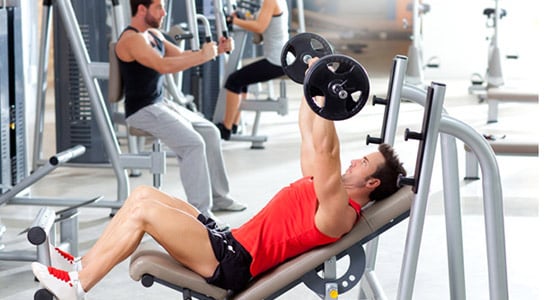
    Study Shows Weight Training Targets Belly Fat
    Credit: iStock/Harvard Gazette

    New research from the Harvard T.H. Chan School of Public Health shows that weight training helps target age-related abdominal fat in men.

    Healthy men who did 20 minutes of daily weight training had less increase in age-related abdominal fat than men who spent the same amount of time doing aerobic activities, according to a new study by Harvard T.H. Chan School of Public Health (HSPH) researchers and colleagues. Combining weight training and aerobic activity led to the most optimal results. Aerobic exercise by itself was associated with less weight gain compared with weight training.

    The study appears online in Obesity.

    “Because aging is associated with sarcopenia, the loss of skeletal muscle mass, relying on body weight alone is insufficient for the study of healthy aging,” said lead author Rania Mekary, a researcher in HSPH’s Department of Nutrition. “Measuring waist circumference is a better indicator of healthy body composition among older adults. Engaging in resistance training or, ideally, combining it with aerobic exercise, could help older adults lessen abdominal fat while increasing or preserving muscle mass.”

    Prior studies had been focused on a specific population (e.g., overweight people or type 2 diabetics), were of short duration, and had mixed results. The new study was long-term with a large sample of healthy men with a wide range of body mass indexes (BMI).

    Mekary and colleagues studied the physical activity, waist circumference (in centimeters), and body weight of 10,500 healthy U.S. men aged 40 and older participating in the Health Professionals Follow-Up Study between 1996 and 2008. Their analysis included a comparison of changes in participants’ activity levels over the 12-year period to see which activities had the most effect on the men’s waistlines. Those who increased the amount of time spent weight training by 20 minutes a day had less gain in their waistline (-0.67 cm) compared with men who similarly increased the amount of time they spent on moderate-to-vigorous aerobic exercise (-0.33 cm), and yard work or stair climbing (-0.16 cm). Those who increased their sedentary behaviors, such as TV watching, had a larger gain in their waistline.

    “This study underscores the importance of weight training in reducing abdominal obesity, especially among the elderly,” said Frank Hu, professor of nutrition and epidemiology at HSPH and senior author of the study. “To maintain a healthy weight and waistline, it is critical to incorporate weight training with aerobic exercise.”

    Other HSPH authors include Anders Grøntved, Walter Willett, Eric Rimm, and Edward Giovannucci.

    The study was supported by National Institutes of Health grants.

    Reference: “Weight training, aerobic physical activities, and long-term waist circumference change in men” by Rania A. Mekary, Anders Grøntved, Jean-Pierre Despres, Leandro Pereira De Moura, Morteza Asgarzadeh, Walter C. Willett, Eric B. Rimm, Edward Giovannucci and Frank B. Hu, 19 December 2014, Obesity.
    DOI: 10.1002/oby.20949


    Never miss a breakthrough: Join the SciTechDaily newsletter.
    Follow us on Google and Google News.

    Exercise Harvard University Obesity Weight Loss
    Share. Facebook Twitter Pinterest LinkedIn Email Reddit

    Related Articles

    Breakthrough in Exercise Science: The Workout That Reduces Hunger, Especially for Women

    Secret to Maximum Fat Burn: How Time of Day May Impact Exercise Results

    Harvard Scientists Find That Weight Loss Isn’t Always Good

    Researchers Find Training Routine That Will Turn Your Body Into a Fat Burning “Machine”

    Intense Exercise While Dieting May Reduce Cravings for High-Fat Food

    Researchers Find the Secret Behind Maintaining Healthy Weight Loss

    Weight Loss and Exercise: Why Physical Activity Entices You To Eat More – And How To Fight It

    Cruel Twist: Exercise Reduces Calories Burned at Rest in People With Obesity

    Controlled Trial Finds Tai Chi Similar to Conventional Exercise for Reducing Belly Fat

    Leave A Reply Cancel Reply

    • Facebook
    • Twitter
    • Pinterest
    • YouTube

    Don't Miss a Discovery

    Subscribe for the Latest in Science & Tech!

    Trending News

    Don’t Miss: A Brilliant Venus and Glowing Harvest Moon Light Up the Sky

    New Twist on the Einstein Problem Reveals Unexpected Physics

    JWST Captures Stunning Evidence of How Supermassive Black Holes Feed

    Early Exercise May Permanently Change How Much Energy the Body Uses To Move

    New Molecule Wipes Out Aggressive Lymphoma Tumors in Mice in Just 11 Days

    The Human Family Tree May Need a Major Rewrite

    Scientists Find a Surprising Cancer-Fighting Effect in Dark Sweet Cherries

    New AI Detects Hidden Warning Signs of Solar Eruptions Hours Before They Emerge

    Follow SciTechDaily
    • Facebook
    • Twitter
    • YouTube
    • Pinterest
    • Newsletter
    • RSS
    SciTech News
    • Biology News
    • Chemistry News
    • Earth News
    • Health News
    • Physics News
    • Science News
    • Space News
    • Technology News
    Recent Posts
    • Scientists May Have Finally Explained Why Astronauts Get Constipated in Space
    • Pomegranates Could Unlock a New Treatment for Heart Failure
    • Africa’s Giant Herbivores Were Disappearing Millions of Years Before Humans Could Hunt Them
    • This Utah Mountain Is Hiding Enough Ice To Fill 600 Olympic Pools
    • Vagus Nerve Stimulation Could Unlock the Brain’s Hidden Learning Potential
    Copyright © 1998 - 2026 SciTechDaily. All Rights Reserved.
    • Science News
    • About
    • Contact
    • Editorial Board
    • Privacy Policy
    • Terms of Use

    Type above and press Enter to search. Press Esc to cancel.