
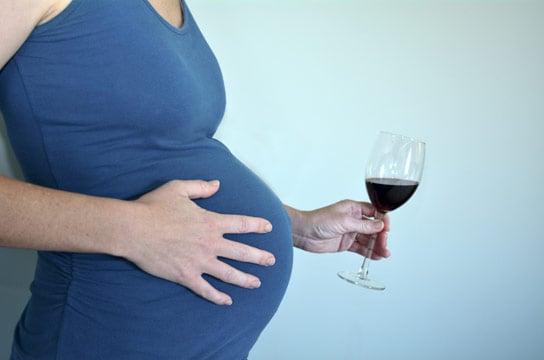
Newly published research shows that low to moderate alcohol consumption during pregnancy is not associated with an increased risk of specific birth outcomes and measures of fetal growth.
Heavy alcohol consumption during pregnancy has long been linked to a range of developmental problems and birth defects including fetal alcohol syndrome (FAS), low birth weight, and preterm delivery, but a new study from Yale and Brown University shows that low to moderate alcohol consumption is not associated with an increased risk of specific birth outcomes and measures of fetal growth.
The study is published in the November 19 issue of the Annals of Epidemiology.
National guidelines recommend abstaining from all alcohol exposure during pregnancy, but many women consume low to moderate amounts of alcohol, often before realizing they are pregnant. Researchers from Yale’s Schools of Public Health and Medicine and Brown University investigated the effects of lower levels of alcohol consumption on 4,496 women and singleton infants.
The team evaluated the association of maternal alcohol exposure in early and late pregnancy with selected birth outcomes such as low birth weight, preterm delivery, and intrauterine growth restriction. They also examined other neonatal outcomes such as Apgar scores, need for neonatal ventilation, admission to a neonatal intensive care unit, jaundice, major congenital malformations, birth length, and head circumference.
About 30% of women in the study reported consuming alcohol— predominantly wine — during their first month of pregnancy. Alcohol was measured in absolute ounces of alcohol per day, as well as any reported alcohol exposure during specific periods of gestation. Overall alcohol exposure levels among women who reported drinking were relatively low, with a median level of approximately one drink per week in the first month of pregnancy.
The team found that for those women who drank low to moderate amounts of alcohol in early pregnancy, there was a reduced likelihood of low birth weight, short birth length, and small head circumference, which are all hallmarks of FAS. Drinking later in pregnancy during the third trimester was associated with a lower risk for low birth weight and preterm delivery.
“While this study and others finds no evidence of harm from low to moderate alcohol consumption, more research is needed to investigate this contradiction,” said senior author Michael B. Bracken, the Susan Dwight Bliss Professor of Epidemiology and Professor of Obstetrics, Gynecology & Reproductive Sciences at Yale School of Medicine. “Our findings also demonstrate alcohol exposure is most prevalent in the first month of gestation, which is typically prior to pregnancy recognition, and a period of early fetal development. Whether these associations of reduced risk are due to healthier lifestyles of women consuming low to moderate alcohol and especially wine cannot be fully ruled out.”
Bracken added that while not assessing heavy or chronic alcohol exposure in pregnancy, or evaluating outcomes including FAS, alcohol-related birth defects, or developmental measures among the infants, the study makes an important contribution in the examination of gestational alcohol use at levels more typical among reproductive age women.
Reference: “Low-to-moderate prenatal alcohol consumption and the risk of selected birth outcomes: a prospective cohort study” by Lisbet S. Lundsberg PhD, MPH; Jessica L. Illuzzi MD, MS; Kathleen Belanger PhD; Elizabeth W. Triche PhD and Michael B.Bracken PhD, MPH, 16 October 2014, Annals of Epidemiology.
DOI: 10.1016/j.annepidem.2014.10.011
Other authors on the study include first author Lisbet S. Lundsberg and Dr. Jessica L. Illuzzi, both from the Yale School of Medicine Department of Obstetrics, Gynecology & Reproductive Sciences, and Elizabeth W. Triche from the Department of Community Health at Brown University.
The study was funded by the National Institutes of Health.
Never miss a breakthrough: Join the SciTechDaily newsletter.
Follow us on Google and Google News.
1 Comment
I prefer to not drink when someone is in pregnent : P