
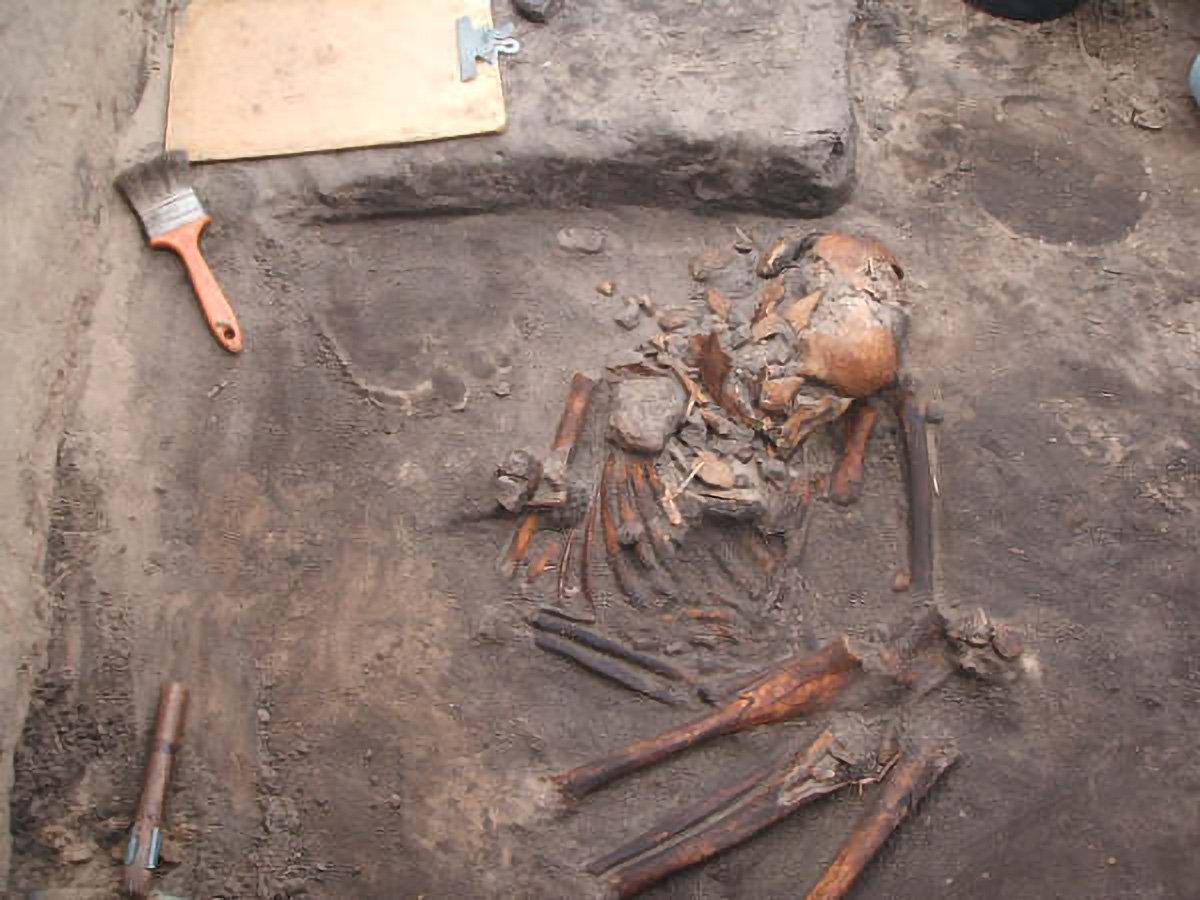
Research at an archaeological site near Laguna challenges the hypothesis that the Southern Jê’s ancestors displaced the communities that constructed shell middens and burial mounds (sambaquis) along the coast of Santa Catarina state for over 5,000 years.
Brazilian researchers have revised the history of ancient sambaqui builders in Santa Catarina, showing that they were not replaced by Southern Jê ancestors, contrary to earlier beliefs, and shedding new light on their culture and interactions.
A significant chapter in the history of human settlement along the Brazilian coast is being revised by researchers from the Museum of Archeology and Ethnology at the University of São Paulo (MAE-USP), with support from FAPESP.
In an article published in the journal PLOS ONE, the group, which also includes researchers in Santa Catarina state, South Brazil, and in other countries (the United States, Belgium, and France), shows that the sambaqui builders of Galheta IV, an archeological site in Laguna (Santa Catarina), were not replaced by ancestors of the Southern Jê, as previously thought.
As the article explains, sambaquis are middens that constitute “evidence of long-term occupation.” They consist of mounds with layers of shellfish debris, human and animal bones, remains of plants and hearths, stone or bone utensils, and other refuse. They were used for burial and shelter, and to demarcate territory.
“There was far less interaction than has been thought between these midden builders [sambaquieiros] and the proto-Jê populations, as we call them. Their funerary practices and pottery were different. Moreover, the sambaquieiros lived there from birth and were descendants of people who had lived in the same place,” says André Strauss, a professor at MAE-USP and penultimate author of the article.
Reevaluating Cultural Transitions
The theory that one ethnic group replaced the other arose partly because sites like Galheta IV mark the end of sambaqui building. The potsherds found in the most recent layers of mounds on these sites recall the pottery of the ancestors of South Jê Indigenous groups Kaingang and Laklãnõ-Xokleng. This is another reason for the long-held belief, now refuted, that the sambaqui builders who lived on the coast were replaced by people from the Santa Catarina uplands.
“We don’t know why sambaqui building stopped. Possible explanations include contact with other cultures and environmental factors such as changing sea levels and salinity, which may have led to a fall in the supply of shellfish and hence of the raw material for shell mounds,” says Jéssica Mendes Cardoso, first author of the article. The study was conducted while she researching for her doctoral thesis at MAE-USP and the University of Toulouse in France.
Cardoso re-analyzed material collected by another team at MAE-USP and the Heritage Education and Archeology Research Group (GRUPEP) at the University of Southern Santa Catarina (UNISUL) between 2005 and 2007, when the skeletons of four individuals were exhumed. In doing so, she quantified the strontium, carbon and nitrogen isotopes, determining that fish and other seafood accounted for 60% of the diet of the group in question. Analysis of the bones also showed that the individuals were not buried after cremation, a funerary practice used by Southern proto-Jê populations.
She also analyzed faunal remains (parts of animals in the material record), especially of fish, which are common in sambaquis. Unlike other sites, this one also had bones of marine birds such as albatrosses and penguins, and bones of mammals such as a fur seal.
“These animals were not part of their daily diet but were consumed seasonally while they were migrating or might have been kept at the site. They were probably part of their funeral rites since no one lived in this place. The site was a burial ground,” Cardoso says. There were 12 albatrosses in one burial unit, for example.
New dating found the site older than was thought, estimating that it was built and frequented between 1,300 and 500 years ago. The previous estimate was 1,170-900 years ago.
Rosetta Stone
Analysis of the pottery found at the archeological site also suggests that the proto-Jê may have been only a cultural influence adopted by the sambaqui builders. Out of 190 potsherds excavated there, 131 were large enough for examination and analysis.
“The pottery is very different from that found in the Santa Catarina uplands, in terms of shape and decoration, but similar to that found at other sites on the coast in both the north and south of the state, showing that these objects may well have been transported from one coastal location to another. These are the oldest pottery remains found in the state, dating from 1,300 years ago, whereas the pottery found in the uplands is about 1,000 years old,” says Fabiana Merencio, second author of the article. During the study, she was a PhD candidate at MAE-USP with a scholarship from FAPESP. She is currently a postdoctoral fellow at the Federal University of Santa Catarina (UFSC).
“We reveal a new expression of human materiality on the coast, some 1,000 years ago, in the shape of substitution for sambaquis of sites without mollusk shells but with pottery. This site is a Rosetta Stone that helps us understand these connections,” Strauss says.
A new research group will now return to the area to study another site (Jabuticabeira II) in a new project supported by FAPESP and led by Ximena Villagran, a professor at MAE-USP.
Reference: “Late shellmound occupation in southern Brazil: A multi-proxy study of the Galheta IV archaeological site” by Jessica Mendes Cardoso, Fabiana Merencio, Ximena Villagran, Veronica Wesolowski, Renata Estevam, Benjamin T. Fuller, Paulo DeBlasis, Simon Pierre-Gilson, Danaé Guiserix, Pauline Méjean, Levy Figuti, Deisi Farias, Geovan Guimaraes, Andre Strauss and Klervia Jaouen, 21 March 2024, PLOS ONE.
DOI: 10.1371/journal.pone.0300684
Never miss a breakthrough: Join the SciTechDaily newsletter.
Follow us on Google and Google News.