
Close Menu
    Facebook X (Twitter) Instagram
    SciTechDaily
    • Biology
    • Chemistry
    • Earth
    • Health
    • Physics
    • Science
    • Space
    • Technology
    Facebook X (Twitter) Pinterest YouTube RSS
    SciTechDaily
    Home»Space»Sun Unleashes an X1.5 Class Flare: NASA Captures the Stunning Display
    Space

    Sun Unleashes an X1.5 Class Flare: NASA Captures the Stunning Display

    By NASAAugust 8, 20231 Comment3 Mins Read
    Facebook Twitter Pinterest Telegram LinkedIn WhatsApp Email Reddit
    Share
    Facebook Twitter LinkedIn Pinterest Telegram Email Reddit
    Solar Flare August 7 2023
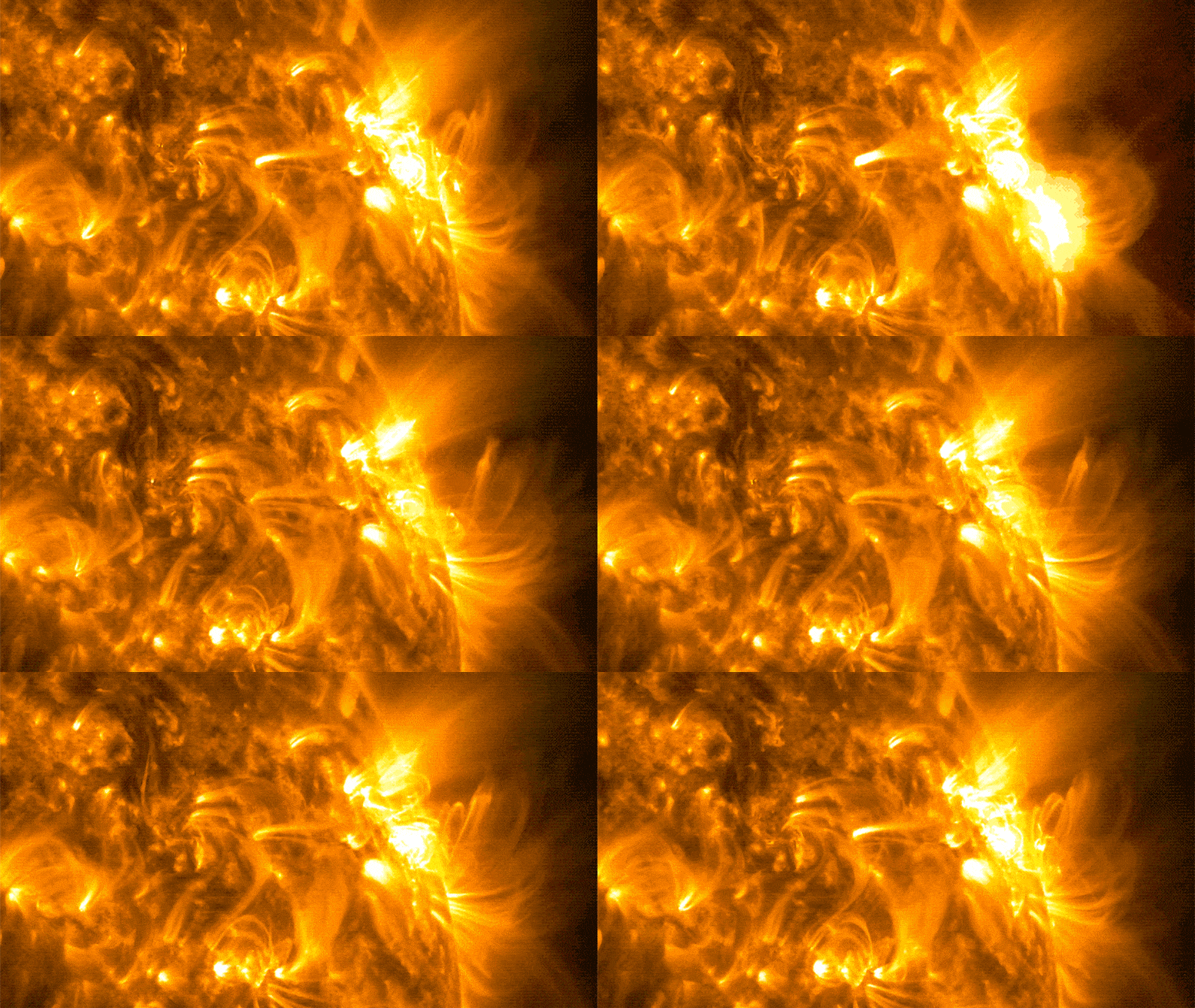
    ASA’s Solar Dynamics Observatory captured this image of a solar flare – as seen in the bright flash on the right side – on August 7, 2023. The image shows a subset of extreme ultraviolet light that highlights the extremely hot material in flares, and which is colorized in yellow and orange. Credit: NASA/SDO

    The Sun emitted a strong solar flare that reached its peak at 4:46 p.m. EDT on August 7, 2023. NASA’s Solar Dynamics Observatory, a vigilant monitor of the Sun’s activities, captured an image of the occurrence.

    Effects of Solar Flares

    Solar flares are potent bursts of energy. These flares, along with solar eruptions, can have various effects on Earth. They can disrupt high-frequency (HF) radio communications, affect electric power grids, interfere with navigation signals, and even pose risks to spacecraft and astronauts.

    Classification of the Flare

    The flare in question is classified as an X1.5 flare. An X1.5 flare is a substantial solar flare on the scale used to categorize such phenomena. The classification system for solar flares includes three main categories: C, M, and X, with X-class flares being the most intense.

    The number following the class letter gives further details about its strength on a continuous scale. In this case, an X1.5 flare is a strong event but falls in the lower range of the X-class category. The scale starts at X1, and the numbers increase with the flare’s intensity, with some flares even exceeding X20.

    An X1.5 flare can emit energy equivalent to billions of hydrogen bombs and have significant effects, such as causing radio blackouts on the sunlit side of the Earth and possibly affecting satellite operations, power grids, and other technological systems.
    NASA Solar Dynamics Observatory
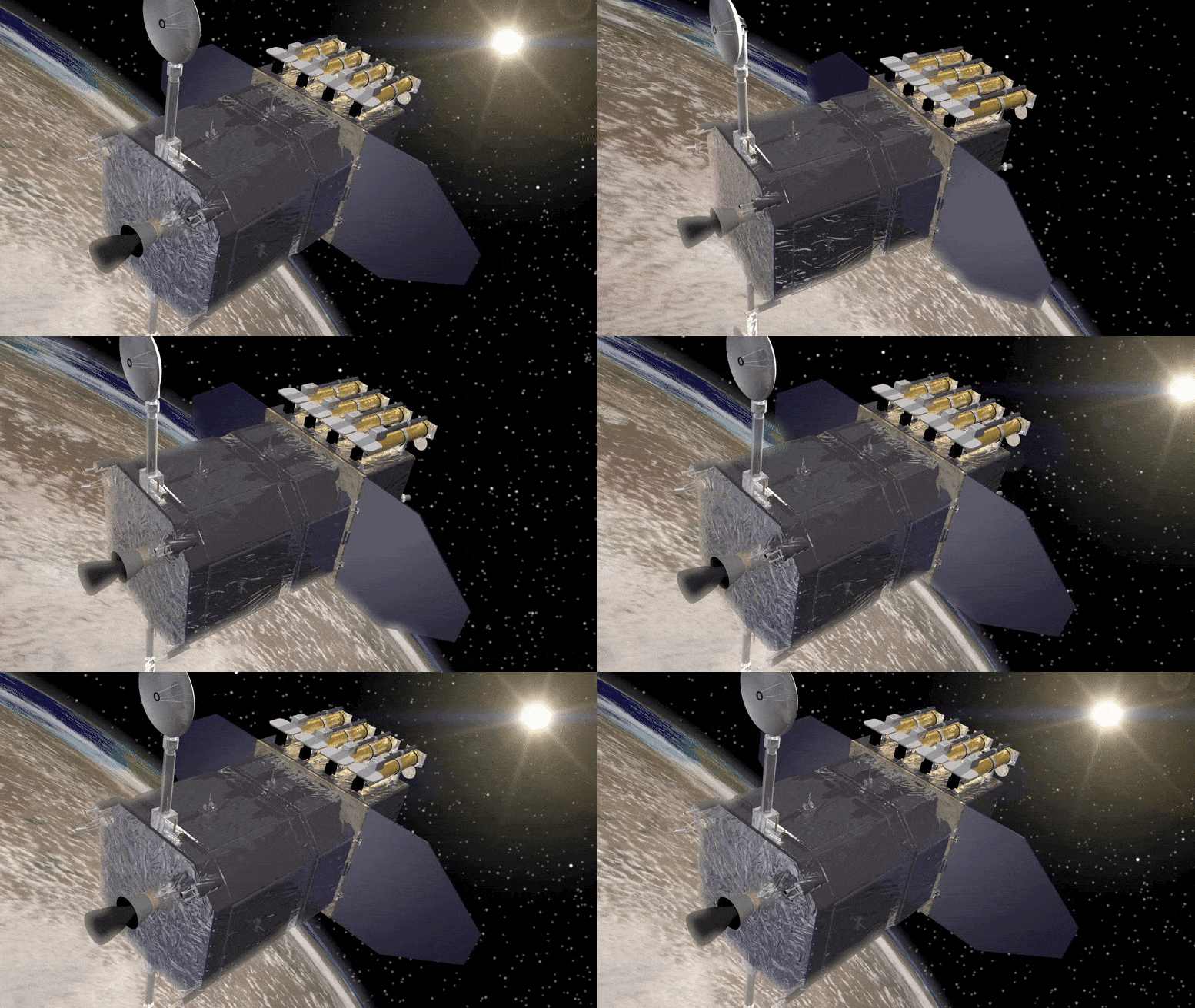
    This animation of the Solar Dynamics Observatory shows it above the Earth as it faces toward the Sun. SDO is designed to help us understand the Sun’s influence on Earth and Near-Earth space by studying the solar atmosphere on small scales of space and time and in many wavelengths simultaneously. Credit: NASA/Goddard Space Flight Center Conceptual Image Lab

    NASA’s Solar Dynamics Observatory

    NASA’s Solar Dynamics Observatory (SDO) is a space-based observatory that continuously observes the Sun. Launched by NASA, it is tasked with monitoring and studying the Sun’s magnetic field, solar activity, and solar flares. The data collected by SDO helps scientists understand the Sun’s influence on Earth and near-Earth space, providing insights into phenomena like solar flares that can affect space weather and impact various technologies on Earth.

    Never miss a breakthrough: Join the SciTechDaily newsletter.
    Follow us on Google and Google News.

    Astronomy NASA Solar Dynamics Observatory Solar Flares
    Share. Facebook Twitter Pinterest LinkedIn Email Reddit

    Related Articles

    Solar Fury Erupts: Sun Rings In the New Year With X1.8 Flare

    X1.8 Flare Unleashed: NASA Captures Powerful Solar Eruption

    Sun Unleashes Monumental X9.0 Solar Flare – Most Intense in 7 Years – Captured by NASA Observatory

    Monster X7.1 Solar Flare Unleashed: Intense Blast Captured by NASA’s Solar Dynamics Observatory

    NASA’s Solar Dynamics Observatory Captures Mid-Level Flare Erupting From the Sun

    NASA’s Solar Dynamics Observatory Spots Burst of Light and Energy on the Sun: A B-Class Flare

    NASA’s Solar Dynamics Observatory Views M-Class Solar Flare

    NASA’s SDO Reveals Images of X4.9-Class Solar Flare

    NASA’s Solar Dynamics Observatory Views Two New Solar Flares

    1 Comment

    1. GAMAL MOHAMMED HEZAM HUSSEIN on August 10, 2023 3:56 am

      OWNER GAMAL MOHAMMED HEZAM HUSSEIN ONLY ONE Cole Cole Computers Cole Cole Cole end Cole Cole Cole thifes Cole Cole danger Cole Cole things Cole Cole

      Reply
    Leave A Reply Cancel Reply

    • Facebook
    • Twitter
    • Pinterest
    • YouTube

    Don't Miss a Discovery

    Subscribe for the Latest in Science & Tech!

    Trending News

    Scientists May Have Found the Key to Jupiter and Saturn’s Moon Mystery

    Scientists Uncover Brain Changes That Link Pain to Depression

    Saunas May Do More Than Raise Body Temperature – They Activate Your Immune System

    Exercise in a Pill? Metformin Shows Surprising Effects in Cancer Patients

    Hidden Oceans of Magma Could Be Protecting Alien Life

    New Study Challenges Alzheimer’s Theories: It’s Not Just About Plaques

    Artificial Sweeteners May Harm Future Generations, Study Suggests

    Splashdown! NASA Artemis II Returns From Record-Breaking Moon Mission

    Follow SciTechDaily
    • Facebook
    • Twitter
    • YouTube
    • Pinterest
    • Newsletter
    • RSS
    SciTech News
    • Biology News
    • Chemistry News
    • Earth News
    • Health News
    • Physics News
    • Science News
    • Space News
    • Technology News
    Recent Posts
    • Scientists Discover Unexpected Climate Benefit Hidden in Forest Soils
    • The Grand Canyon’s “Swiss Cheese” Rocks Hold a Critical Secret
    • Scientists Discover 430,000-Year-Old Wooden Tools, Rewriting Human History
    • Scientists Make Breakthrough on 40-Year-Old 2D Physics Puzzle
    • As Cities Invade the Amazon, Yellow Fever Makes a Dangerous Comeback
    Copyright © 1998 - 2026 SciTechDaily. All Rights Reserved.
    • Science News
    • About
    • Contact
    • Editorial Board
    • Privacy Policy
    • Terms of Use

    Type above and press Enter to search. Press Esc to cancel.