
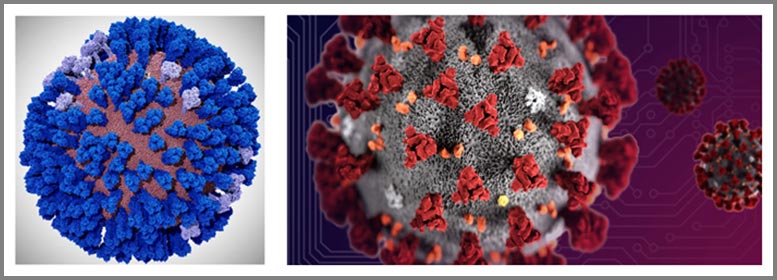
New simulations can help researchers design new drugs and vaccines to combat the coronavirus.
Scientists are preparing a massive computer model of the coronavirus that they expect will give insight into how it infects in the body. They’ve taken the first steps, testing the first parts of the model and optimizing code on the Frontera supercomputer at the University of Texas at Austin’s Texas Advanced Computing Center (TACC). The knowledge gained from the full model can help researchers design new drugs and vaccines to combat the coronavirus.
Rommie Amaro is leading efforts to build the first complete all-atom model of the SARS-COV-2 coronavirus envelope, its exterior component. “If we have a good model for what the outside of the particle looks like and how it behaves, we’re going to get a good view of the different components that are involved in molecular recognition.” Molecular recognition involves how the virus interacts with the angiotensin-converting enzyme 2 (ACE2) receptors and possibly other targets within the host cell membrane. Amaro is a professor of chemistry and biochemistry at the University of California, San Diego.
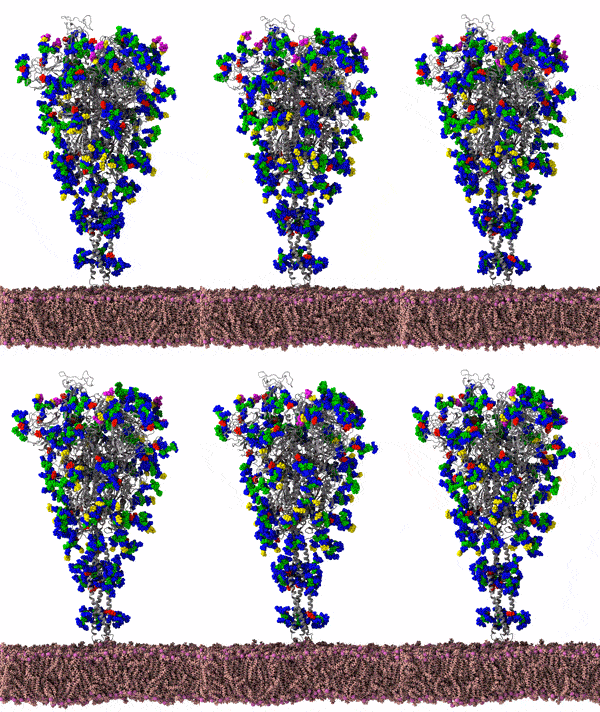
The coronavirus model is anticipated by Amaro to contain roughly 200 million atoms, a daunting undertaking, as the interaction of each atom with one another has to be computed. Her team’s workflow takes a hybrid, or integrative modeling approach.
“We’re trying to combine data at different resolutions into one cohesive model that can be simulated on leadership-class facilities like Frontera,” Amaro said. “We basically start with the individual components, where their structures have been resolved at atomic or near atomic resolution. We carefully get each of these components up and running and into a state where they are stable. Then we can introduce them into the bigger envelope simulations with neighboring molecules.”
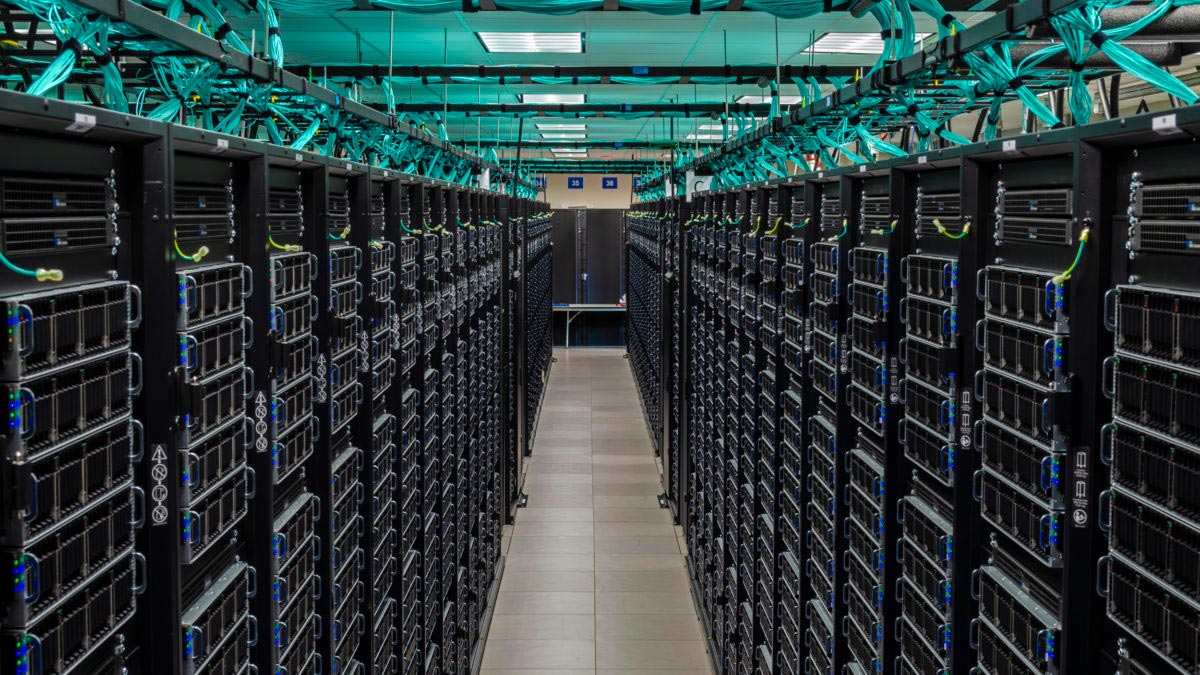
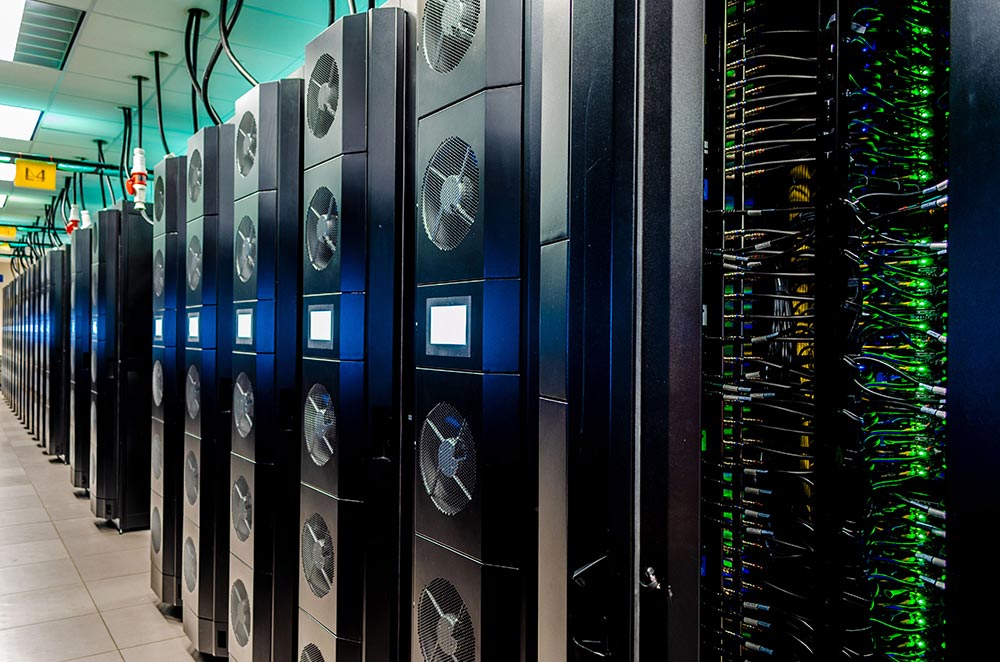
On March 12-13, 2020, the Amaro Lab ran molecular dynamics simulations on up to 4,000 nodes, or about 250,000 processing cores, on Frontera. Frontera, the #5 top supercomputer in the world and #1 academic supercomputer according to November 2019 rankings of the Top500 organization, is the leadership-class high-performance computing system supported by the National Science Foundation.
“Simulations of that size are only possible to run on a machine like Frontera or on a machine possibly at the Department of Energy,” Amaro said. “We straightaway contacted the Frontera team, and they’ve been very gracious in giving us priority status for benchmarking and trying to optimize the code so that these simulations can run as efficiently as possible, once the system is actually up and running.”
“It’s exciting to work on one of these brand-new machines, for sure. Our experience so far has been very good. The initial benchmarks have been really impressive for this system. We’re going to continue to optimize the codes for these ultra-large systems so that we can ultimately get even better performance. I would say that working with the team at Frontera has also been fantastic. They’re ready to help and have been extremely responsive during this critical time window. It’s been a very positive experience,” Amaro said.
“TACC is proud to support this critical and groundbreaking research,” said Dan Stanzione, Executive Director of TACC and Principal Investigator of the Frontera supercomputer project. “We will continue to support Amaro’s simulations and other important work related to understanding and finding a way to defeat this new threat.”
Amaro’s work with the coronavirus builds on her success with an all-atom simulation of the influenza virus envelope, published in ACS Central Science, February 2020. She said that the influenza work will have a remarkable number of similarities to what they’re now pursuing with the coronavirus.
“It’s a brilliant test of our methods and our abilities to adapt to new data and to get this up and running right off the fly,” Amaro said. “It took us a year or more to build the influenza viral envelope and get it up and running on the national supercomputers. For influenza, we used the Blue Waters supercomputer, which was in some ways the predecessor to Frontera. The work, however, with the coronavirus obviously is proceeding at a much, much faster pace. This is enabled, in part because of the work that we did on Blue Waters earlier.”
Said Amaro: “These simulations will give us new insights into the different parts of the coronavirus that are required for infectivity. And why we care about that is because if we can understand these different features, scientists have a better chance to design new drugs; to understand how current drugs work and potential drug combinations work. The information that we get from these simulations is multifaceted and multidimensional and will be of use for scientists on the front lines immediately and also in the longer term. Hopefully, the public will understand that there are many different components and facets of science to push forward to understand this virus. These simulations on Frontera are just one of those components, but hopefully an important and a gainful one.”
Reference: “Mesoscale All-Atom Influenza Virus Simulations Suggest New Substrate Binding Mechanism” by Jacob D. Durrant, Sarah E. Kochanek, Lorenzo Casalino, Pek U. Ieong, Abigail C. Dommer and Rommie E. Amaro, 19 February 2020, ACS Central Science.
DOI: 10.1021/acscentsci.9b01071
Never miss a breakthrough: Join the SciTechDaily newsletter.
Follow us on Google and Google News.