
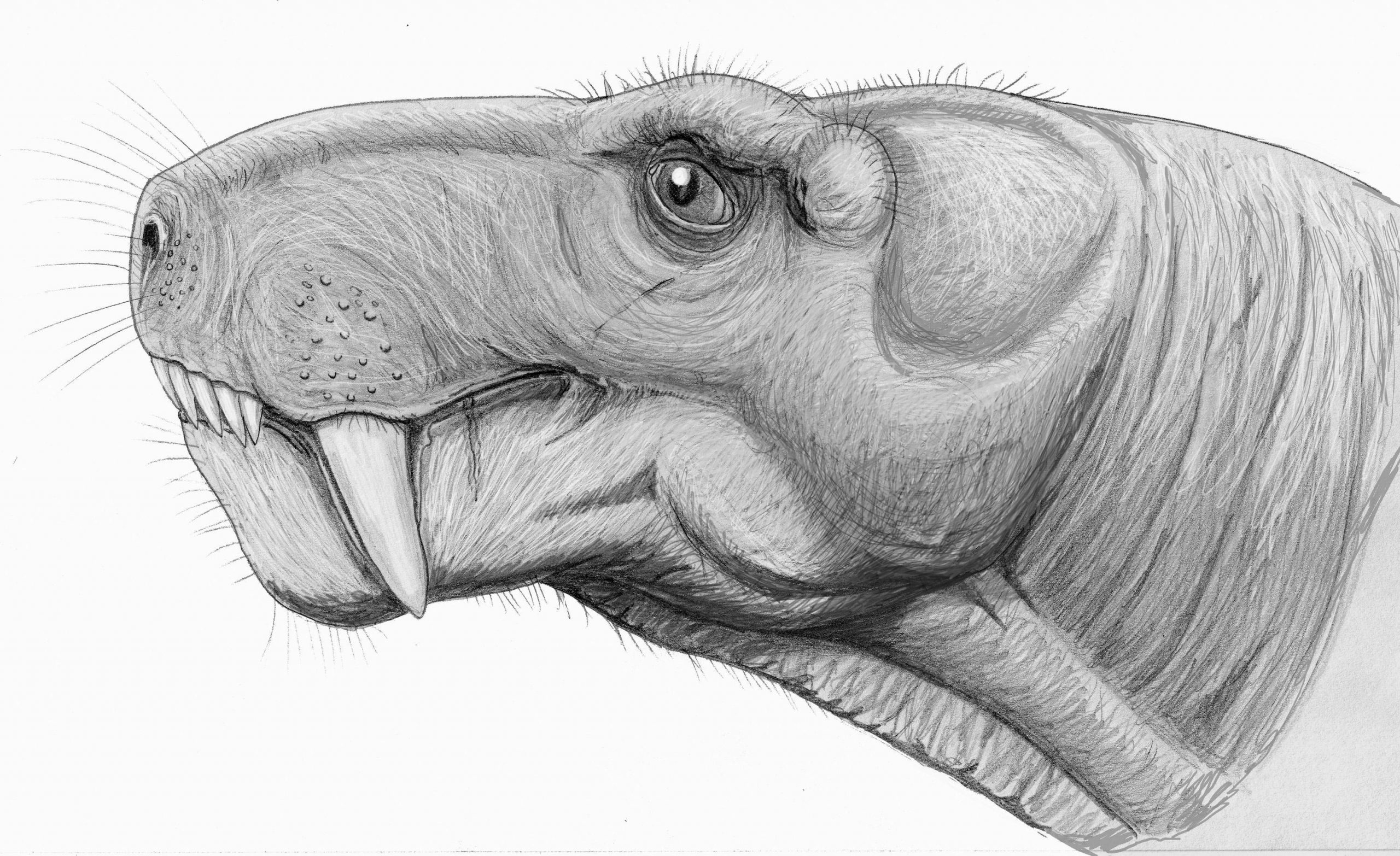
When most people think of ferocious, blade-like teeth on prehistoric creatures they picture Smilodon, better known as the saber-toothed tiger. But in the world of dinosaurs, theropods are well known for having blade-like teeth with serrated cutting edges used for biting and ripping their prey. And until recently, the complex arrangement of tissues that gave rise to these terrifying teeth was considered unique to these meat-eating dinosaurs.
In a paper published on December 16, 2020, in Biology Letters, lead author Megan Whitney, postdoctoral fellow in the Department of Organismic and Evolutionary Biology, Harvard University, examined thin fossil slices of gorgonopsian’s teeth and discovered similar complex arrangement of tissues that made the steak-knife-like serrations in theropods.
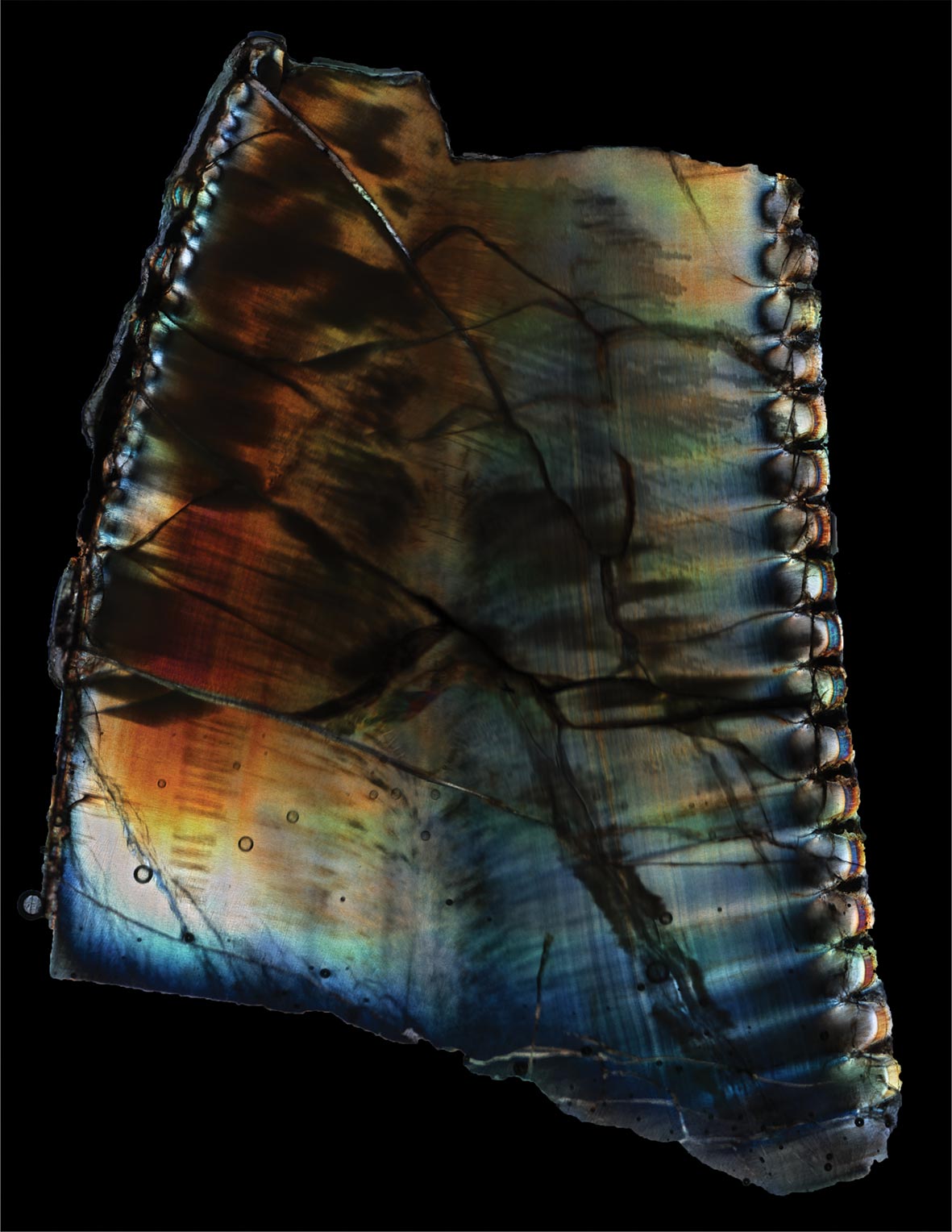
Gorgonopsians are a group of synapsids from the middle-late Permian 270-252 million years ago. These animals, like other synapsids, are considered to be the forerunners of mammals and fall within the lineage that eventually gave rise to mammals. “These animals were the apex predators of their day and are characterized by their saber-like canine that could extend up to 13 cm (5 in) long,” said Whitney.
Previous studies of theropod dinosaurs uncovered a complex arrangement of tissues made of both enamel and dentine that formed the serrations on their teeth. This complex arrangement was considered unique to theropod dinosaurs. But no one had ever made a thin section of a gorgonopsian tooth before to examine the serrations.
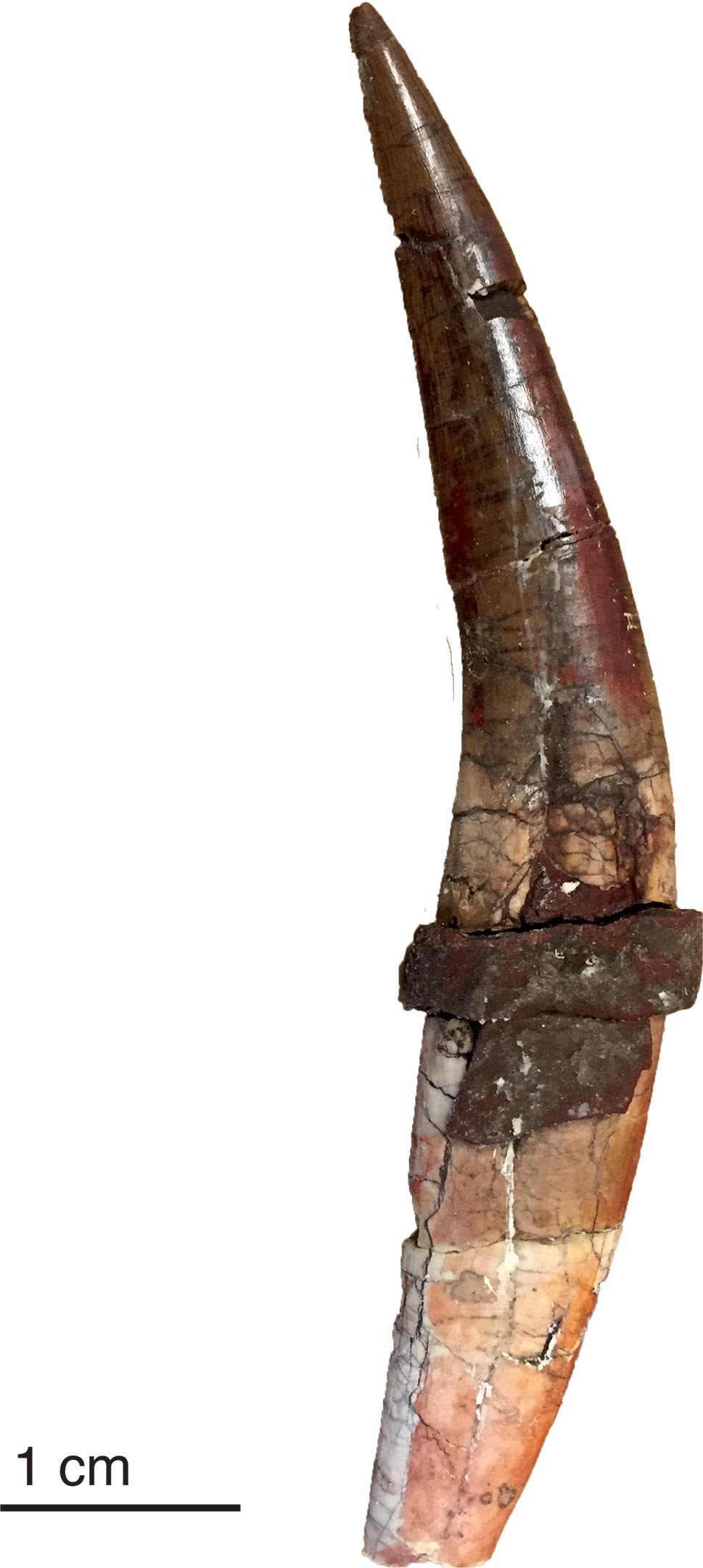
Inspired, Whitney and co-authors combined their expertise in paleohistology (the study of the microstructure of fossilized skeletal tissues) and examined thin sections of fossils from three synapsids from three different time periods to test a theory of the structure of the serrations in this group. “We were surprised to find theropod-like serrations in gorgonopsians,” said Whitney. “We wanted to see how other carnivorous synapsids had made their serrations, so we looked at an older synapsid [Dimetrodon] and a younger, mammalian synapsid [Smilodon].”
Gorgonopsian, Dimetrodon, and Smilodon are all synapsids and like theropods were apex predators of their day and had serrated, knife-like teeth (i.e. ziphodonty). Dimetrodon is one of the earliest synapsids during the Cisuralian period around 295 to 272 million years ago; Dimetrodon is often mistakenly described as a dinosaur. Smilodon lived in the Americas during the Pleistocene epoch 2.5 million to 10,000 years ago. “All of these animals fall along the mammal line which is divergent from the reptile line with dinosaurs,” said Whitney. “In fact, these three animals are more closely related to humans than to dinosaurs.”
Whitney’s PhD focused on the teeth of gorgonopsians and other forerunners of mammals so she examined the gorgonopsian specimens that were collected from ongoing, extensive fieldwork in Zambia where many of these animals are found. Co-authors Aaron LeBlanc, postdoctoral fellow in the Department of Biological Sciences, University of Alberta, Ashley Reynolds, PhD candidate in the Department of Ecology and Evolutionary Biology, University of Toronto, and Kirstin Brink, assistant professor in the Department of Geological Sciences, University of Manitoba, contributed expertise in dental histology and the animals included in this study.
The thin sections revealed that the gorgonopsian serrations are composed of tightly packed serrations made of both enamel and dentine, the same complex arrangement of tissues that had previously been attributed to theropod dinosaurs and considered unique to them. “What’s surprising is that the type of serrations in gorgonopsians are more like those of the meat-eating dinosaurs from the Mesozoic era,” said LeBlanc. “It means that this unique type of cutting tooth evolved first in the lineage leading to mammals, only to later evolve independently in dinosaurs.”
“The fact that we only see this type of serration evolve in meat-eating animals is significant,” said Brink. “The tiny microstructures hidden inside the teeth offer a significant advantage to the tooth, strengthening the serrations and helping them last longer in the mouth, which in turn helps the animal eat efficiently.”
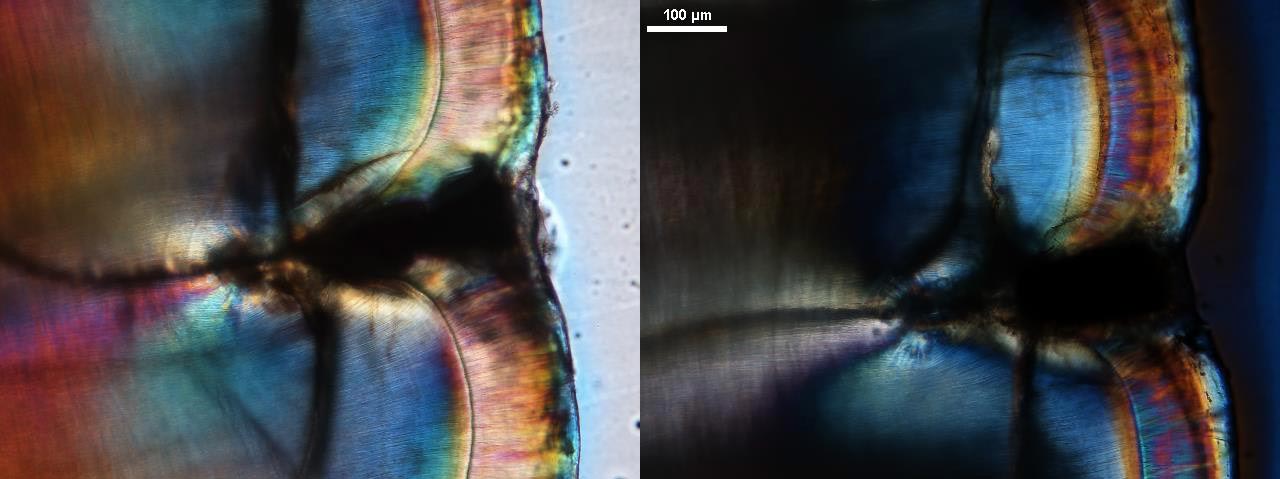
Though gorgonopsians share this trait with theropod dinosaurs, they actually share more characteristics with other synapsids like Dimetrodon and humans. “These animals converged on a similar tooth serration morphology because of the functional benefits, not because they’re close relatives to one another,” said Whitney. “In this case, it probably has something to do with the fact that animals were really putting a lot of wear and tear on their teeth. And so independently they’ve been able to form a serration that is going to withstand the repeated forces needed to eat because eating is important. So, there’s a lot of selection acting on teeth.”
Gorgonopsians were a diverse group with body sizes that ranged from the size of a medium-sized dog to a bear and Whitney notes that although the specimens sampled had this type of morphology, it remains possible that there is a diversity of serration types that would match the diversity of gorgonopsians.
Reference: “Convergent dental adaptations in the serrations of hypercarnivorous synapsids and dinosaurs” by M. R. Whitney, A. R. H. LeBlanc, A. R. Reynolds and K. S. Brink, 15 December 2020, Biology Letters.
DOI: 10.1098/rsbl.2020.0750
Never miss a breakthrough: Join the SciTechDaily newsletter.
Follow us on Google and Google News.
1 Comment
How can you be surprised if you follow the science. You show preconceived notions. Almost like your stuck in a paradigm. Think for your self and follow the science. Stop letting your Professors opinions nail you down. Old school is not better here. Old views are corrupted with basic ignorance and christian beliefs. Think for yourself kids. Throw out the old Status Quo.