
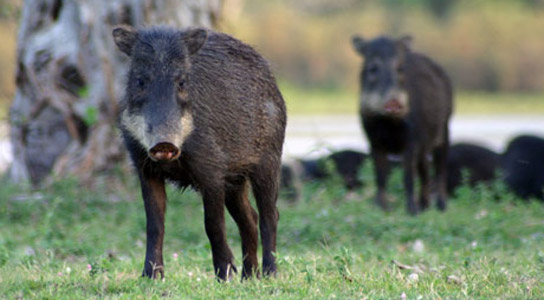
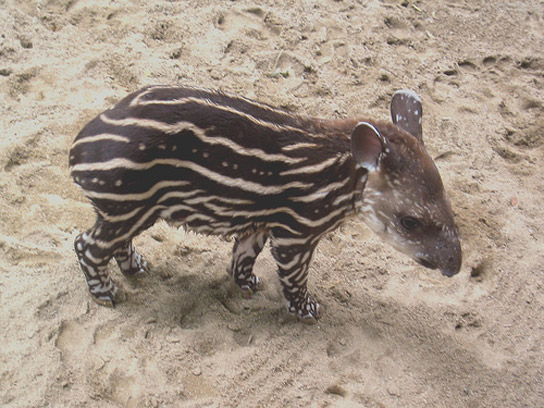
According to a new survey of Brazil’s Atlantic forests, mammal extinctions are occurring at least twice as fast as previous estimates suggested. Jaguars, lowland tapirs, woolly spider monkeys, and giant anteaters are almost absent from Brazil’s northeastern forests, which are among the most ancient and threatened tropical ecosystems on Earth.
The white-lipped peccary, a species related to pigs, is now no longer found in the area at all. The survey was published in the journal PLoS One. It was led by a team of ecologists based in Brazil and the UK, and their focus was the populations of 18 mammal species in 196 forest fragments, within an area of 250,000 square kilometers (97,000 square miles).
The population density, before the arrival of European colonists, was estimated and used as a comparison. Out of 3,528 populations estimated to have originally lived in the area, only 767 (21.7%) remain today. Only three species, two small monkeys and an armadillo, are still present throughout the region.
Previous modeling of the rate of extinction from the 1960s was far more optimistic. According to the zoologists, even big patches of forests are largely empty of mammals, which is often used as a proxy for the general health of the ecosystem.
The Atlantic forest used to stretch from the north of Brazil to Argentina, and almost as far west as the Amazonian rainforest. It was home to several species that are found nowhere else. During the past 500 years, ranches, sugarcane plantations, logging, and hunting have destroyed nearly 90% of the forest, which only exists now in fragmented plots of degraded cover. Just 1% of its original area remains now in Argentina.
The previous studies failed to account for the synergistic effects of habitat loss, fires, urban expansion, and hunting on the fragmented forests. The scientists spent two years driving along the roads of Brazilian states to interview local people about the presence of large mammals. In most places, they weren’t even recorded in living memory.
Mammal populations are doing better in officially protected areas, such as national parks. However, private landowners in northeastern Brazil are turning a blind eye to hunting, or even shooting the animals themselves without complying with the Brazilian Forest Code.
A larger protected area needs to be established, allowing for gene flow.
Reference: “Pervasive Defaunation of Forest Remnants in a Tropical Biodiversity Hotspot” by Gustavo R. Canale, Carlos A. Peres, Carlos E. Guidorizzi, Cassiano A. Ferreira Gatto and Maria Cecília M. Kierulff, 14 August 20212, PLoS One.
DOI: 10.1371/journal.pone.0041671
Never miss a breakthrough: Join the SciTechDaily newsletter.
Follow us on Google and Google News.
1 Comment
When I was in high school, I used to go to the school library and read Time Magazine, especially the science section. This was in the late 1960s. One population scientist predicted that the then current growth rates of human population would eventually crowd out all of the other life forms on planet Earth. The only existing life forms would be humans! Further, he predicted that in order to feed this population, humans would have to be housed in apartment complexes made up of many stories, and this would free up enough land to grow crops to feed humans living then.
That doesn’t seem to be happening for all of the countries on Earth. Increased education and improved healthcare have caused the population growth in developed countries to flatten or decline. Family size in developed nations is decreasing and populations are also aging! Senior populations are growing and due to reduced birthrates, there are less people of working age! This is a problem that was not predicted at that time. Less developed countries still are having large families and better access to healthcare has increased the survival rates for the general populations. This growth has increased the demands for increased food production and destruction of the environment! The loss of habitat is causing the native animal population to rapidly decline! Humans created these problems; solutions aren’t being created as rapidly! The environment is suffering!