
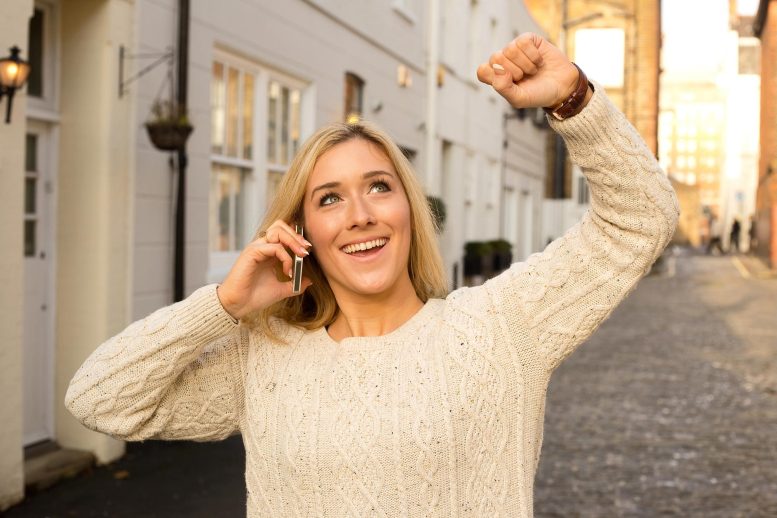
According to new research, the greater the surprise, the greater the appreciation.
People consistently underestimate how much others in their social circle might appreciate an unexpected phone call, text, or email just to say hello. This is according to new research published by the American Psychological Association, which also found that the more surprising the connection, the greater the appreciation.
“People are fundamentally social beings and enjoy connecting with others,” said lead author Peggy Liu, PhD, of the University of Pittsburgh. “There is much research showing that maintaining social connections is good for our mental and physical health. However, despite the importance and enjoyment of social connection, our research suggests that people significantly underestimate how much others will appreciate being reached out to.”
The research was published on July 11, 2022, in the Journal of Personality and Social Psychology.
In a series of experiments involving more than 5,900 participants, scientists explored how accurate people are at estimating how much others might value an attempt to connect and what factors might play into that degree of appreciation.
People Underestimate How Much Others Appreciate Contact
In one experiment, half the participants were asked to recall the last time they used email, text, or phone to reach out to someone in their social circle “just because” or “just to catch up” after an extended period of not interacting with them. The remaining participants were prompted to think of a similar situation where someone had reached out to them. Participants were then asked to indicate how much either they or the person they reached out to (depending upon the condition) appreciated, felt grateful, felt thankful, or felt pleased by the contact using a 7-point scale (1=not at all, 7=to a great extent). People who recalled reaching out thought the gesture they recalled was significantly less appreciated in comparison to those who recalled receiving a communication.
In other experiments, participants sent a short note, or a note and a small gift, to someone in their social circle with whom they had not interacted in a while. Similar to the previous experiment, participants who initiated contact were asked to rate on a 7-point scale the extent to which they thought the recipient would appreciate, feel grateful for, and feel pleased by the contact. After the notes/gifts were sent, researchers also asked the recipients to rate their appreciation.
Across all experiments, those who initiated the communication significantly underestimated the extent to which recipients would appreciate the act of reaching out. The researchers also found one interesting variable that affected how much a person appreciated a reach out.
“We found that people receiving the communication placed greater focus than those initiating the communication on the surprise element, and this heightened focus on surprise was associated with higher appreciation,” said Liu. “We also found that people underestimated others’ appreciation to a greater extent when the communication was more surprising, as opposed to part of a regular communication pattern, or the social ties between the two participants were weak.”
Social Hesitation and the Pandemic
Many people have lost touch with others in their lives, whether they’re friends from high school or college or co-workers they used to see at the water cooler before work went remote, according to Liu. Initiating social contact after a prolonged period of disconnect can feel daunting because people worry about how such a gesture might be received. These findings suggest that their hesitations may be unnecessary, as others are likely to appreciate being reached out to more than people think.
“I sometimes pause before reaching out to people from my pre-pandemic social circle for a variety of reasons. When that happens, I think about these research findings and remind myself that other people may also want to reach out to me and hesitate for the same reasons,” Liu said. “I then tell myself that I would appreciate it so much if they reached out to me and that there is no reason to think they would not similarly appreciate my reaching out to them.”
Reference: “The Surprise of Reaching Out: Appreciated More than We Think,” by Peggy Liu, PhD, University of Pittsburgh; SoYon Rim, PhD, William Patterson University; Lauren Min, PhD, University of Kansas; and Kate Min, PhD, Wheaton College, 11 July 2022. Journal of Personality and Social Psychology.
DOI: 10.1037/pspi0000402
Never miss a breakthrough: Join the SciTechDaily newsletter.
Follow us on Google and Google News.