
Close Menu
    Facebook X (Twitter) Instagram
    SciTechDaily
    • Biology
    • Chemistry
    • Earth
    • Health
    • Physics
    • Science
    • Space
    • Technology
    Facebook X (Twitter) Pinterest YouTube RSS
    SciTechDaily
    Home»Space»The First Extraterrestrial Application of Magnetotellurics: New Instrument Delivered for Lunar Lander Mission
    Space

    The First Extraterrestrial Application of Magnetotellurics: New Instrument Delivered for Lunar Lander Mission

    By Southwest Research InstituteMarch 30, 2023No Comments3 Mins Read
    Facebook Twitter Pinterest Telegram LinkedIn WhatsApp Email Reddit
    Share
    Facebook Twitter LinkedIn Pinterest Telegram Email Reddit
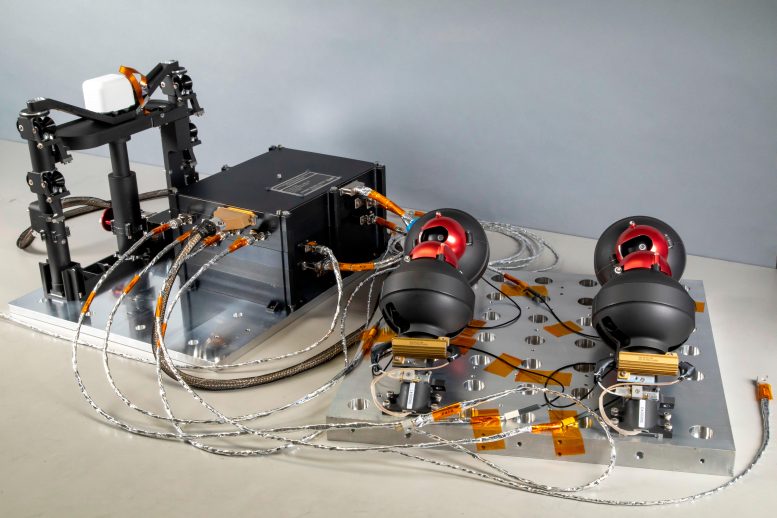
    Lunar Magnetotelluric Sounder
    SwRI developed and delivered the LMS instrument for the Mare Crisium lander to determine the electrical conductivity of the interior of the Moon by measuring low-frequency electric and magnetic fields. LMS includes (from left) a magnetometer (white) on an extendable mast, a central electronics box and four spring-launched electrodes. Credit: Southwest Research Institute

    The LMS Instrument Will Examine the Electrical Conductivity of the Interior of the Moon

    The Southwest Research Institute recently delivered the Lunar Magnetotelluric Sounder (LMS) to Firefly Aerospace located in Cedar Park, Texas, for incorporation into the Blue Ghost lunar lander. The vehicle is expected to touch down on the Moon in 2024. The LMS will evaluate the electrical conductivity of the Moon’s interior by analyzing low-frequency electric and magnetic fields.

    “For more than 50 years, scientists have used magnetotelluric techniques, which use natural characteristics of the Earth’s electromagnetic fields to determine the electrical resistivity of the subsurface for research and resource exploration,” said SwRI’s Bob Grimm, principal investigator of the instrument. “LMS will be the first extraterrestrial application of magnetotellurics.”
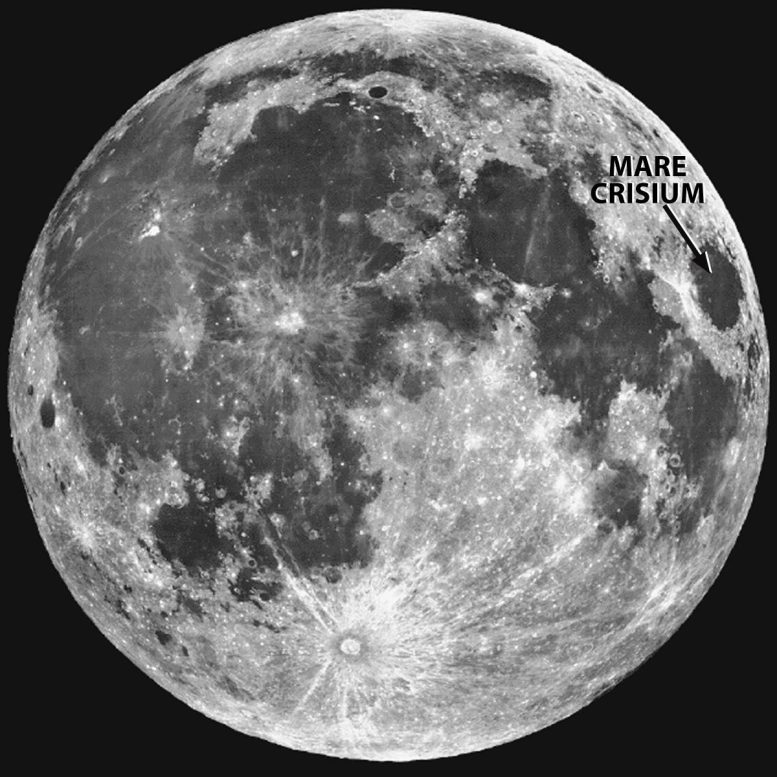
    Mare Crisum
    SwRI’s LMS instrument will be the first extraterrestrial application of magnetotellurics from aboard a lunar lander to Mare Crisium, an ancient, 350-mile-diameter impact basin that subsequently filled with lava. The basin is one of many large dark spots on the Moon’s surface visible to the naked eye. They were dubbed lunar maria, Latin for “seas,” by early astronomers who mistook them for actual seas. Credit: Lick Observatory

    NASA’s Artemis program is a series of increasingly complex missions to build a sustained human presence on the Moon for decades to come. To support these goals, LMS is part of a 12-day lunar lander mission to help understand the Moon’s subsurface in a previously unexplored location. LMS is being funded and delivered to the lunar surface via NASA’s Commercial Lunar Payload Services (CLPS) initiative and is expected to land in Mare Crisium, an ancient, 350-mile-diameter impact basin on the Moon that subsequently filled with lava. It is a dark circular spot in the northeast region of the Moon’s nearside that stands apart from the large, connected areas of dark lava to the west of where most of the Apollo missions landed.

    These vast, linked lava plains are now thought to be compositionally and structurally anomalous to the rest of the Moon. From its vantage point at Mare Crisium, LMS may provide the first geophysical measurements representative of the overall Moon.

    Electromagnetic fields penetrate to greater depths with decreasing frequency, allowing LMS to probe the interior of the Moon to depths up to 700 miles or two-thirds of the lunar radius. The electrical conductivity depends on the temperature and composition of the materials traveling through the field. The measurements will shed light on the differentiation and thermal history of our Moon, a cornerstone to understanding the evolution of solid worlds.

    Never miss a breakthrough: Join the SciTechDaily newsletter.
    Follow us on Google and Google News.

    Conductivity Electromagnetics Firefly Aerospace Geophysics Moon Southwest Research Institute
    Share. Facebook Twitter Pinterest LinkedIn Email Reddit

    Related Articles

    Discover What Lies Beneath: NASA’s Lunar Mission To Map the Moon’s Hidden Layers

    Scientists Map the Mineralogy of the Moon’s South Pole-Aitken Basin

    Small Asteroids Completely Shattered the Moon’s Upper Crust

    Lunar Reconnaissance Orbiter Finds Evidence of “Recent” Lunar Volcanism

    Solar Energetic Particles May Have Significantly Altered the Properties of Lunar Soil

    NASA Scientists Measure the Deformation of the Moon

    Lunar Rock Samples Reveal Evidence of a Huge Meteorite Strike

    Researchers Explain Metamorphosis of Moon’s Water Ice

    Data Suggests the Possible Ice on the Moon at Shackleton Crater

    Leave A Reply Cancel Reply

    • Facebook
    • Twitter
    • Pinterest
    • YouTube

    Don't Miss a Discovery

    Subscribe for the Latest in Science & Tech!

    Trending News

    Doctors May Need To Rethink Calcium and Vitamin D Recommendations After Major Review

    Scientists Discover a Hidden Cause of Cellular Aging That Can Be Reversed

    Archaeologists Have Found Something Unexpected Inside a 1,600-Year-Old Egyptian Mummy

    Scientists May Have Found a Completely New Way To Treat Depression

    New 7-Dimensional Theory May Finally Solve the Black Hole Information Paradox

    Scientists Made Older Mice Biologically Younger Using Gut Microbes

    Scientists Finally Uncover Why Ozempic Stops Working for Some People

    Wasp Colonies Explode Into Violence After Losing Their Queen

    Follow SciTechDaily
    • Facebook
    • Twitter
    • YouTube
    • Pinterest
    • Newsletter
    • RSS
    SciTech News
    • Biology News
    • Chemistry News
    • Earth News
    • Health News
    • Physics News
    • Science News
    • Space News
    • Technology News
    Recent Posts
    • Researchers Measured Alien Planet Spins and Discovered a Surprising Pattern
    • NASA’s Roman Telescope Will Search 100 Million Stars for New Worlds
    • A Cannibal Star Finally Solves One of Astronomy’s Biggest Mysteries
    • Researchers Solve the Mystery Behind a Billion-Dollar Dental Implant Disease
    • Scientists Finally Uncover How a “Forever Chemical” Causes Birth Defects
    Copyright © 1998 - 2026 SciTechDaily. All Rights Reserved.
    • Science News
    • About
    • Contact
    • Editorial Board
    • Privacy Policy
    • Terms of Use

    Type above and press Enter to search. Press Esc to cancel.