
Close Menu
    Facebook X (Twitter) Instagram
    SciTechDaily
    • Biology
    • Chemistry
    • Earth
    • Health
    • Physics
    • Science
    • Space
    • Technology
    Facebook X (Twitter) Pinterest YouTube RSS
    SciTechDaily
    Home»Science»The Future of Fashion: Waste Is the New Cotton
    Science

    The Future of Fashion: Waste Is the New Cotton

    By Journal of Bioresources and BioproductsJanuary 23, 20241 Comment4 Mins Read
    Facebook Twitter Pinterest Telegram LinkedIn WhatsApp Email Reddit
    Share
    Facebook Twitter LinkedIn Pinterest Telegram Email Reddit
    Recycled Clothing
    A new paper addresses the environmental challenges in textile manufacturing due to increased global demand and proposes using agricultural residues and recycled materials for sustainable production. Led by Ryen Frazier’s research, it identifies suitable residues in North America and emphasizes the need for adapted processing techniques for these alternative fibers.

    We could be wearing clothing made from agricultural, paper, and textile waste in 50 years.

    The world’s population has surpassed 8 billion, leading to a rise in textile demand. Synthetic fibers such as polyester are rapidly and inexpensively produced, yet their environmental footprint is growingly worrisome. Cotton, while natural and decomposable, necessitates significant land and water resources, further burdening the environment.

    Land in the future will be important for food crops and development to feed and shelter the growing population, and planting more non-food crops like cotton will take away from the already dwindling available land.
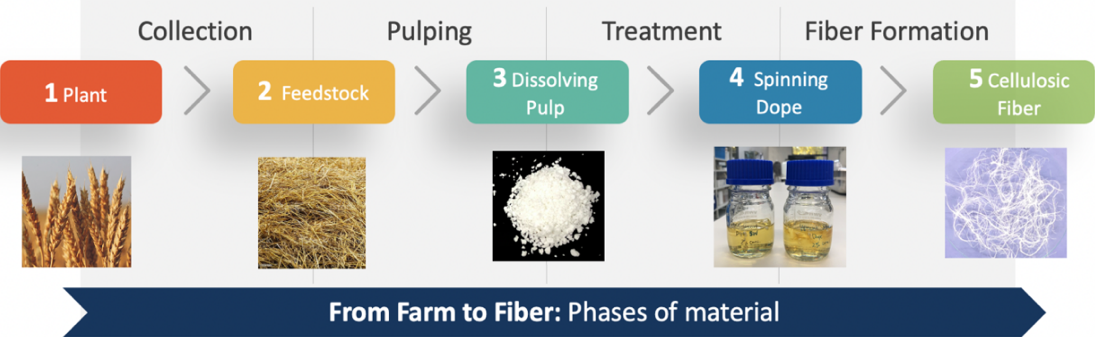
    Simplified Process Steps for Converting Non Wood Feedstocks to Textile Fibers
    Simplified process steps for converting non-wood feedstocks (such as agricultural waste) to textile fibers. Credit: Ryen M. Frazier, Department of Forest Biomaterials, North Carolina State University, Raleigh, NC 27695, USA

    Textile manufacturers are under tremendous pressure to make more and more textile fiber without bringing about any additional environmental burden. Fiber recycling has played an important role and could serve as part of the solution, but this area is still emerging and needs more infrastructure, buy-in from brands, and high levels of organization and cooperation.

    Innovative Solutions for Sustainable Textile Manufacturing

    Therefore, the authors have proposed using waste materials such as agricultural residues, recycled paper and board, and old cotton textile waste as raw materials for regenerative textile manufacturing. Thus far, no study has evaluated the potential of such waste sources for textile applications in such a comprehensive manner.
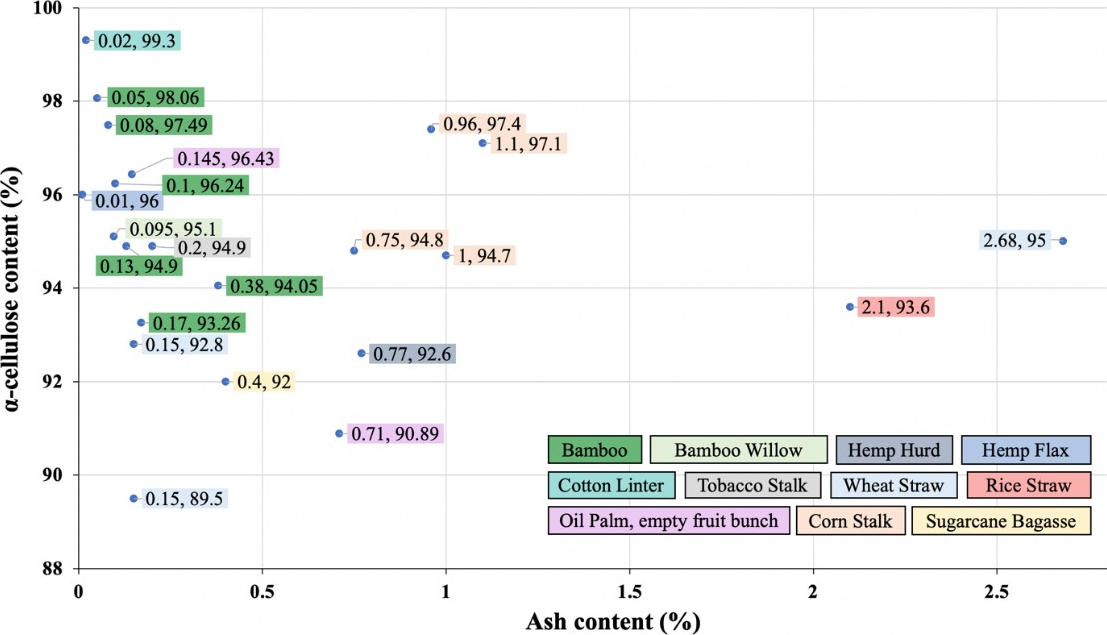
    The Future of Cotton Graphic
    Dissolving pulp α-cellulose and ash contents achieved by various alternative feedstock and pulping combinations (globally). High α-cellulose values combined with low ash contents yield pulp most suitable for textile conversion. Note, this graphic does not consider availability. Credit: Ryen Frazier

    “The article mostly focuses on the potential of agricultural residues, as these waste sources have well-documented volumes and could serve as a good solution to the shortage of fiber in the United States,” explains Ph.D. candidate Ryen Frazier, who led the research on this topic. Ryen’s work is part of a larger research consortium named SAFI (Sustainable and Alternative Fibers Initiative), led by her research advisor at North Carolina State University. SAFI is a global initiative for sustainable fiber development that focuses on researching, developing, and utilizing alternative fibers to manufacture a myriad of sustainable products. “Although the raw materials can vary in chemical and physical properties, if we understand the differences, we may be able to use this to our advantage to tune properties in the final textile fibers or to prioritize one feedstock over another.”

    The authors conclude that in North America, soybean, wheat, rice, sorghum, and sugarcane residues are widely available and the most suitable candidates for textile conversion. Recycled materials are also a good feedstock option for textiles. However, it should be emphasized that conventional pulping and conversion processes may not be suitable for these alternative fibers without modification or adaptation. The work identifies emerging technology options that might be more suitable for these alternative raw material sources.

    Reference: “Beyond Cotton and Polyester: An Evaluation of Emerging Feedstocks and Conversion Methods for the Future of Fashion Industry” by Ryen M. Frazier, Keren A. Vivas, Ivana Azuaje, Ramon Vera, Alonzo Pifano, Naycari Forfora, Hasan Jameel, Ericka Ford, Joel J. Pawlak, Richard Venditti and Ronalds Gonzalez, 4 January 2024, Journal of Bioresources and Bioproducts.
    DOI: 10.1016/j.jobab.2024.01.001

    Never miss a breakthrough: Join the SciTechDaily newsletter.
    Follow us on Google and Google News.

    Recycling Sustainability
    Share. Facebook Twitter Pinterest LinkedIn Email Reddit

    Related Articles

    Solar Cell Breakthrough: New Method Makes Perovskite Panels Fully Recyclable

    Turning Old Electronics Into Gold: A Recycling Breakthrough

    New Research Reveals Why Your Glass Bottle of Orange Juice Is Bad for the Planet

    Nanostructure Increases Solar-to-Hydrogen Conversion Efficiency by a Factor of Eleven

    New Study Breaks Down Nanomaterial Health & Environmental Risks

    Volcanic Ash Reduces the Energy Required to Manufacture Concrete

    MIT-Developed Technique Turns Emissions Into Fuel

    Energy-Efficient Construction is Key to Lowering Urban Emissions

    Graphite Foam Could Harness Energy from Temperature Gradient in Oceans

    1 Comment

    1. Pope on January 23, 2024 12:13 pm

      This means if it proved workable, we’d resort to wastes of reclyced wastes…population isn’t a problem for us on condition that we’re able to recycle and renew effectively…

      Reply
    Leave A Reply Cancel Reply

    • Facebook
    • Twitter
    • Pinterest
    • YouTube

    Don't Miss a Discovery

    Subscribe for the Latest in Science & Tech!

    Trending News

    Scientists May Have Found the Key to Jupiter and Saturn’s Moon Mystery

    Scientists Uncover Brain Changes That Link Pain to Depression

    Saunas May Do More Than Raise Body Temperature – They Activate Your Immune System

    Exercise in a Pill? Metformin Shows Surprising Effects in Cancer Patients

    Hidden Oceans of Magma Could Be Protecting Alien Life

    New Study Challenges Alzheimer’s Theories: It’s Not Just About Plaques

    Artificial Sweeteners May Harm Future Generations, Study Suggests

    Splashdown! NASA Artemis II Returns From Record-Breaking Moon Mission

    Follow SciTechDaily
    • Facebook
    • Twitter
    • YouTube
    • Pinterest
    • Newsletter
    • RSS
    SciTech News
    • Biology News
    • Chemistry News
    • Earth News
    • Health News
    • Physics News
    • Science News
    • Space News
    • Technology News
    Recent Posts
    • Physicists Discover a Strange New Kind of One-Dimensional Particle
    • Scientists Discover Unexpected Climate Benefit Hidden in Forest Soils
    • The Grand Canyon’s “Swiss Cheese” Rocks Hold a Critical Secret
    • Scientists Discover 430,000-Year-Old Wooden Tools, Rewriting Human History
    • Scientists Make Breakthrough on 40-Year-Old 2D Physics Puzzle
    Copyright © 1998 - 2026 SciTechDaily. All Rights Reserved.
    • Science News
    • About
    • Contact
    • Editorial Board
    • Privacy Policy
    • Terms of Use

    Type above and press Enter to search. Press Esc to cancel.