
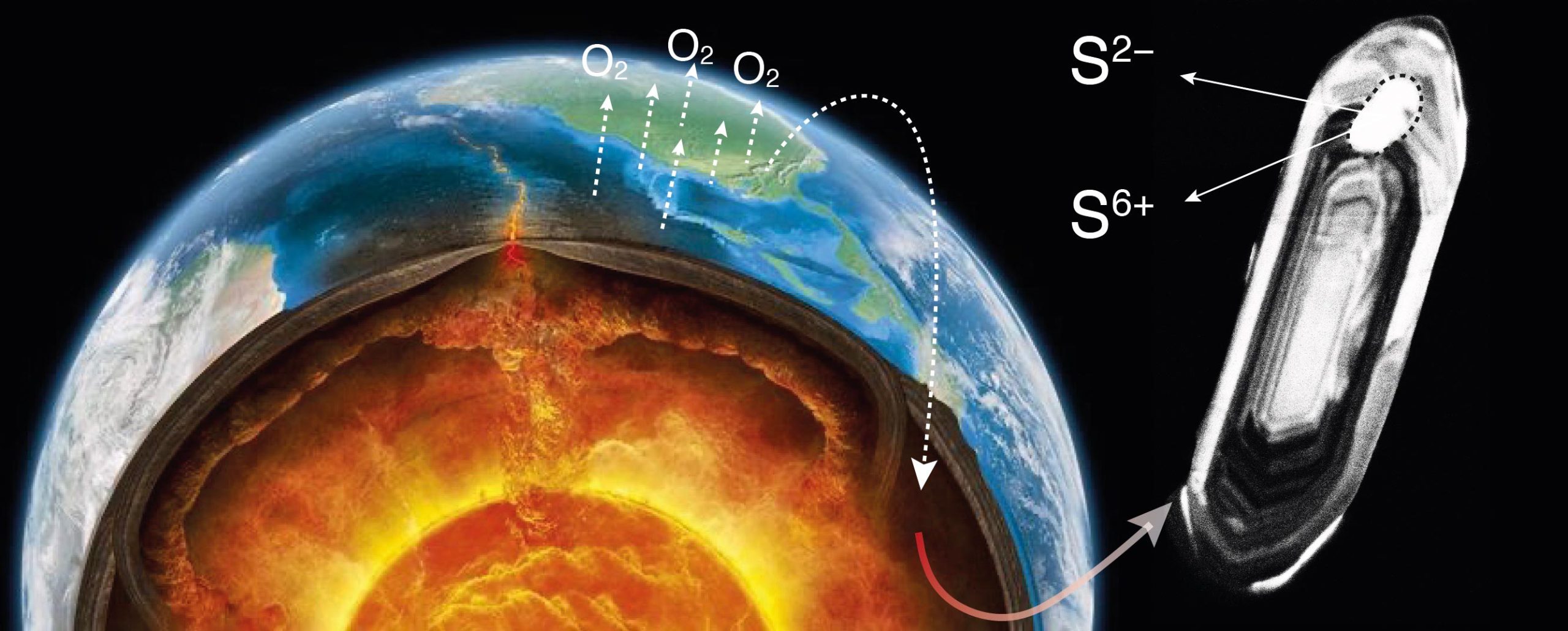
Using synchrotron techniques, scientists have unveiled important information on The Great Oxidation Event by studying apatite inclusions in zircon crystals from old magmas with the ESRF – Extremely Brilliant Source.
Around 2.4 billion years ago, a pivotal moment in Earth’s history took place: The Great Oxidation Event. During this period, a significant amount of oxygen accumulated in the atmosphere. This surge in oxygen production led to a dramatic shift in the composition of the atmosphere, altering the chemistry of the planet. The event marked a turning point as oxygen levels rose, enabling the development of more complex multicellular life forms and fundamentally reshaping Earth’s ecosystems.
Role of Plate Tectonics in Earth’s Chemistry
Plate tectonics are an effective mechanism for the cycling and interchange of elements among Earth’s surface, atmosphere, and mantle. As mountains undergo weathering and erosion through interactions with water and the atmosphere, they break down into sediments. These sediments are then partially returned to the mantle through subduction processes (one tectonic plate sinking beneath another). The formation of magmas in the mantle above subduction zones provides a unique opportunity to explore how the atmosphere could have impacted the mantle by assimilating materials from subducted sediments, offering insights into this intriguing geological relationship.
Innovative Methods to Study Geological Interactions
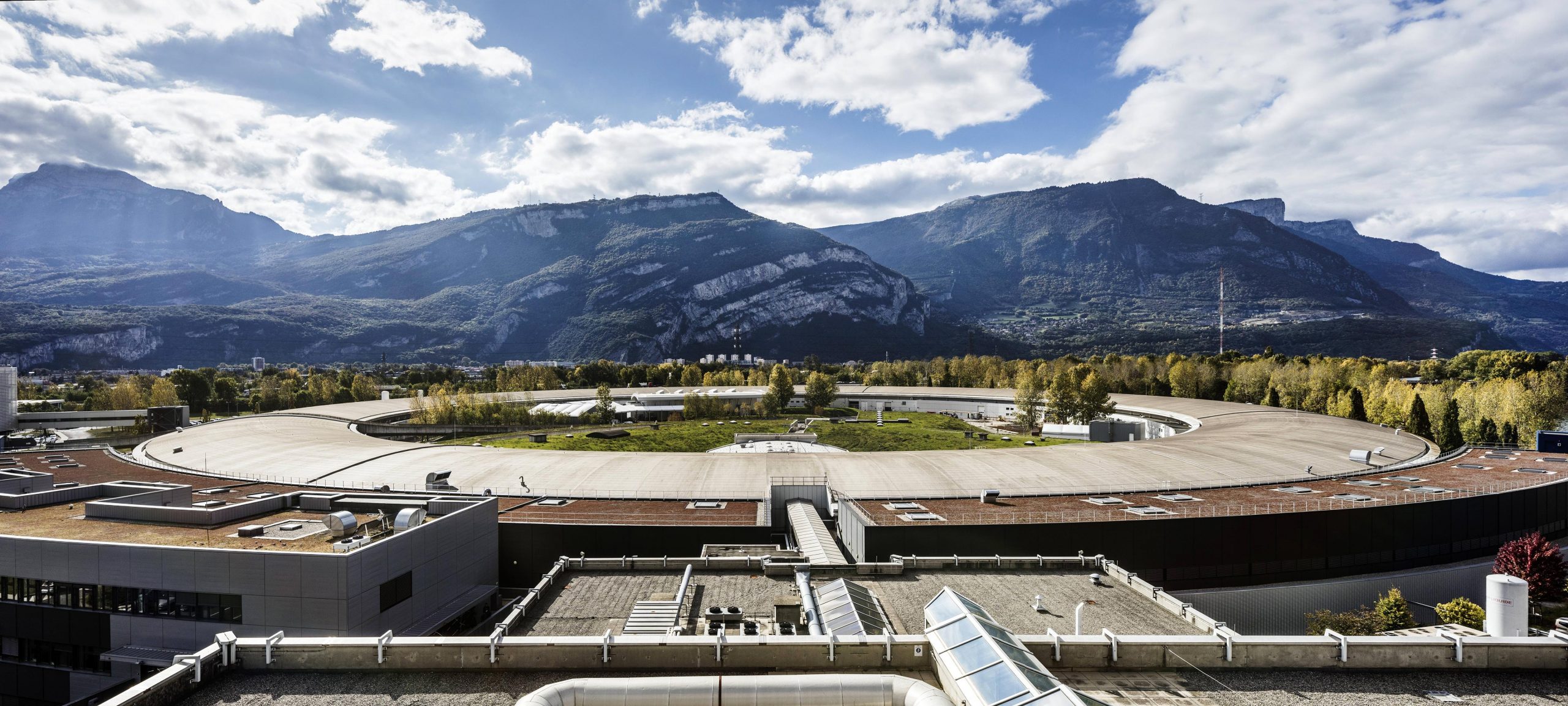
Scientists have long tried to study the interaction between the atmosphere and the Earth’s mantle. The mission is already complicated to be accomplished in the modern Earth, and even more so in the early Earth, when the atmosphere and plate tectonics were changing at rapid rates. A team led by the University of Montpellier and University of Portsmouth teamed up with the ESRF – The European Synchrotron – and found a way to overcome obstacles by studying apatite inclusions in zircon from subduction zones.
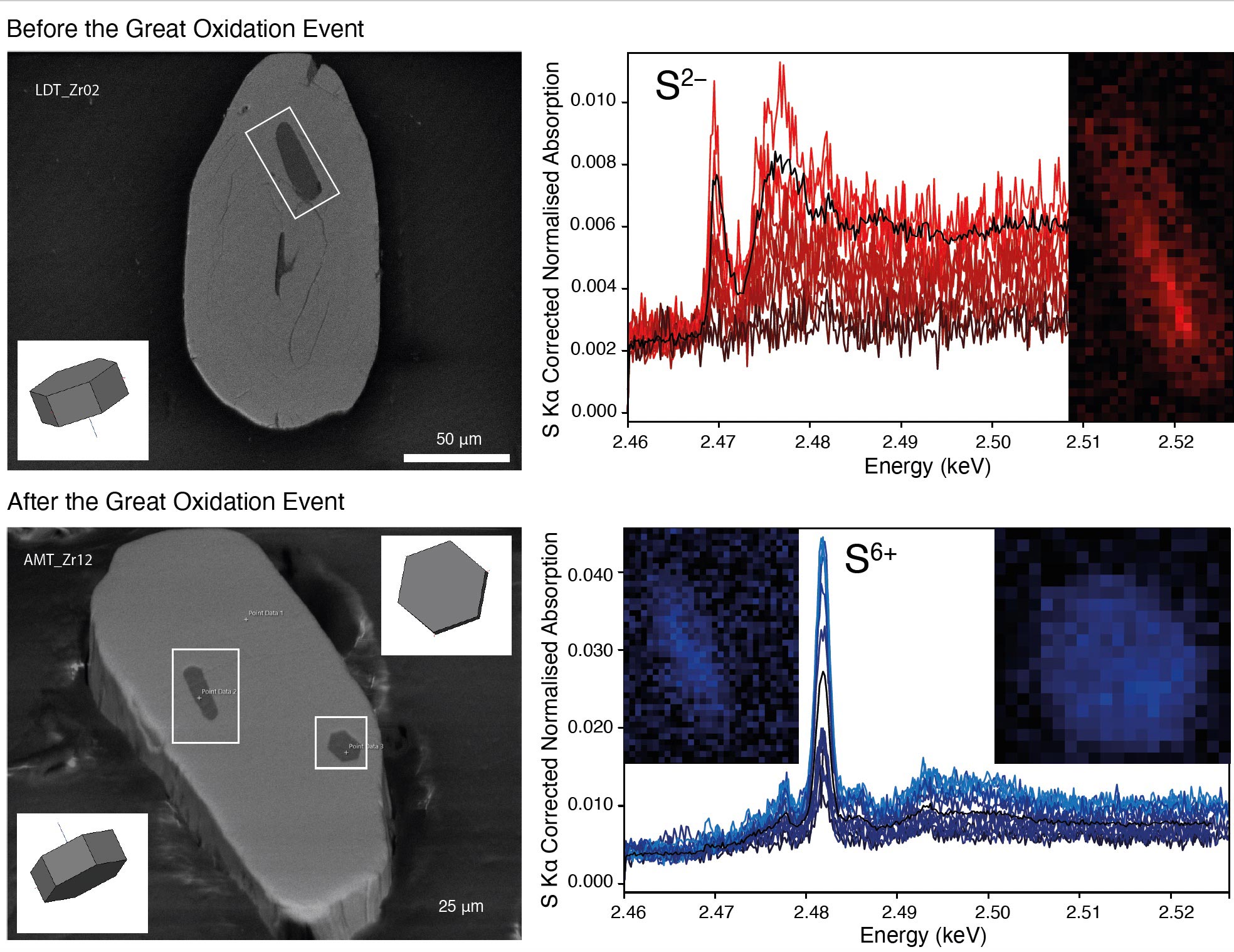
“In 2017, a paper on the mineral apatite unveiled that when it grows at reduced conditions, meaning there is little or no free oxygen for chemical reactions, its sulfur would show a very specific signature. However, if it crystalized in oxidized conditions, the sulfur inside the apatite would look very different. This means that apatite is a proxy for redox conditions,” explains Hugo Moreira, a CNRS postdoctoral researcher at the University of Montpellier and first author of the paper.
Moreira and colleagues decided to explore inclusions of phosphate-mineral apatite in zircon grains that are crystallized in magmas formed in an ancient subduction zone, and measured their sulfur valence speciation using X-ray absorption near edge structure (XANES) at the ESRF, the brightest synchrotron light source.
Key Findings and Implications
Sulfur incorporation and speciation in apatite is intrinsically dependent on the oxygen fugacity of the magma and therefore ideal for assessing the oxidation state during the evolution of magmatic systems. “Using apatite inclusions in zircons rather than apatite from the rock matrix was paramount, as the inclusions have been shielded by the extremely robust zircon crystals, preserving their original composition,” explains Moreira.
The experiment results show that apatite inclusions in zircons from magmas that crystallized prior to the Great Oxidation Event have a relatively reduced sulfur redox state, whereas after the Great Oxidation Event, they are more oxidized. The analysis of zircon shows that these magmas shared a similar source and that the younger samples had incorporated a sediment component. Overall, the clear implication is that sediments affected by an increasingly oxidized atmosphere modified the mantle and shifted the fugacity of magmas towards more oxidized conditions.
Future Research Directions
“Our study shows that investigating apatite inclusions in zircon using synchrotron X-rays is a powerful tool to constraint a critical magma parameter,” concludes Moreira.
The next step for the team is to study other magmas that crystallized in key periods of Earth’s history, such as the Neoproterozoic Oxidation Event (beginning 850 million years ago) and when the first signs of oxygen emerged in the Archaean period.
Reference: “Sub-arc mantle fugacity shifted by sediment1 recycling across the Great Oxidation Event” by Hugo Moreira, Craig Storey, Emilie Bruand, James Darling, Mike Fowler, Marine Cotte, Edgar E. Villalobos-Portillo, Fleurice Parat, Luís Seixas, Pascal Philippot & Bruno Dhuime, 31 August 2023, Nature Geoscience.
DOI: 10.1038/s41561-023-01258-4
Never miss a breakthrough: Join the SciTechDaily newsletter.
Follow us on Google and Google News.