
Close Menu
    Facebook X (Twitter) Instagram
    SciTechDaily
    • Biology
    • Chemistry
    • Earth
    • Health
    • Physics
    • Science
    • Space
    • Technology
    Facebook X (Twitter) Pinterest YouTube RSS
    SciTechDaily
    Home»Earth»The Hidden Sounds of the Earth: What Our Soil is Telling Us
    Earth

    The Hidden Sounds of the Earth: What Our Soil is Telling Us

    By Flinders UniversityAugust 22, 2024No Comments3 Mins Read
    Facebook Twitter Pinterest Telegram LinkedIn WhatsApp Email Reddit
    Share
    Facebook Twitter LinkedIn Pinterest Telegram Email Reddit
    Planting Soil in Hands
    Australian ecologists from Flinders University use eco-acoustics to study soil biodiversity, discovering that soundscapes in soils vary with the presence and activity of various invertebrates. Revegetated areas show greater acoustic diversity compared to degraded soils, suggesting a new approach to monitoring soil health and supporting restoration efforts.

    Eco-acoustic studies at Flinders University indicate that healthier soils have more complex soundscapes, pointing to a novel tool for environmental restoration.

    Healthy soils produce a cacophony of sounds in many forms barely audible to human ears – a bit like a concert of bubble pops and clicks.

    In a new study published in the Journal of Applied Ecology, ecologists from Flinders University have made special recordings of this chaotic mixture of soundscapes. Their research shows these soil acoustics can be a measure of the diversity of tiny living animals in the soil, which create sounds as they move and interact with their environment.

    With 75% of the world’s soils degraded, the future of the teeming community of living species that live underground faces a dire future without restoration, says microbial ecologist Dr. Jake Robinson, from the Frontiers of Restoration Ecology Lab in the College of Science and Engineering at Flinders University.

    This new field of research aims to investigate the vast, teeming hidden ecosystems where almost 60% of the Earth’s species live, he says.
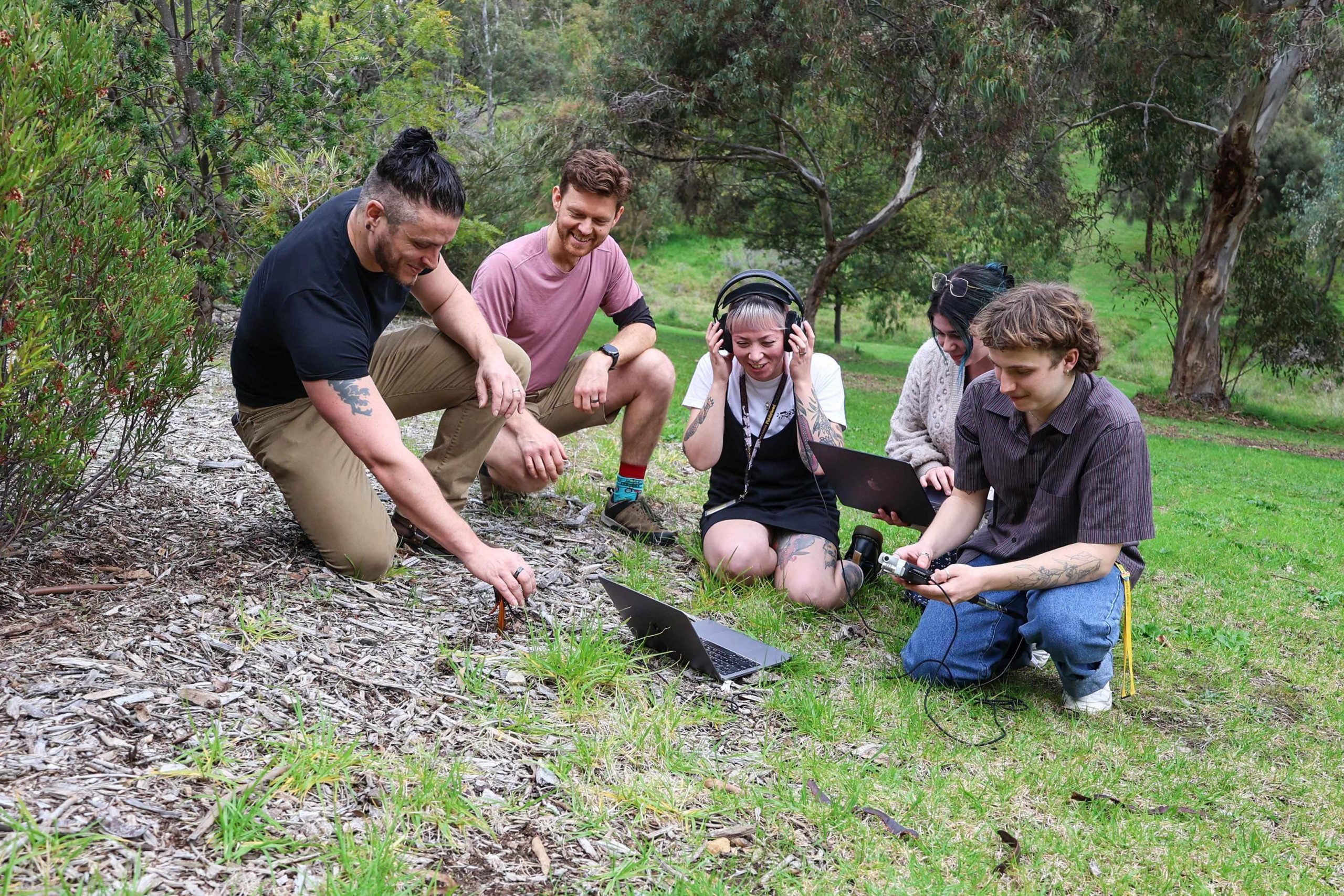
    Soil Acoustics Group
    Flinders University researchers test soil acoustics (left to right) Dr. Jake Robinson, Associate Professor Martin Breed, Nicole Fickling, Amy Annells, and Alex Taylor. Credit: Flinders University

    Advancements in Eco-Acoustics

    “Restoring and monitoring soil biodiversity has never been more important.

    “Although still in its early stages, ‘eco-acoustics’ is emerging as a promising tool to detect and monitor soil biodiversity and has now been used in Australian bushland and other ecosystems in the UK.

    “The acoustic complexity and diversity are significantly higher in revegetated and remnant plots than in cleared plots, both in-situ and in sound attenuation chambers.

    “The acoustic complexity and diversity are also significantly associated with soil invertebrate abundance and richness.”
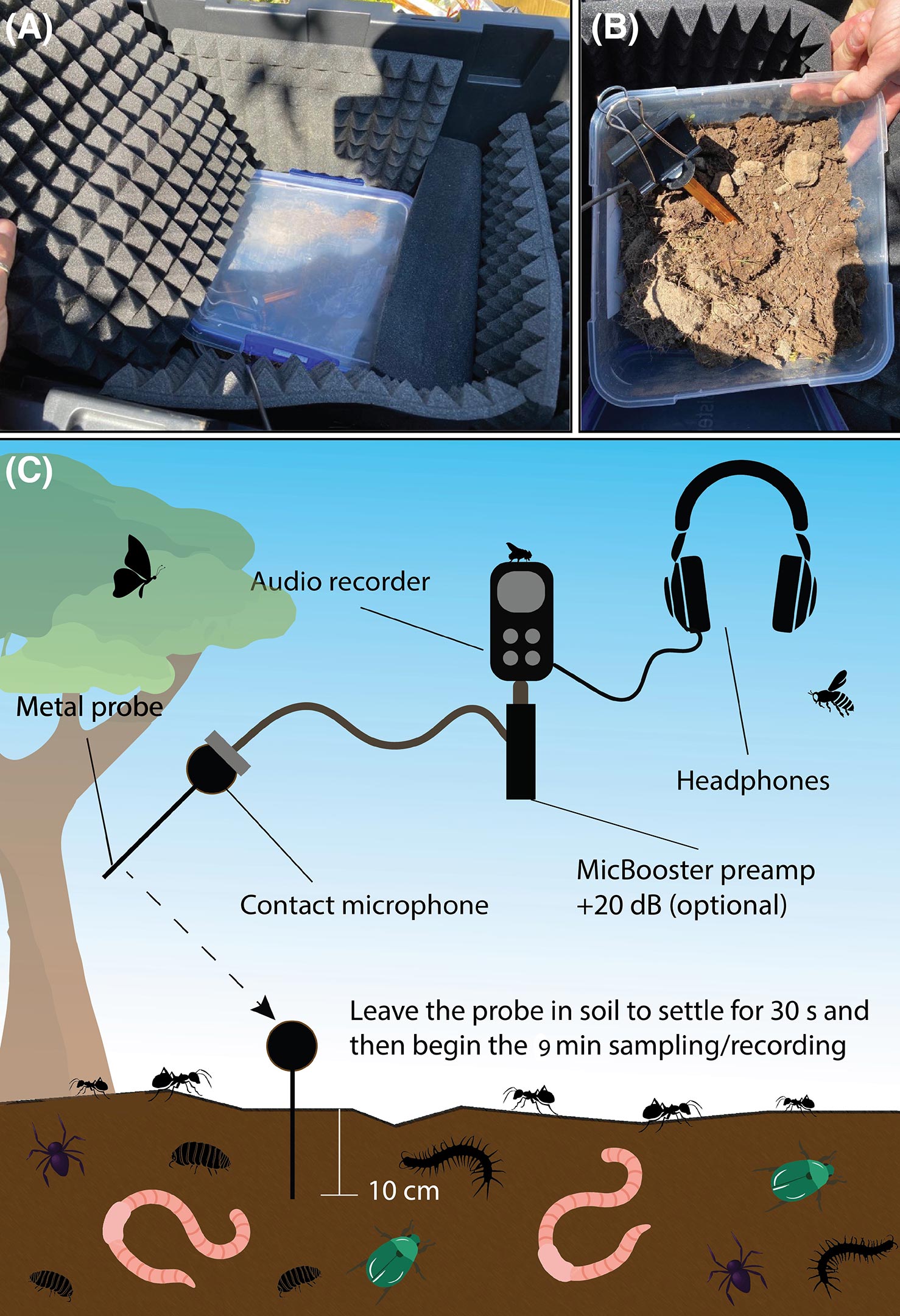
    Graphical Abstract of Soil Acoustics
    Acoustic monitoring was carried out on soil in remnant vegetation as well as degraded plots and land that was revegetated 15 years ago. Credit: Flinders University

    The study, including Flinders University expert Associate Professor Martin Breed and Professor Xin Sun from the Chinese Academy of Sciences, compared results from acoustic monitoring of remnant vegetation to degraded plots and land that was revegetated 15 years ago.

    The passive acoustic monitoring used various tools and indices to measure soil biodiversity over five days in the Mount Bold region in the Adelaide Hills in South Australia. A below-ground sampling device and sound attenuation chamber were used to record soil invertebrate communities, which were also manually counted.
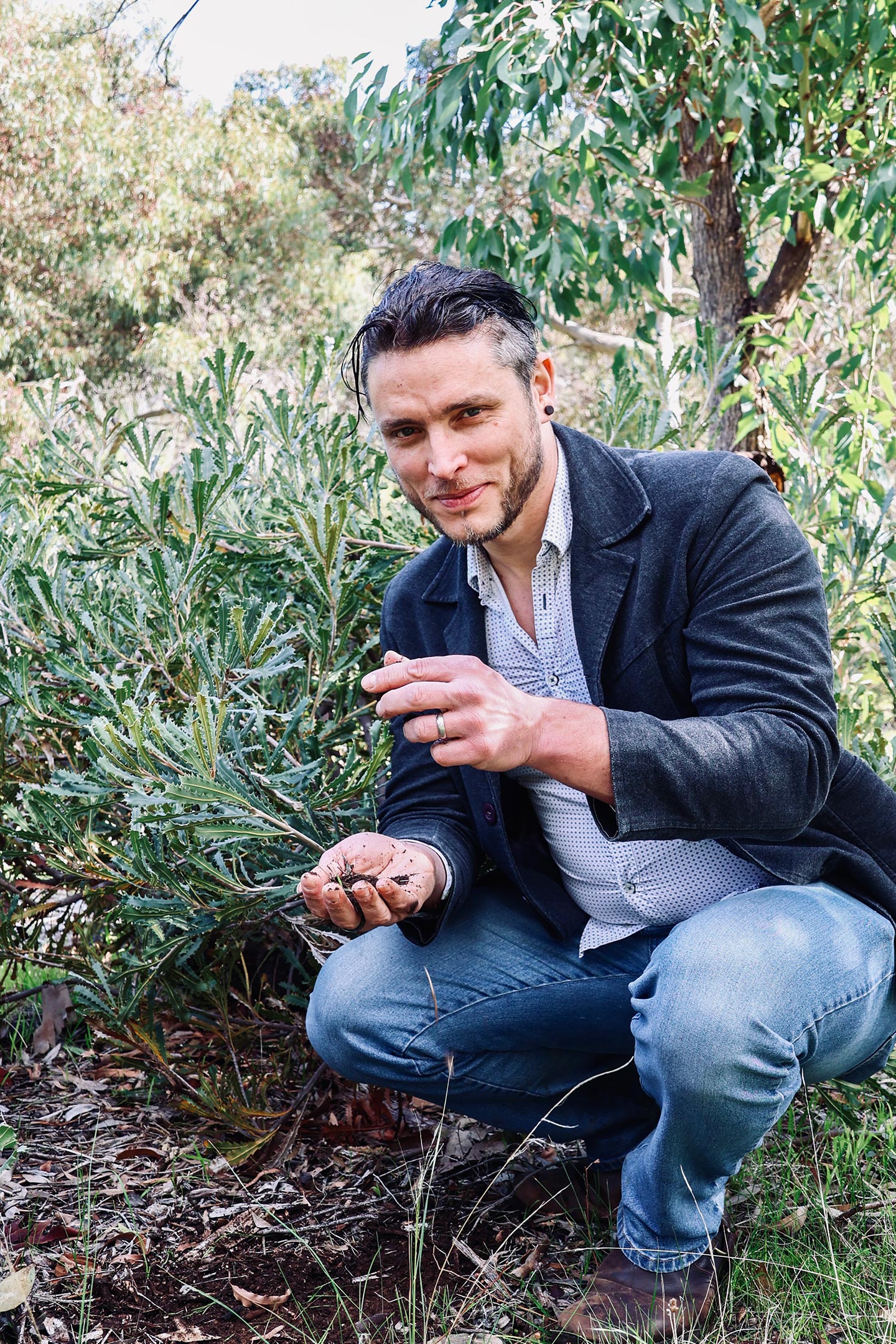
    Jake Robinson
    Microbial ecologist Dr. Jake Robinson, from Flinders University, Australia. Credit: Flinders University

    “It’s clear acoustic complexity and diversity of our samples are associated with soil invertebrate abundance – from earthworms, beetles to ants and spiders – and it seems to be a clear reflection of soil health,” says Dr. Robinson.

    “All living organisms produce sounds, and our preliminary results suggest different soil organisms make different sound profiles depending on their activity, shape, appendages, and size.

    “This technology holds promise in addressing the global need for more effective soil biodiversity monitoring methods to protect our planet’s most diverse ecosystems.”

    Reference: “Sounds of the underground reflect soil biodiversity dynamics across a grassy woodland restoration chronosequence” by Jake M. Robinson, Alex Taylor, Nicole Fickling, Xin Sun and Martin F. Breed, 15 August 2024, Journal of Applied Ecology.
    DOI: 10.1111/1365-2664.14738

    Never miss a breakthrough: Join the SciTechDaily newsletter.
    Follow us on Google and Google News.

    Acoustics Ecology Flinders University Soil
    Share. Facebook Twitter Pinterest LinkedIn Email Reddit

    Related Articles

    Hidden Life in the World’s Driest Desert Defies All Expectations

    Unearthing the Amazon’s Dark Secret: How Ancient Soil Can Boost Forest Restoration Across the Globe

    Get Your Hands Dirty for Health: Call to Restore Urban Biodiversity, Post COVID-19 Pandemic

    Carbon Absorption by Plants Limited by the Abundance of Soil Nutrients

    Survey of Brazil’s Atlantic Forests Reveals Loss of Key Species

    Nitrogen Pollution Is Altering Sensitive Ecosystems

    Preserving Biodiversity When Agricultural Production Increases

    Evidence Suggests that Earth May Be Headed Toward an Irreversible Change in the Biosphere

    Earth Recovered 10 Million Years After Permian-Triassic Mass Extinction

    Leave A Reply Cancel Reply

    • Facebook
    • Twitter
    • Pinterest
    • YouTube

    Don't Miss a Discovery

    Subscribe for the Latest in Science & Tech!

    Trending News

    Why Popular Diabetes Drugs Like Ozempic Don’t Work for Everyone: The “Genetic Glitch”

    Scientists Stunned After Finding Plant Thought Extinct for 60 Years

    Scientists Discover Tiny New Spider That Hunts Prey 6x Its Size

    Natural Component From Licorice Shows Promise for Treating Inflammatory Bowel Disease

    Scientists Warn: Popular Sweetener Linked to Dangerous Metabolic Effects

    Monster Storms on Jupiter Unleash Lightning Beyond Anything on Earth

    Scientists Create “Liquid Gears” That Spin Without Touching

    The Simple Habit That Could Help Prevent Cancer

    Follow SciTechDaily
    • Facebook
    • Twitter
    • YouTube
    • Pinterest
    • Newsletter
    • RSS
    SciTech News
    • Biology News
    • Chemistry News
    • Earth News
    • Health News
    • Physics News
    • Science News
    • Space News
    • Technology News
    Recent Posts
    • 2.8 Days to Disaster: Scientists Warn Low Earth Orbit Could Suddenly Collapse
    • Scientists Uncover How Serotonin May Trigger Tinnitus
    • Common Food Compound Shows Surprising Power Against Superbugs
    • Ancient DNA Study Reveals Human Evolution Is Happening Faster Than We Thought
    • 5 Simple Ways To Remember More and Forget Less
    Copyright © 1998 - 2026 SciTechDaily. All Rights Reserved.
    • Science News
    • About
    • Contact
    • Editorial Board
    • Privacy Policy
    • Terms of Use

    Type above and press Enter to search. Press Esc to cancel.