
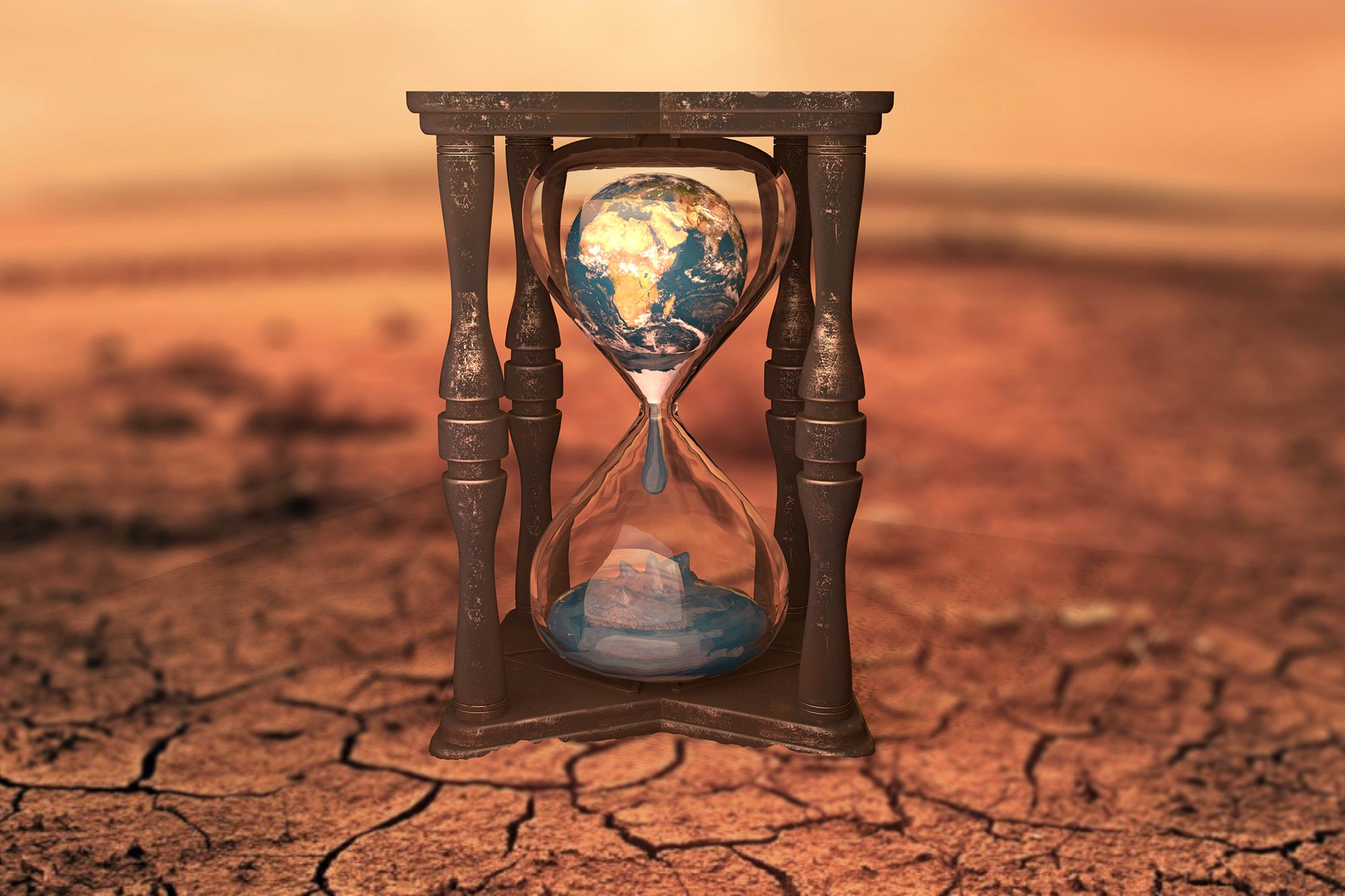
Global warming may be speeding up—scientists say the planet is heating nearly twice as fast as before, putting the 1.5°C limit at risk before 2030.
Global warming has been speeding up since around 2015, according to a new analysis from the Potsdam Institute for Climate Impact Research (PIK). After removing the effects of known natural factors that influence global temperatures, researchers identified a statistically significant increase in the pace of warming for the first time.
During the past decade, global temperatures have risen at an estimated rate of about 0.35°C per decade, depending on the dataset examined. That is a sharp increase compared with the average warming rate of just under 0.2°C per decade recorded between 1970 and 2015. According to the study, the recent decade shows the fastest warming rate observed since instrumental temperature records began in 1880.
“We can now demonstrate a strong and statistically significant acceleration of global warming since around 2015,” says Grant Foster, a US statistics expert and co-author of the study, which was published today (March 6) in the scientific journal Geophysical Research Letters.
“We filter out known natural influences in the observational data, so that the ‘noise’ is reduced, making the underlying long-term warming signal more clearly visible,” Foster added.
Removing Natural Climate Fluctuations From Temperature Data
Short-term natural events such as El Niño, volcanic eruptions, and solar cycles can temporarily raise or lower global temperatures, sometimes obscuring changes in the long-term warming trend.
To address this, the researchers analyzed direct measurement data from five widely used global temperature datasets (NASA, NOAA, HadCRUT, Berkeley Earth, ERA5). By adjusting the data to account for these natural influences, the team was able to isolate the long-term warming signal more clearly.
“The adjusted data show an acceleration of global warming since 2015 with a statistical certainty of over 98 percent, consistent across all data sets examined and independent of the analysis method chosen,” explains Stefan Rahmstorf, PIK researcher and lead author of the study.
Study Focuses on Warming Trend Acceleration
The research specifically examined whether the pace of warming has changed over time, rather than attempting to determine the exact causes behind the shift.
After adjusting the temperature records for El Niño effects and the recent solar maximum, the exceptionally hot years of 2023 and 2024 become slightly cooler in the analysis. Even so, they still rank as the two warmest years since modern temperature measurements began. Across all datasets, the acceleration in warming starts to become visible around 2013 or 2014.
To evaluate whether the warming rate had changed since the 1970s, the researchers applied two statistical techniques: a quadratic trend analysis and a piecewise linear model designed to detect the timing of changes in long term warming rates.
Implications for the Paris Agreement Climate Target
The study does not attempt to identify the specific drivers behind the acceleration. However, the authors note that climate models already indicate that increasing rates of warming are consistent with current scientific understanding of climate change.
“If the warming rate of the past 10 years continues, it would lead to a long-term exceedance of the 1.5°C limit of the Paris Agreement before 2030,” says Stefan Rahmstorf. “How quickly the Earth continues to warm ultimately depends on how rapidly we reduce global CO₂ emissions from fossil fuels to zero.”
Reference: “Global Warming Has Accelerated Significantly” by G. Foster and S. Rahmstorf, 6 March 2026, Geophysical Research Letters.
DOI: 10.1029/2025GL118804
Never miss a breakthrough: Join the SciTechDaily newsletter.
Follow us on Google and Google News.
3 Comments
“During the past decade, global temperatures have risen at an estimated rate of about 0.35°C per decade, DEPENDING ON THE DATASET EXAMINED.”
What that tells me is that the researchers should be looking at the uncertainty of all the datasets to understand WHY the estimates vary with the datasets. The apparent variation may be spurious. That is, just looking at nominal or average values is only part of the picture. If there is no statistical difference in warming rates, then the claim is false. It results from wider uncertainty ranges.
It should be noted that the extent of the seasonal low in Arctic sea ice coverage, reported by the National Snow & Ice Data Center (NSIDC), reached a low in 2012 and the trend since then has been increasing minimum coverage. This is an apparent contradiction of the claim that “the planet is heating nearly twice as fast as before.” This strongly suggests that the schema for ‘correcting’ the recent historical temperature was not done properly.
“Across all datasets, the acceleration in warming starts to become visible around 2013 or 2014.”
It is generally accepted that the Arctic has been warming at a rate that is 2-4X greater than the global average, making the Arctic the ‘Coal Mine Canary’ singing the loudest. The greatest loss in seasonal Arctic ice was in 2012, which was presumably the warmest year in the Arctic in modern times; it has been colder EVERY year since then! What is wrong with this picture?
“The study does not attempt to identify the specific drivers behind the [claimed] acceleration.”
That is unfortunate because trying to assign a plausible causality to the claimed increase in warming rate might serve as a ‘sanity check’ on the claimed increase of the global temperature resulting from anthropogenic drivers.
An important, unstated assumption, is that the “noise” they allege to have removed is independent and random. Truth be known, it is probably NOT independent but is part of the numerous interrelated feedback loops. That is particularly true for El Nino events which appear to be a natural way to remove excess ocean heat.