
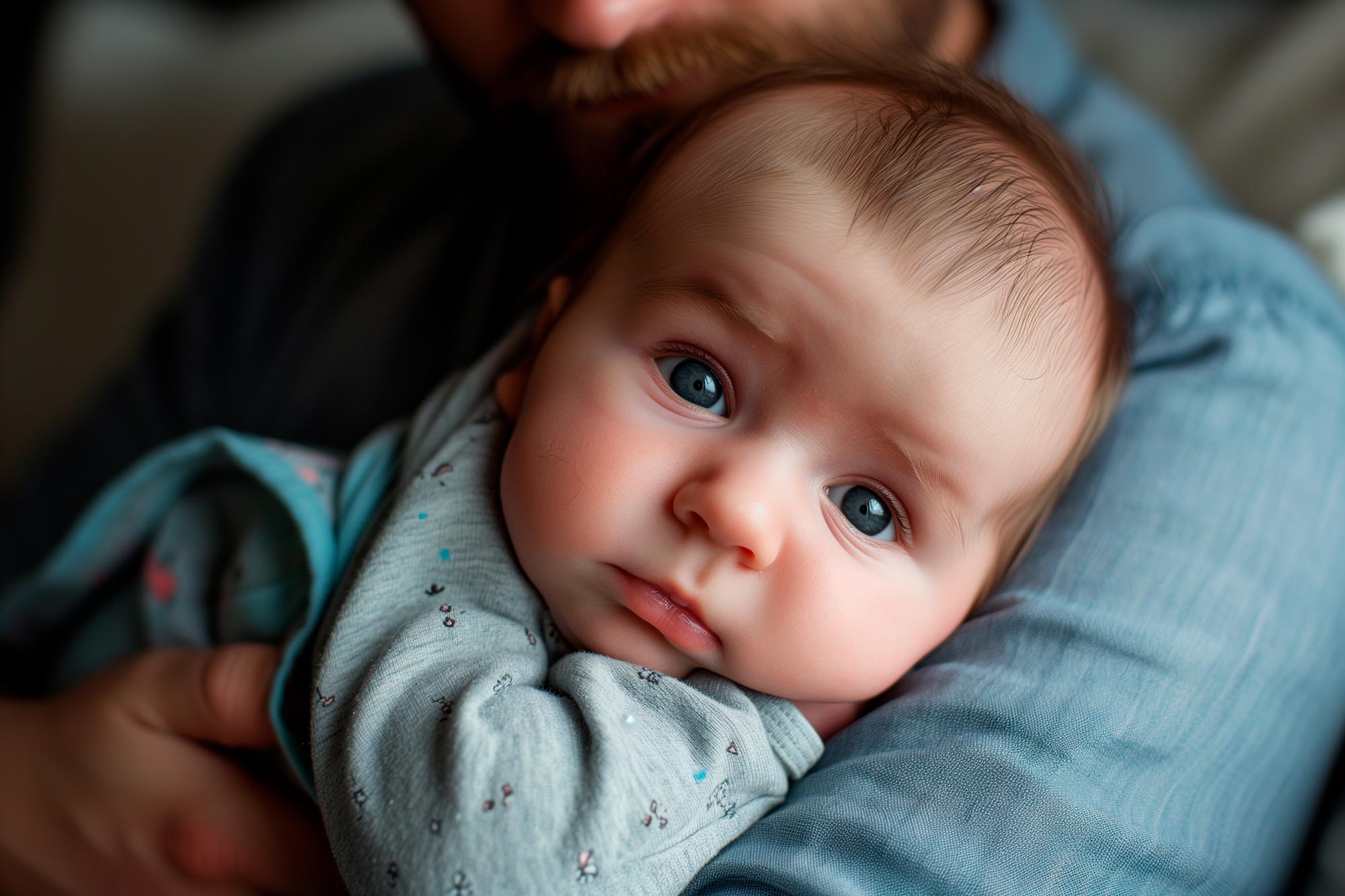
You probably haven’t ever given it much thought, but almost everyone cradles a baby in one specific arm. The vast majority of people always cradle a baby in the crook of their left arm.
Why is that?
“Researchers have been trying to explain this phenomenon,” says Audrey van der Meer, a professor of neuropsychology at the Norwegian University of Science and Technology (NTNU’s) Department of Psychology.
It is undoubtedly a phenomenon and several studies confirm it; the vast majority of people prefer to cradle a baby in the crook of their left arm. Artists have also noticed this.
“The Virgin Mary is usually depicted cradling baby Jesus in the crook of her left arm,” says Professor van der Meer.
The professor has previously studied the phenomenon and has now investigated it in more detail in a review article that includes the latest empirical data and meta-analyses in the field. This work was published in Infancy, an academic journal.
Three out of four people cradle babies in their weakest arm
When van der Meer and Åsmund Husby worked together a few years ago, Husby was a psychology student. He wrote an experimental bachelor’s thesis on the phenomenon under van der Meer’s supervision.
During that year, Husby was one of 35 undergraduate students who collected cradling data from family and friends, kindergartens, schools and sports clubs. Everyone had to perform the doll test on 20 people, and at least 5 of these had to be left-handed.
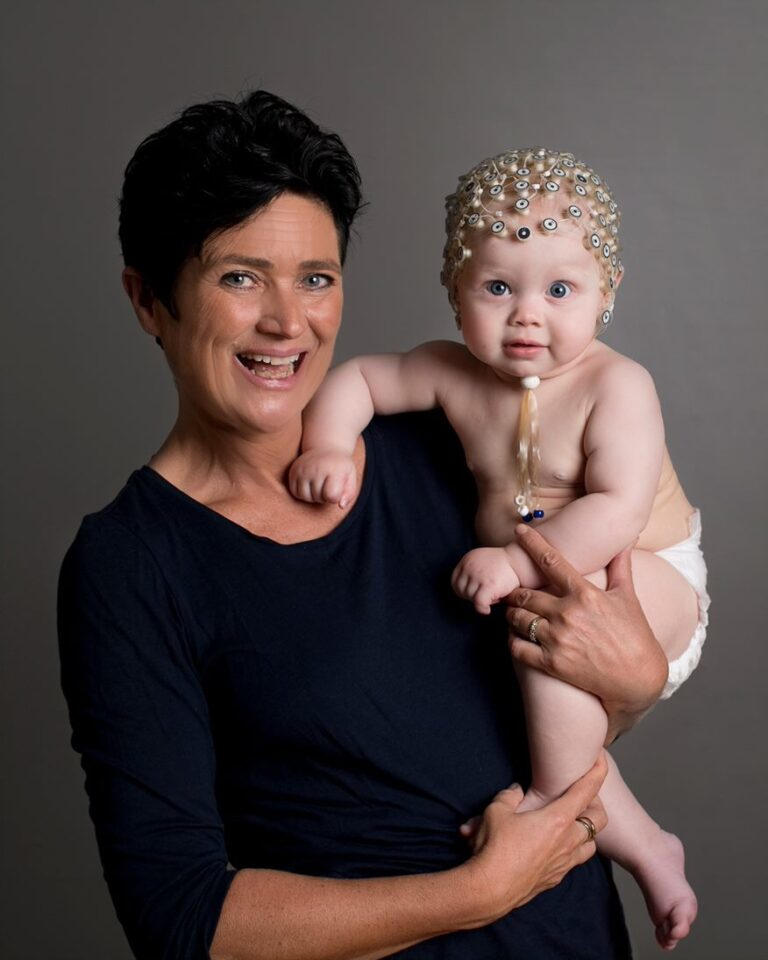
They tested 765 people aged 4-86. These people were asked to cradle a doll in the crook of one arm. The researchers found that 567 of these (75 percent) cradled the doll in the crook of their non-dominant arm. They tested the subjects’ handedness using a continuous scale.
Heartbeat or hearing?
One theory is that most people cradle a baby to the left so that it can hear their heartbeat better. In almost all people, the heart is located on the left. Can the sound of a beating heart soothe a baby or connect it more closely to an adult?
Or maybe it has something to do with our hearing? Humans often perceive information in the form of sound faster with their left ear than their right. The theory is that most people cradle a baby to the left because we then use our left ear and eye to get information about the baby’s emotional state. Signals from the left are sent to the right hemisphere of the brain, which is specialized for interpreting emotions and faces.
However, perhaps the most intuitive explanation is also the most correct.
Associated with the dominant arm
A few years ago, van der Meer published an empirical study together with researcher Åsmund Husby. This theory holds that the phenomenon is closely related to the arm we use the most.
“Interestingly, this has not been regarded as an adequate explanation, even though it intuitively seems logical,” says Professor van der Meer.
New findings have strengthened this theory.
“Nine out of 10 people in the world are right-handed. We still believe that this is the best explanation why the vast majority of people cradle babies in the crook of their left, non-dominant arm,” says van der Meer.
We are usually doing something else while holding a baby, not just posing for a picture or showing it off. So, we basically do what is most convenient.
We want our ‘best arm’ free to do other things
Most of us cradle a baby to the left in order to have our right hand free. Generally speaking, it is most natural for left-handed people to cradle a baby in the crook of their right arm.
“It is perhaps interesting to mention that there are many pictures of William, the Prince of Wales, cradling a baby in the crook of his right arm. He is left-handed,” says Professor van der Meer.
However, right-handed Kate, the Princess of Wales, cradles babies in her left arm, like most of us.
This does not mean that van der Meer uses royal preferences as proof of the phenomenon. Instead, she has taken other theories into account and focused on the empirical data, and her conclusion is clear.
“The explanation that we cradle babies in the arm we use the least is also true if other factors are taken into account,” says van der Meer.
However, the phenomenon applies only to babies. As children get bigger and heavier, most people tend to carry them using their dominant and stronger arm.
Reference: “Handedness as a major determinant of lateral bias in human functional cradling” by Audrey L. H. van der Meer, 15 December 2023, Infancy.
DOI: 10.1111/infa.12572
Never miss a breakthrough: Join the SciTechDaily newsletter.
Follow us on Google and Google News.