
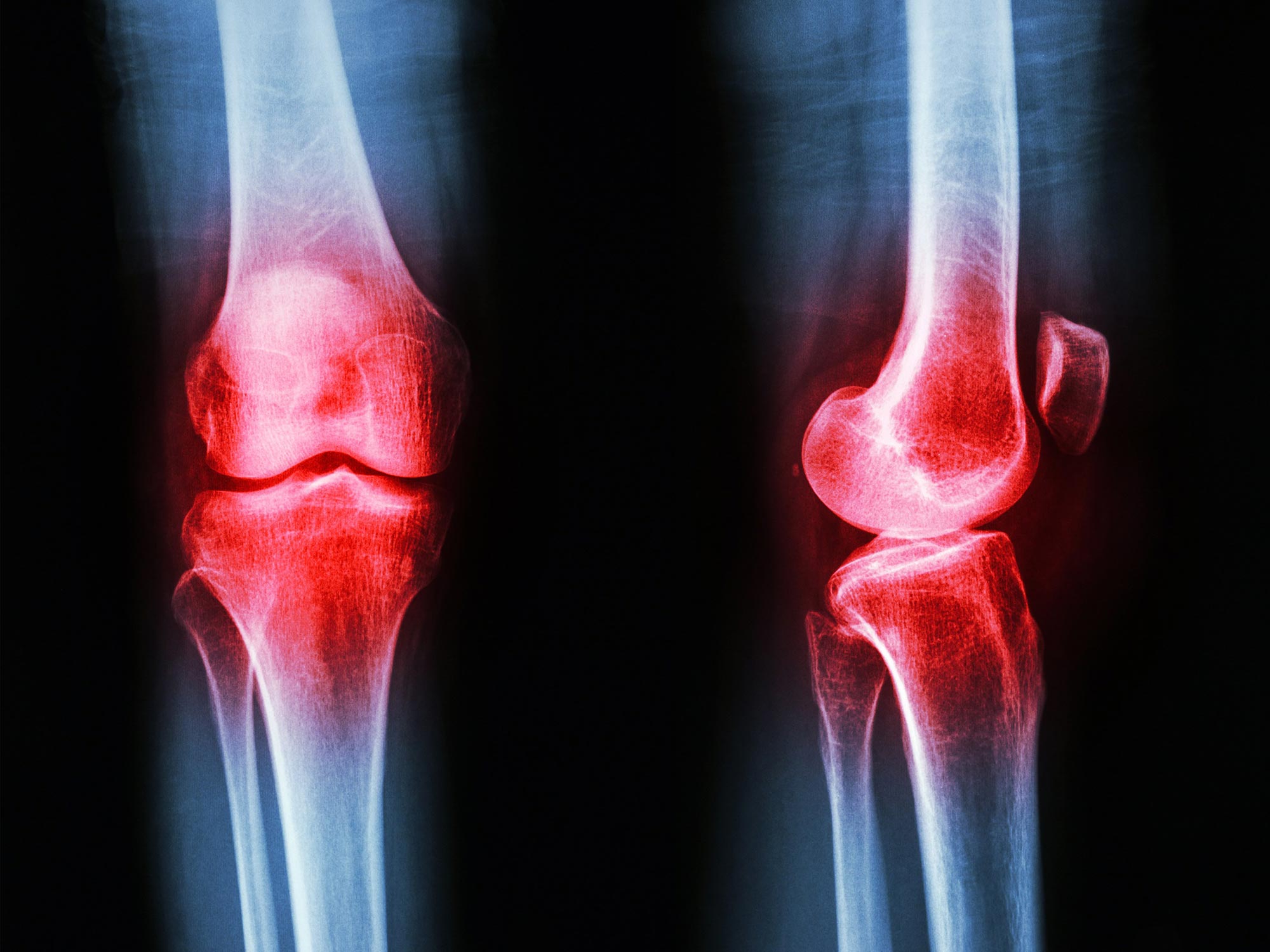
A sweeping review of clinical evidence casts doubt on one of the most commonly prescribed treatments for osteoarthritis.
For millions of people living with osteoarthritis, being told to exercise is almost a reflex in medical care. But a new analysis suggests that, when it comes to easing joint pain and improving day-to-day function, the average benefit may be smaller and shorter lasting than many patients expect.
In the open-access journal RMD Open, researchers report that exercise therapy is likely to have minimal, short-lived effects on osteoarthritis symptoms and may perform about the same as doing nothing in some comparisons. The work combined results from an overarching (umbrella) systematic review and a pooled data analysis.
The authors say their results challenge the idea that exercise should be universally promoted as the first-line option for everyone with osteoarthritis. They also argue that the field may need to rethink which research questions get the most attention, including which treatments deserve stronger comparisons and longer follow-up.
Exercise is widely advised as an early intervention for different forms of osteoarthritis. However, the researchers note that a growing body of studies has raised doubts about how strong and long-lasting its effects truly are.
Although many systematic reviews have evaluated exercise for osteoarthritis, the team points out that no single comprehensive review has compared exercise against a broad spectrum of alternatives, such as placebo, usual care, no treatment, medications, other non-drug therapies, and surgical procedures.
Scope and Methods of the Review
To address this gap, the researchers searched major medical databases for relevant systematic reviews and randomized clinical trials published up to November 2025. Their umbrella review included 5 systematic reviews with a combined total of 8631 participants, along with 28 randomized clinical trials involving 4360 participants. Most of these trials focused on knee or hip osteoarthritis (23), while others examined hand (3) and ankle (2) osteoarthritis.
When the results were pooled and analyzed together, exercise was linked to small and short-lived reductions in knee osteoarthritis pain compared with placebo or no treatment. However, the certainty of this evidence was rated as very low. In larger studies and those with longer follow-up periods, the benefits were even smaller.
Evidence of moderate certainty indicated that exercise had little to no effect on hip osteoarthritis and only small effects on hand osteoarthritis.
Findings with varying levels of certainty showed that exercise produced outcomes similar to patient education, manual therapy, painkillers, steroid or hyaluronic acid injections, and keyhole knee surgery (arthroscopy).
In certain subgroups evaluated in individual trials, exercise was found to be less effective over the long term than knee bone remodeling surgery (osteotomy) and joint replacement.
Limitations and Interpretation
The researchers acknowledge that they selectively prioritized certain reviews for inclusion, which means some relevant studies may not have been incorporated. Even so, additional analyses of effect sizes from those excluded reviews showed comparable results.
They also note that few studies directly compared exercise head-to-head with other treatments. Participants differed widely in symptom severity, and some trials permitted additional therapies alongside exercise, which may have influenced the findings.
Nevertheless, they conclude: “We found largely inconclusive evidence on exercise for osteoarthritis, suggesting negligible or, at best, short-lasting small effects on pain and function across different types of osteoarthritis compared with placebo or no treatment. These effects appear less pronounced in larger and longer-term trials.
“Our findings question the universal promotion of exercise therapy as the sole focus in first- line treatment to improve pain and physical function in all patients with osteoarthritis.”
The researchers also stress that osteoarthritis care is not only about joint symptoms. Exercise can still support heart health, mood, sleep, balance, and independence, and many people prefer it to medications or procedures. That is why they recommend a more personalized approach rather than abandoning exercise altogether.
“Clinicians and patients should engage in shared decision-making, weighing the worthwhileness of exercise effects on pain and function alongside secondary health benefits, safety, low-cost profile, care stage, and alternative treatment options,” they advise.
Reference: “Effectiveness of exercise therapy for osteoarthritis: an overview of systematic reviews and randomised controlled trials” by Tim Schleimer, Florian Teichert, Marius Henriksen, Rebekka Doeding, Tiziano Innocenti, Helena Brisby, Matthias C Klotz, Marianne Korinth, Patrick J Owen, Dawid Pieper and Daniel L Belavy, 17 February 2026, RMD Open.
DOI: 10.1136/rmdopen-2025-006275
Never miss a breakthrough: Join the SciTechDaily newsletter.
Follow us on Google and Google News.
9 Comments
TQ very for sharing this very important informative health tip
Hmm interesting article. I thought increasing your muscle mass or keeping your muscle mass means that your skeleton has to also increase in size and strength to hold the mass. Is this not correct??
Cheers
Jeff
Please can you update me on researches on blood and its breakthrough?
And more of discovery of anatomy and physiology on humans
I was a gym rat into my early 40’s. I had to stop when joint swelling got so painful that I wasn’t able to get out of bed after exercising the night before. For years fat doctors kept telling me I had to start exercising. I tried to explain that I once loved to exercise but it had become too painful so I stopped. I could have written this article 25 years ago! Doctors need to LISTEN and not just hear their patients.
For someone who suffers with stage 3 knee arthritis I can say that stretching and strengthening the muscles above and below the knee has put off surgery for years..the knees are arthritic but the muscles are not.. as a layperson, I do understand the importance of your study, but do not discourage exercise for knee arthritis…
I have found the article on exercise and osteoarthritis very interesting as I have it in my neck I have found personally exercising seems to adversely increases discomfort i am glad that cortisone injections have taken the in your face pain away dramatically thankful for any information regarding this nightmare
Cortisone injections are amazing at cutting pain for Osteoarthritis. I had them for about 3 years for osteoarthritis in my lower back.
However, it is, very unfortunately a temporary treatment. I am no longer able to have them. My doctor informed me it is only a temporary fix.
The pain has increased considerably now and prescription pain killers have a limited effect on the problem.
It appears that I will eventually be facing surgery. I did find some improvement through losing around 18 kilos over past year. Especially my knees. Even so, the pain is such a nuisance and is quite debilitating in trying to stay active.
The exercises given to me for my right knee caused a slipped disc, this in turn gave me drop foot in my left foot. I was unable to bend my foot whilst walking and by the time I had some feeling back in my foot many weeks later I had mid joint osteoarthritis in that foot. I have now had a right knee replacement and heading towards foot surgery as the foot injections haven’t helped. This journey started in December 2021 when my knee started giving out when walking.
While review articles are important and shine a light on many medical problems, one has to note that many of these articles included in the review articles are those published in English-written journals, even if they are from non-English-speaking journals. When it comes to osteoarthritis, never mind the studies, those who suffer from the problem, including myself know that early in the morning the joints are much more painful than after few hours of movement when the stiffness and pain eases.