
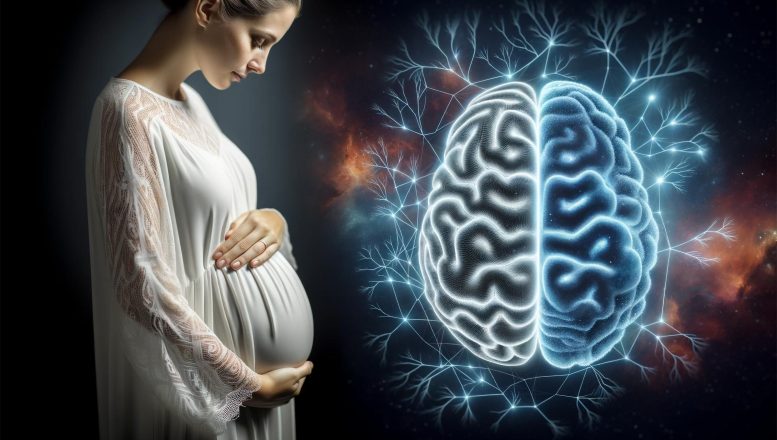
Researchers at the Francis Crick Institute have shown that pregnancy hormones ‘rewire’ the brain to prepare mice for motherhood.
Their findings, published on October 5 in the journal Science, show that both estrogen and progesterone act on a small population of neurons in the brain to switch on parental behavior even before offspring arrive. These adaptations resulted in stronger and more selective responses to pups.
It is well known that while virgin female rodents do not show much interaction with pups, mothers spend most of their time looking after their young. It was thought that hormones released when giving birth are most crucial for this onset of maternal behavior.
But earlier research also showed that rats who have given birth by Caesarean section, and virgin mice exposed to pregnancy hormones, still display this maternal behaviour, suggesting that hormone changes already during pregnancy may be more important.
Mechanics of Hormonal Impact on Neurons
In the current study, the researchers found that female mice indeed showed increased parental behavior during late pregnancy, and that exposure to pups wasn’t necessary for this change in behavior.
They found that a population of nerve cells (galanin-expressing neurons) in an area of the brain called the medial preoptic area (MPOA) in the hypothalamus, associated with parenting, was impacted by estrogen and progesterone.
Brain recordings showed that estrogen simultaneously reduced the baseline activity of these neurons and made them more excitable, whereas progesterone rewired their inputs, by recruiting more synapses (sites of communication between neurons).
Making these neurons insensitive to hormones completely removed the onset of parental behavior during pregnancy. Mice failed to show parental behavior even after giving birth, suggesting there is a critical period during pregnancy when these hormones take effect.
While some of these changes lasted for at least a month after giving birth, others seem to be permanent, suggesting pregnancy can lead to long-term rewiring of the female brain.
Expert Insights
Jonny Kohl, Group Leader of the State-Dependent Neural Processing Laboratory at the Crick, said: “We know that the female body changes during pregnancy to prepare for bringing up young. One example is the production of milk, which starts long before giving birth. Our research shows that such preparations are taking place in the brain, too.
“We think that these changes, often referred to as ‘baby brain’, cause a change in priority – virgin mice focus on mating, so don’t need to respond to other females’ pups, whereas mothers need to perform robust parental behavior to ensure pup survival. What’s fascinating is that this switch doesn’t happen at birth – the brain is preparing much earlier for this big life change.”
Rachida Ammari, postdoctoral fellow at the Crick, and first author along with PhD student Francesco Monaca, said: “We’ve demonstrated that there’s a window of plasticity in the brain to prepare for future behavioral challenges. These neurons receive a large number of inputs from elsewhere in the brain, so now we’re hoping to understand where this new information comes from.”
The researchers believe the brain may also be rewired in a similar way during pregnancy in humans, as the same hormonal changes are expected to impact the same areas of the brain. This could influence parental behavior alongside environmental and social cues.
Reference: “Hormone-mediated neural remodeling orchestrates parenting onset during pregnancy” by Rachida Ammari, Francesco Monaca, Mingran Cao, Estelle Nassar, Patty Wai, Nicholas A. Del Grosso, Matthew Lee, Neven Borak, Deborah Schneider-Luftman and Johannes Kohl, 5 October 2023, Science.
DOI: 10.1126/science.adi0576
Never miss a breakthrough: Join the SciTechDaily newsletter.
Follow us on Google and Google News.