
Close Menu
    Facebook X (Twitter) Instagram
    SciTechDaily
    • Biology
    • Chemistry
    • Earth
    • Health
    • Physics
    • Science
    • Space
    • Technology
    Facebook X (Twitter) Pinterest YouTube RSS
    SciTechDaily
    Home»Space»Hubble Image: A Catastrophic Demise
    Space

    Hubble Image: A Catastrophic Demise

    By ESA/HubbleDecember 5, 2019No Comments2 Mins Read
    Facebook Twitter Pinterest Telegram LinkedIn WhatsApp Email Reddit
    Share
    Facebook Twitter LinkedIn Pinterest Telegram Email Reddit
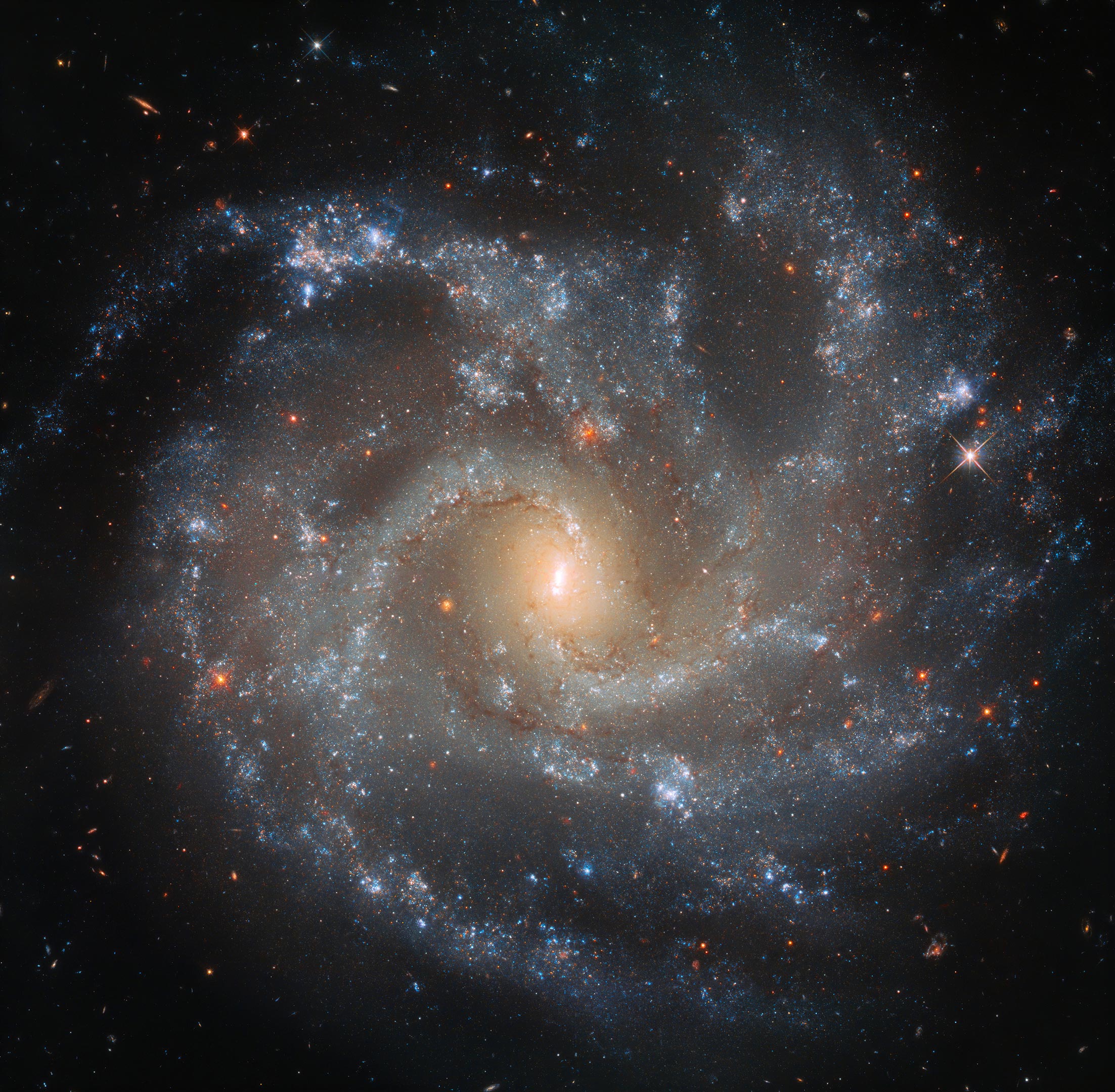
    Galaxy NGC 5468
    Galaxy NGC 5468. Credit: ESA/Hubble & NASA, W. Li et al.

    Some of the most dramatic events in the Universe occur when certain stars die — and explode catastrophically in the process.

    Such explosions, known as supernovae, mainly occur in a couple of ways: either a massive star depletes its fuel at the end of its life, become dynamically unstable and unable to support its bulk, collapses inwards, and then violently explodes; or a white dwarf in an orbiting stellar couple siphons more mass off its companion than it is able to support, igniting runaway nuclear fusion in its core and beginning the supernova process. Both types result in an intensely bright object in the sky that can rival the light of a whole galaxy.

    In the last 20 years the galaxy NGC 5468, visible in this image, has hosted a number of observed supernovae of both the aforementioned types: SN 1999cp, SN 2002cr, SN2002ed, SN2005P, and SN2018dfg. Despite being just over 130 million light-years away, the orientation of the galaxy with respect to us makes it easier to spot these new ‘stars’ as they appear; we see NGC 5468 face on, meaning we can see the galaxy’s loose, open spiral pattern in beautiful detail in images such as this one from the NASA/ESA Hubble Space Telescope.

    Never miss a breakthrough: Join the SciTechDaily newsletter.
    Follow us on Google and Google News.

    Astronomy European Space Agency Hubble Space Telescope NASA
    Share. Facebook Twitter Pinterest LinkedIn Email Reddit

    Related Articles

    Hubble’s Newest Discovery Isn’t a Star, It’s a Window Into the Dark Universe

    This Nearby Galaxy Shows How Frozen Clouds Ignite Into Stars

    This Chaotic Spiral Galaxy Is Still Recovering From a Cosmic Collision

    This Strange Spiral Galaxy Is Hiding a Massive Black Hole

    Hubble Zooms In on a Galaxy That Maps the Universe’s Expansion

    Hubble Captures a Dazzling Spiral Galaxy Alive With Birth and Destruction

    Hubble Spots a Glowing “Ring of Fire” in a Distant Spiral Galaxy

    Dust, Light & Ancient Collisions: The Sombrero Galaxy Like You’ve Never Seen It

    Star Formation in Motion: Hubble Reveals Spiraling Stars and Sculpted Nebulae

    Leave A Reply Cancel Reply

    • Facebook
    • Twitter
    • Pinterest
    • YouTube

    Don't Miss a Discovery

    Subscribe for the Latest in Science & Tech!

    Trending News

    A Hidden Sugar in Red Meat Linked to a 63% Higher Risk of Diabetes

    Something Strange Is Happening Beneath Nicaragua’s Masaya Volcano

    Scientists Discover Aspirin May Slash Dementia Risk by 70% – but Only for Certain People

    The World’s Oldest Land Animal Has a Remarkable Anti-Aging Secret Hidden in Its DNA

    Scientists Discover a Surprising Link Between Obesity and Dementia Survival

    The Fossil Record May Be Missing 200 Million Years of Animal History

    Scientists Predicted Humanity Would End on November 13, 2026. Should We Be Worried?

    Experimental Heart Drug Helps Patients Exercise More and Feel Better

    Follow SciTechDaily
    • Facebook
    • Twitter
    • YouTube
    • Pinterest
    • Newsletter
    • RSS
    SciTech News
    • Biology News
    • Chemistry News
    • Earth News
    • Health News
    • Physics News
    • Science News
    • Space News
    • Technology News
    Recent Posts
    • The Surprising Reason Some Children Struggle With Math, According to Science
    • Scientists Discover a 99-Million-Year-Old Insect With a Bizarre Feature Never Seen in Living Species
    • Hurricane Simon Roars Below as Strange Waves Ripple Across the Sky
    • NASA Satellites Reveal a Troubling New Reality in the Arctic
    • Scientists Discover a 100-Million-Year-Old Volcanic System Hidden Beneath Iran
    Copyright © 1998 - 2026 SciTechDaily. All Rights Reserved.
    • Science News
    • About
    • Contact
    • Editorial Board
    • Privacy Policy
    • Terms of Use

    Type above and press Enter to search. Press Esc to cancel.