
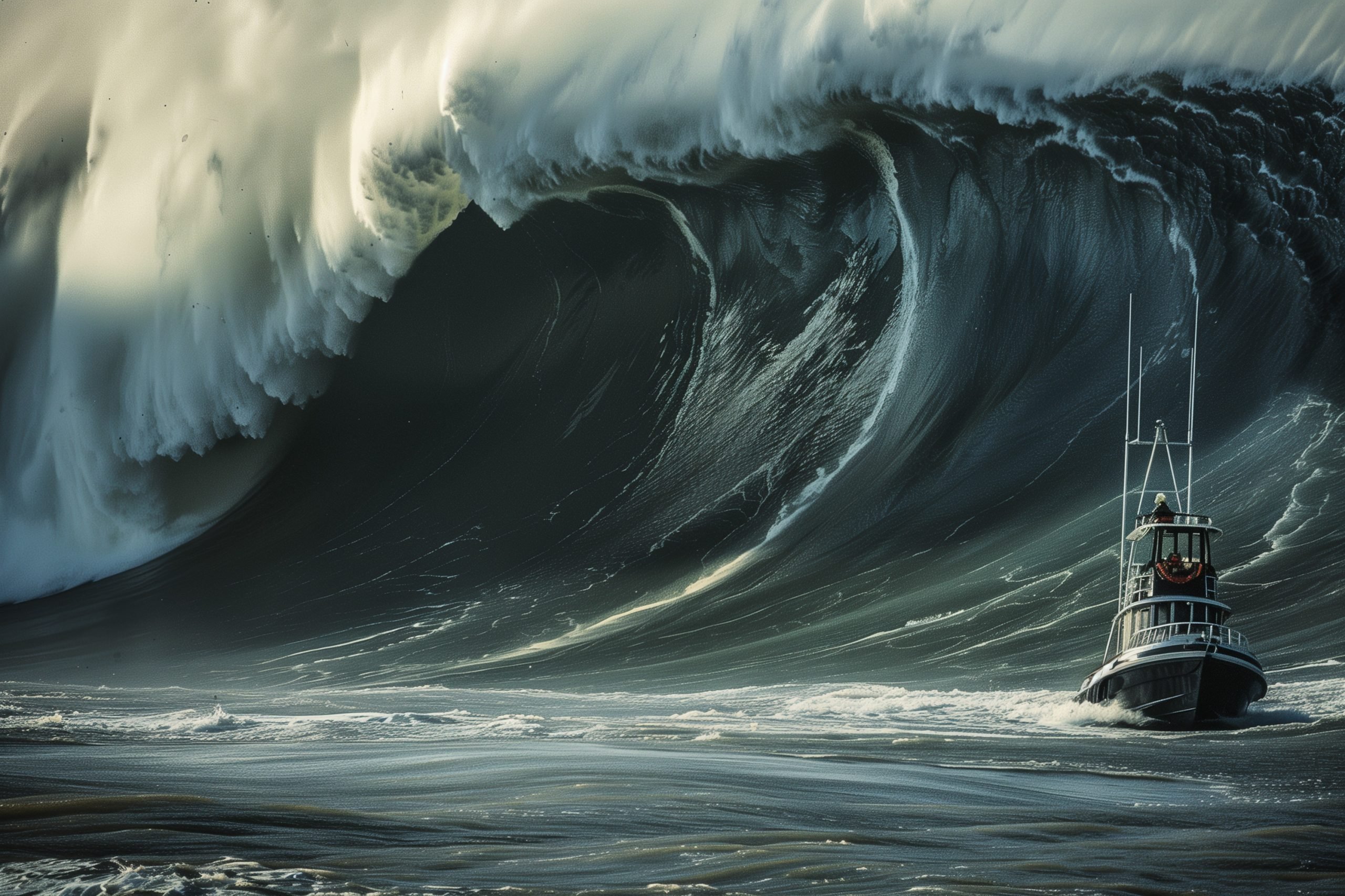
Researchers from the University of Melbourne have discovered in Antarctica’s southernmost waters that wind plays a significant role in the formation of massive rogue waves, which are more common than previously thought.
An expedition from the University of Melbourne to the waters surrounding Antarctica’s southernmost points has revealed that wind is a key factor in the creation of enormous rogue waves. The study found that these unpredictable waves happen more often than previously believed, offering essential data to enhance future models for predicting rogue waves.
A rogue wave is a single swell that is much higher than nearby waves, which can damage ships or coastal infrastructure. Ocean waves are among the most powerful natural forces on Earth, and as global trends suggest ocean winds will blow harder because of climate change, ocean waves could become more powerful.
In a study recently published in Physical Review Letters, the research team led by Professor Alessandro Toffoli found that rogue waves emerge from strong wind forces and unpredictable waveform patterns, confirming an idea previously only demonstrated in laboratory experiments.
Technological Advances in Wave Study
Professor Toffoli said, “Rogue waves are colossi – twice as high as neighboring waves – that appear seemingly out of nowhere.”
Using state-of-the-art technology and embarking on an expedition to one of Earth’s most volatile oceanic realms, the research team deployed a novel technique for three-dimensional imaging of ocean waves. Operating stereo cameras aboard the South African icebreaker SA Agulhas II during the Antarctic expedition in 2017, they captured rare insights into the behavior of waves in this remote region.
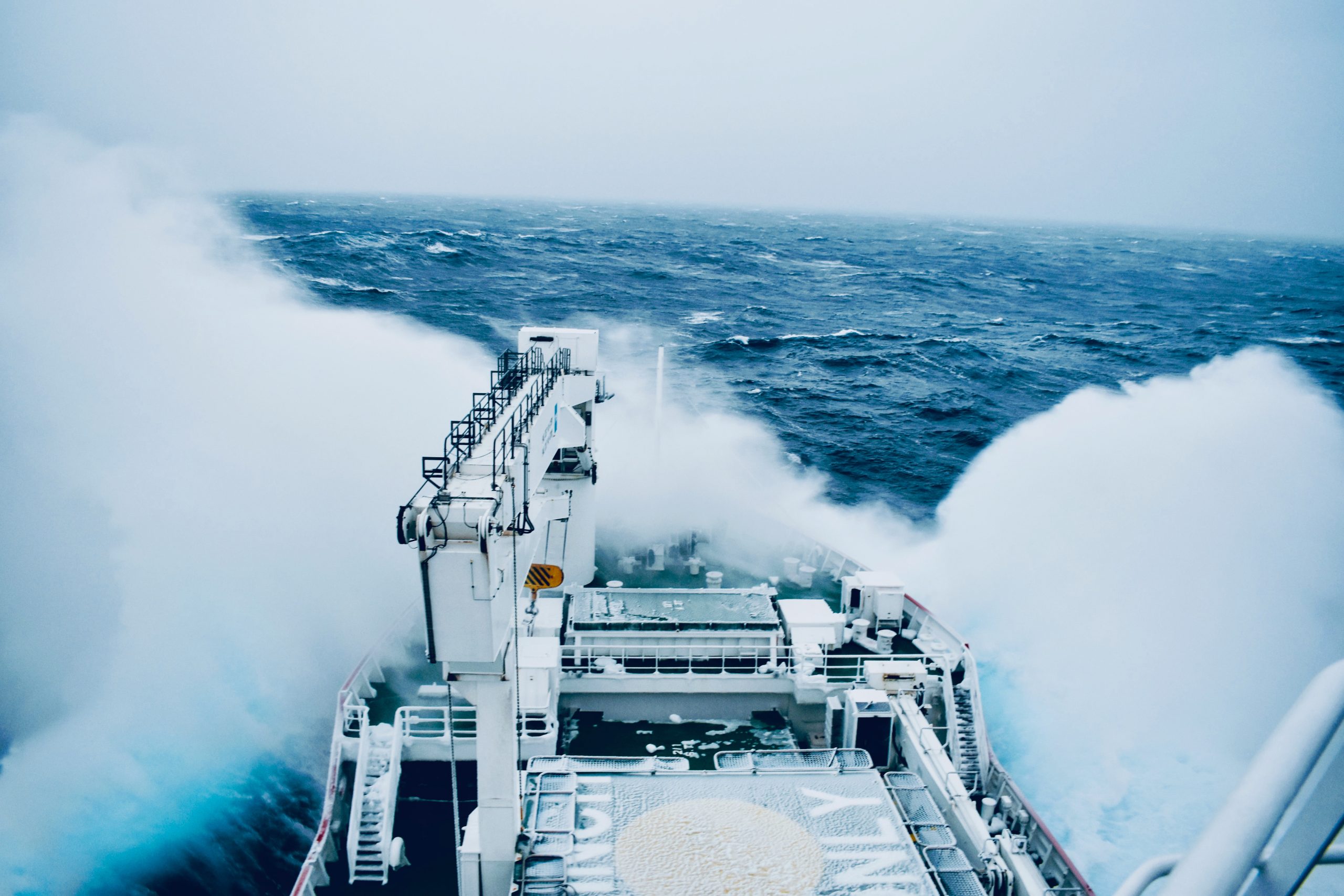
Their method, mimicking human vision through sequential imaging, allowed the team to reconstruct the wavy ocean surface in three dimensions, providing unprecedented clarity into the dynamics of ocean waves. The first scientific measurement of a rogue wave was the 25.6 metre Draupner wave, recorded in the North Sea in 1995. 16 suspected rogue wave incidents have been reported in the 21st century.
“Antarctica’s choppy seas and wild winds can cause large waves to ‘self amplify,’ resulting in rogue wave frequency scientists had theorized for years, but could not yet verify in the ocean,” Professor Toffoli said.
Drawing upon numerical and laboratory studies, which had suggested the role of wind in the formation of rogue waves, the research team’s observations have provided validation of these theories in the actual oceanic environment.
Implications for Future Research
“Our observations now show that unique sea conditions with rogue waves arise during the ‘young’ stage of waves – when they are most responsive to wind. This suggests wind parameters are the missing link,” Prof Toffoli said. “The wind creates a chaotic situation where waves of different dimensions and directions coexist. Wind causes young waves to grow higher, longer, and faster. During this self-amplification, a wave grows disproportionately at the expense of its neighbors.”
“We show young waves display signs of self-amplifying and more likelihood of becoming rogue because of the wind. We recorded waves twice as high as their neighbors once every six hours,” Professor Toffoli said. “This mirrors lab models: that sea conditions theoretically more prone to self-amplification produce more rogue waves. In contrast, we detected no rogue waves in mature seas, which are not affected by wind.”
Professor Toffoli emphasized the critical importance of integrating wind dynamics into predictive models for rogue wave forecasting.
“This shows that when developing tools for predicting rogue waves, scientists need to take wind into thorough consideration.”
Reference: “Observations of Rogue Seas in the Southern Ocean” by A. Toffoli, A. Alberello, H. Clarke, F. Nelli, A. Benetazzo, F. Bergamasco, B. Ntamba Ntamba, M. Vichi and M. Onorato, 12 April 2024, Physical Review Letters.
DOI: 10.1103/PhysRevLett.132.154101
The study was funded by the National Research Foundation, the ACE Foundation, the Australian Research Council, the Australian Research Council, the London Mathematical Society, the Wellcome EPSRC Centre for Medical Engineering, and the Simons Foundation.
Never miss a breakthrough: Join the SciTechDaily newsletter.
Follow us on Google and Google News.
1 Comment
“Antarctica’s choppy seas and wild winds can cause large waves to ‘self amplify,’ resulting in rogue wave frequency scientists had theorized for years, but could not yet verify in the ocean,”
I thought that the accepted paradigm was that straight-line winds were driven by temperature/pressure differences, and rotary winds that turn into hurricanes/typhoons were less frequent with reduced temperature differences, but that warm water provides energy to amplify rotary winds. Furthermore, the “self-amplifying” was a result of constructive interference of waves of different wave lengths.
We have some apparent contradictions here. Antarctica is too cold to sustain hurricanes, even with global warming, and the warming that is claimed to be melting West Antarctic should reduce the speed of straight-line winds.
I think that there is some explaining needed here.