
Researchers at the Champalimaud Foundation (CF) have identified a key neural circuit involved in sexual rejection, uncovering a group of brain cells that influence whether a female accepts or rejects mating attempts depending on her reproductive cycle. Published in the journal Neuron, their study provides new insights into how the brain governs social and reproductive behaviors.
Female mammals, such as rodents, accept mating attempts only during their fertile phase and actively reject males outside this period. Although the brain regions controlling sexual receptivity are well-studied, the mechanisms underlying active rejection remain less understood.
“Sexual rejection isn’t just the absence of receptivity, it’s an active behavior,” explains Susana Lima, senior author and head of the Neuroethology Lab at CF. “Females exhibit defensive actions like running away, kicking, or boxing the male. We wanted to understand how the brain switches between these two drastically different behavioral states.”
Central to their research is the ventromedial hypothalamus (VMH), an evolutionarily ancient brain region that controls social and sexual behavior across species, including humans. “We suspected that the VMH might house a separate population of cells dedicated to rejection, based on previous low-resolution imaging experiments showing VMH activity during both acceptance and rejection of male advances,” says Lima.
The team focused on the anterior VMH, a less-explored area, particularly on cells responsive to the hormone progesterone, which fluctuates throughout the reproductive cycle. “These neurons are ideal for studying how the female brain toggles between acceptance and rejection during the cycle,” notes first author Nicolas Gutierrez-Castellanos.
No. Yes. It Depends.
“Understanding this flip gives us insight into how the brain integrates signals from the environment and the body to shape behavior,” continues Gutierrez-Castellanos. “It’s a striking example of how the same stimulus—in this case, an eager male—can elicit completely opposite behaviors, depending on the female’s internal state.”
Through advanced techniques like fiber photometry—which tracks real-time brain activity by measuring calcium signals—researchers observed the behavior of these progesterone-sensitive neurons in both receptive and non-receptive female mice during interactions with males. The results were striking: anterior VMH neurons became highly active in non-receptive females, correlating with defensive actions like kicking and boxing, but were far less active in receptive females.
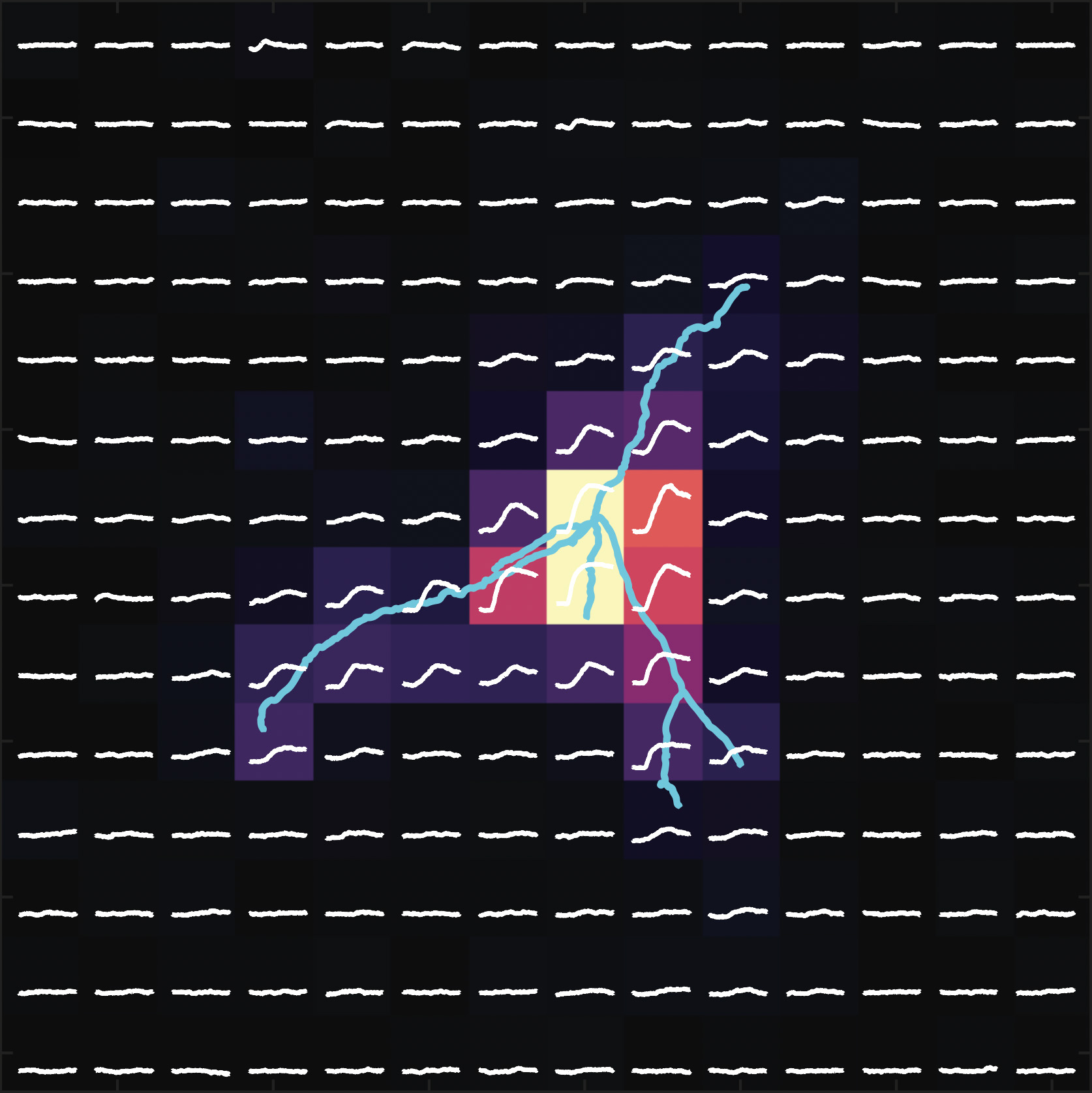
“It appears that progesterone-responsive neurons in the anterior VMH act as gatekeepers for sexual rejection,” says co-first author Basma Husain. “When a female is outside her fertile window, these neurons become highly active, prompting rejection. But during fertility, their activity decreases, allowing mating to occur.”
The Brain’s Dual Control Knobs
How do these neurons switch on or off depending on fertility? To investigate, the team performed electrophysiology experiments, measuring the activity of progesterone-responsive neurons in brain slices. “We found that in non-receptive females, these neurons received more excitatory signals, making them more likely to be activated”, explains Gutierrez-Castellanos. “In receptive females, they received more inhibitory signals, reducing their likelihood of firing. It’s a testament to how adaptable and flexible neural connections in the hypothalamus—and the brain—can be.”
“The activity levels and excitation/inhibition balance of progesterone-responsive neurons in the anterior VMH strongly suggested their role in sexual rejection,” says Husain. “To confirm this, we used optogenetics to selectively activate these neurons with light.” Indeed, artificially stimulating them during the fertile phase induced rejection behaviors such as kicking and boxing. “It’s like flipping a switch—even though the females were fertile, they acted as if they weren’t.”
Conversely, silencing these neurons with a chemical drug in non-receptive females reduced rejection behaviors, though interestingly, it didn’t make them fully receptive—indicating that two distinct populations of neurons, one controlling rejection, and the other receptivity, work in concert to produce the appropriate behavior according to the female’s internal state.
“This setup gives the brain two ‘knobs’ to adjust,” Lima explains. “It’s a more efficient and robust way for the brain to balance these behaviors, ensuring mating occurs when conception is most likely, while minimizing the risks and costs of mating, such as exposure to predators or diseases.”
Husain adds, “This dual-system likely adds flexibility to the brain’s regulation of sexual behavior. Sex isn’t deterministic. Even during the receptive phase, a female might still reject males, so the ability to draw on both sets of neurons may allow for more nuanced and dynamic behaviors.”
Notably, these findings align with recent research showing that progesterone-responsive neurons in the posterior VMH, which drive sexual receptivity, undergo similar cycle-dependent changes, but in the opposite direction—active during the fertile phase and inactive outside it.
“The VMH exists in humans and likely plays similar roles”, notes Lima. “Recent studies in mouse models have shown that the VMH changes in pathological conditions like polycystic ovarian syndrome. Additionally, socially isolating female mice during development may lead to reduced sexual receptivity, with alterations in the same brain area, underscoring the VMH’s clinical relevance.”
“We’re just beginning to scratch the surface of how the brain’s internal wiring orchestrates social behavior,” concludes Lima. “There’s much more to learn, but these findings bring us a step closer to understanding how neural mechanisms and internal states drive complex social interactions, from sexual behavior to aggression and beyond.”
Reference: “A hypothalamic node for the cyclical control of female sexual rejection” by Nicolas Gutierrez-Castellanos, Basma Fatima Anwar Husain, Inês C. Dias, Kensaku Nomoto, Margarida A. Duarte, Liliana Ferreira, Bertrand Lacoste and Susana Q. Lima, 25 November 2024, Neuron.
DOI: 10.1016/j.neuron.2024.10.026
Never miss a breakthrough: Join the SciTechDaily newsletter.
Follow us on Google and Google News.
1 Comment
And now those incels are gonna try to circumvent that circuit accross the board. Enter Elon Musk’s Neuralink.