
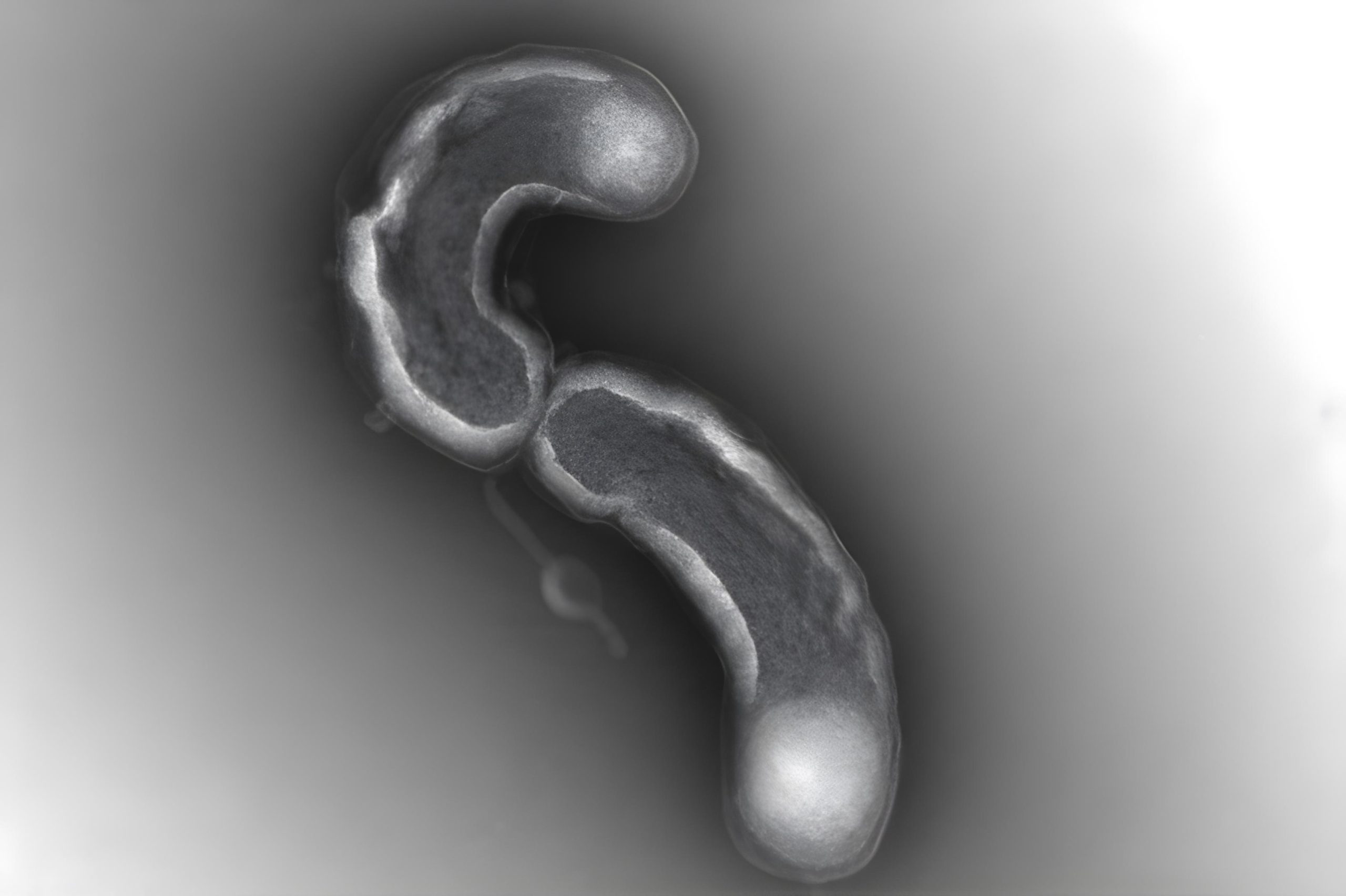
A new study finds that a trait helping a marine bacterium survive and flourish today may ultimately become its Achilles Heel as ocean conditions continue to shift.
For decades, SAR11 bacteria have been held up as a model of ocean efficiency: tiny microbes that thrive where food is scarce. But a new study suggests that the very traits that helped them conquer nutrient-poor seas may also make them fragile when conditions shift.
SAR11 dominates surface seawater across the planet and, in some places, represents up to 40% of marine bacterial cells. Their edge comes from genome streamlining, an evolutionary strategy that trims away genes so cells spend less energy maintaining extra biological machinery. That bargain works well in stable, low-nutrient waters, yet the latest findings indicate it can leave SAR11 with fewer tools to cope when the environment becomes unpredictable.
A new study published in Nature Microbiology argues that this extreme minimalism carries a serious downside.
“SAR11’s extraordinary evolutionary success in adapting to, and dominating, stable low-nutrient environments may have left them vulnerable to oceans that experience more change. They may have evolved themselves into a bit of a trap,” says Cameron Thrash, professor of biological sciences and Earth sciences and corresponding author of the study.
Adaptation with a flaw for SAR11 marine bacteria
By examining hundreds of SAR11 genomes, the researchers found that many strains are missing genes typically used to manage the cell cycle, the tightly coordinated sequence that ensures DNA is copied and then evenly split as a cell divides. In most bacteria, these control genes are considered essential for steady growth because they prevent the cell from starting one step without finishing the other.
Scientists had already noticed that SAR11 does not handle environmental changes especially well. What caught the team off guard was the specific pattern SAR11 showed under stress. Instead of simply pausing growth until conditions improved, many cells continued duplicating their DNA but did not complete division.
“Their DNA replication and cell division became uncoupled. The cells kept copying their DNA but failed to divide properly, producing cells with abnormal numbers of chromosomes,” says Chuankai Cheng, a PhD candidate in biological sciences and lead author of the study. “The surprise was that such a clear and repeatable cellular signature emerged.”
In everyday terms, it is like a factory that keeps producing copies of an instruction manual but never finishes building the products those instructions are meant to guide. The result was enlarged, abnormal cells carrying extra chromosomes that often died.
Even when nutrients were plentiful, this breakdown slowed overall population growth, challenging the assumption that more available food automatically means faster microbial expansion.
The findings also offer a concrete explanation for a pattern marine scientists have seen for years: SAR11 numbers often drop during the later stages of phytoplankton blooms, when organic matter in the water rises.
“We have known for a long time that these organisms are not particularly well suited to late stages of phytoplankton blooms,” Thrash says. “Now we have an explanation: Late bloom stages are associated with increases in new, dissolved organic matter that can disturb these organisms, making them less competitive.”
What’s next for SAR11 bacteria
The study has broader implications for understanding climate change and marine ecosystems. SAR11 bacteria play a major role in ocean carbon cycling, and their sensitivity to warming and nutrient pulses could reshape microbial communities as oceans become more variable.
“This work highlights a new way environmental change can affect marine ecosystems, not simply by limiting resources, but by disrupting the internal physiology of dominant microorganisms,” Cheng said. As environmental stability declines, he added, organisms with greater regulatory flexibility may gain an advantage.
Researchers say future work will focus on uncovering the molecular mechanisms behind these disruptions. Their work will help improve our understanding of SAR11’s role in marine carbon cycling, an effort made critical by the organism’s sheer abundance.
Reference: “Cell cycle dysregulation of globally important SAR11 bacteria resulting from environmental perturbation” by Chuankai Cheng, Brittany D. Bennett, Pratixa Savalia, Hasti Asrari, Carmen Biel, Kate A. Evans, Rui Tang and J. Cameron Thrash, 22 January 2026, Nature Microbiology.
DOI: 10.1038/s41564-025-02237-8
This research was supported by a Simons Foundation Early Career Investigator in Marine Microbial Ecology and Evolution Award and a Simons Foundation Investigator in Aquatic Microbial Ecology Award.
Never miss a breakthrough: Join the SciTechDaily newsletter.
Follow us on Google and Google News.