
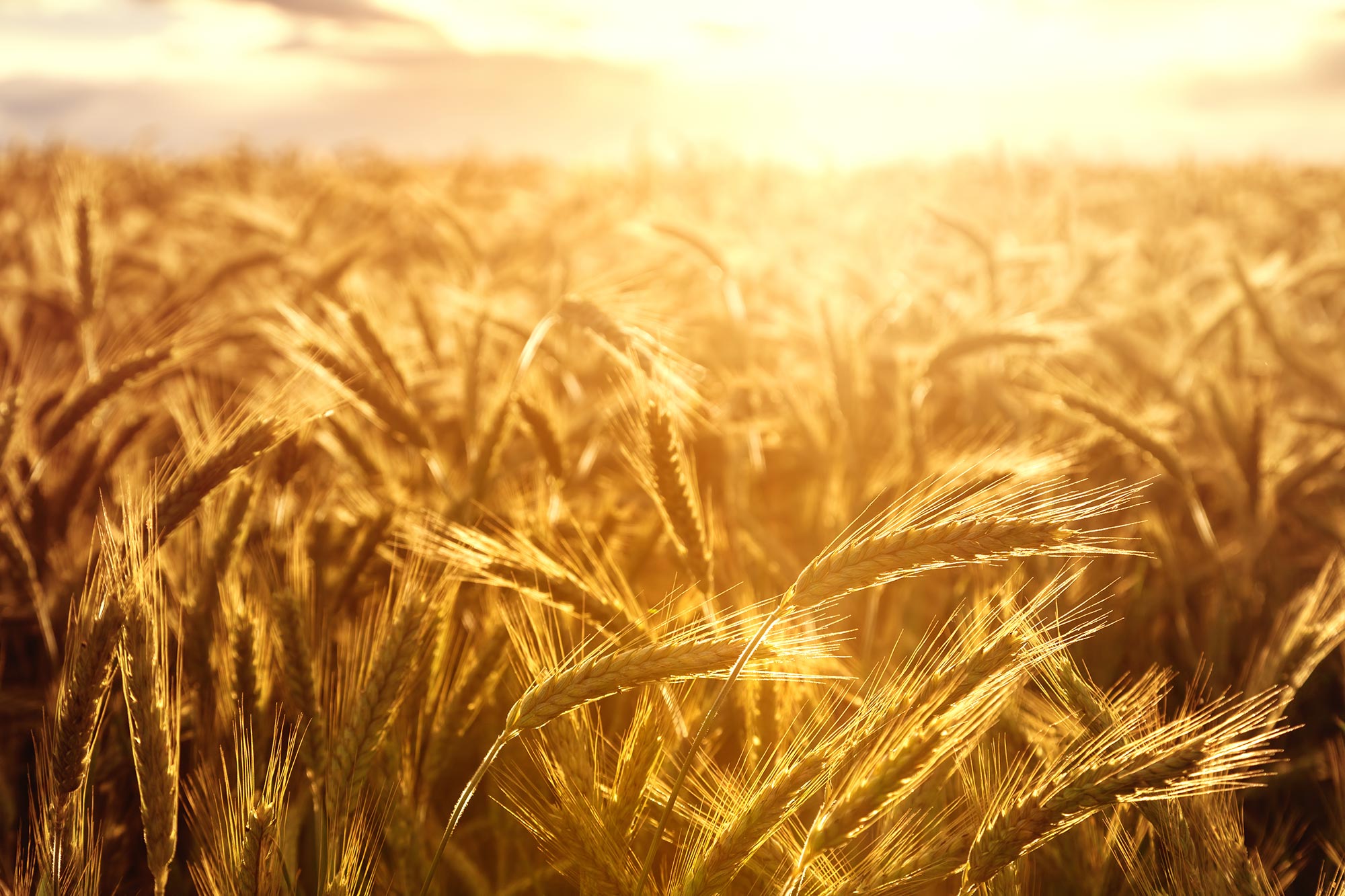
A study has elucidated how bread wheat’s genetic diversity, stemming from Aegilops tauschii, spurred its global spread and agricultural dominance, providing essential resources for future wheat breeding.
A significant international study has revealed how bread wheat played a pivotal role in transforming the ancient world, eventually becoming the staple crop that now sustains a global population of eight billion.
“Our findings shed new light on an iconic event in our civilization that created a new kind of agriculture and allowed humans to settle down and form societies,” said Professor Brande Wulff, a wheat researcher at KAUST (King Abdullah University of Science and Technology) and one of the lead authors of the study which appears in Nature.
Professor Cristobal Uauy, a group leader at the John Innes Centre and one of the authors of the study said: “This work exemplifies the importance of global collaboration and sharing of data and seeds across countries; we can achieve so much by combining resources and expertise across institutes and across international boundaries.”
Genetic Diversity and Bread Wheat’s Origins
The secret of bread wheat’s success, according to the research by institutes that make up the Open Wild Wheat Consortium (OWWC), lies in the genetic diversity of a wild grass called Aegilops tauschii.
Bread wheat is a hybrid between three wild grasses containing three genomes, (A, B and D) within one complex plant.
Aegilops tauschii, an otherwise inconspicuous weed, provided bread wheat’s D-genome when it crossed with early cultivated pasta wheat in the Fertile Crescent sometime between eight and eleven thousand years ago.
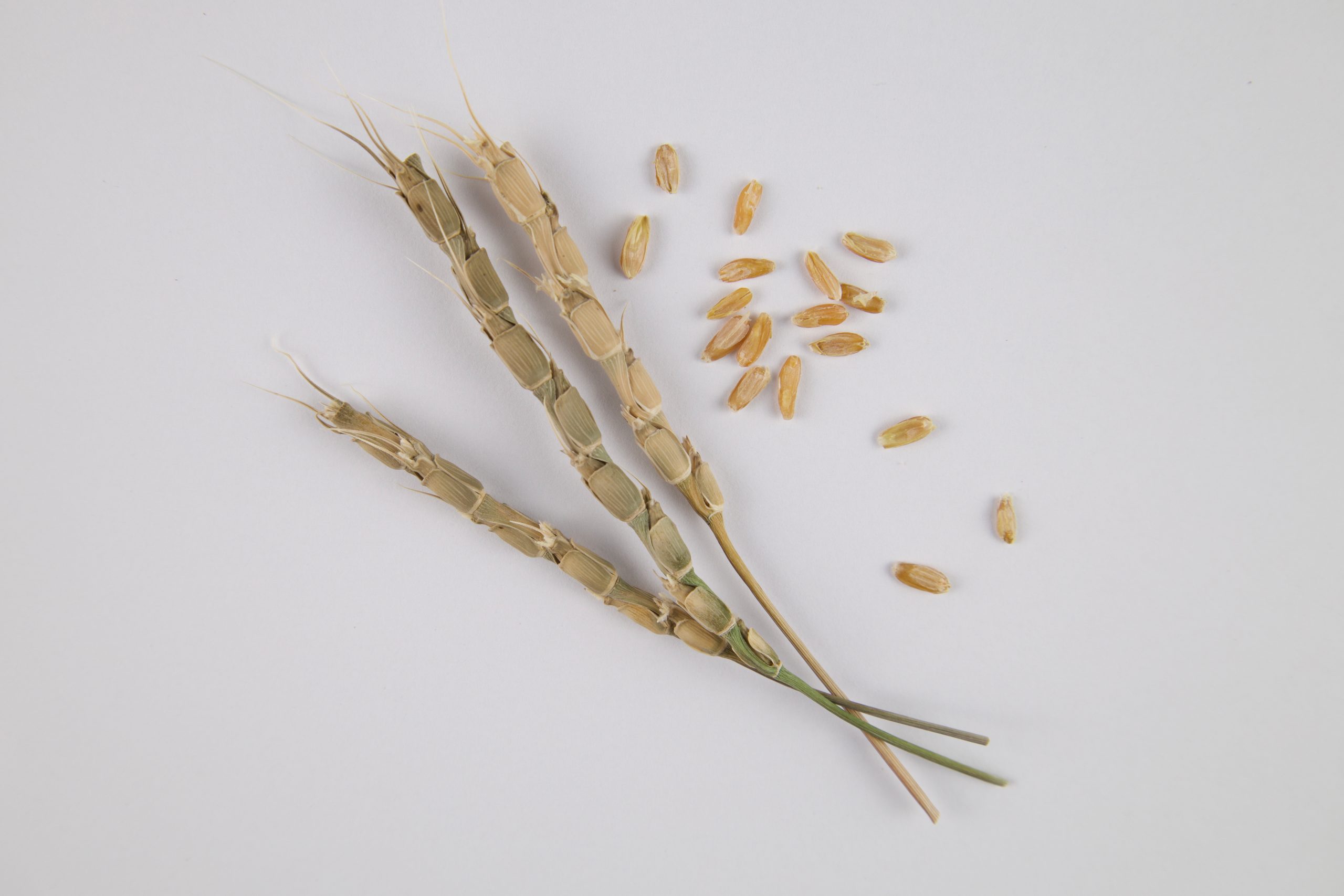
The chance hybridization on the banks of the southern Caspian Sea spawned an agricultural revolution. Cultivation of bread wheat rapidly spread across a wide new range of climates and soils as farmers enthusiastically adopted this dynamic new crop, with its high gluten content that creates an airier elasticated breadmaking dough.
This rapid geographical advance has puzzled wheat researchers. There is no wild bread wheat: and the kind of hybridization event that added the new D genome to wheat’s existing A and B genomes created a genetic bottleneck, whereby the new species had a much-reduced genetic diversity compared to its surrounding wild grasses.
The conundrum of Wheat’s Wide Adaptation
This bottleneck effect coupled with the fact that wheat is an in-breeding species – meaning it is self-pollinating – would suggest that bread wheat might struggle outside its Fertile Crescent origins. So how did it become well-traveled and widely adopted across the region?
In solving this conundrum, the international collaboration assembled a diversity panel of 493 unique accessions spanning the geographical range of Aegilops tauschii from north-western Turkey to eastern China.
From this panel the researchers selected 46 accessions reflecting the species traits and genetic diversity, to create a Pangenome, a high-quality genetic map of Aegilops tauschii.
Using this map, they scanned 80,000 bread wheat landraces – locally adapted varieties – held by CIMMYT and collected from around the world.
Agricultural Revolution and Wheat’s Expansion
This data showed that around 75% of the bread wheat D-genome is derived from the lineage (L2) of Aegilops tauschii which originates from the southern Caspian Sea. The remaining 25% of its genetic make-up is derived from lineages across its range.
“This 25% influx of genetic material from other lineages of tauschii has contributed and defined the success of bread wheat,” said Professor Simon Krattinger, lead author of the study.
“Without the genetic viability that this diversity brings, we would most likely not eat bread on the scale we do today. Otherwise, bread wheat today would be a regional crop – important to the Middle East but I doubt that it would have become globally dominant without this plasticity that enabled bread wheat to adapt.”
A previous study by OWWC revealed the existence of a distinct lineage of Aegilops tauschii geographically restricted to present day Georgia in the Caucasus region – 500 kilometers from the Fertile Crescent. This Aegilops tauschii lineage (L3) is significant because it has provided bread wheat with the best-known gene for dough quality.
In this study the researchers hypothesized that if this were an historic introgression, akin to a Neanderthal genetic footprint in the human genome, they would find landraces in the CIMMYT collections that had a higher proportion of it.
Data analysis showed that CIMMYT wheat landraces collected from the Georgian region contained 7% L3 introgressions in the genome, seven times more than that of bread wheat landraces collected from the Fertile Crescent.
Genetic Mapping and Analysis
“We used the L3 tauschii accessions as a guinea pig to track and trace the hybridizations using 80,000 bread wheat landraces,” said Professor Krattinger.
“The data beautifully supports a picture where bread wheat emerges in the southern Caspian, then with migration and agricultural expansion it reached Georgia and here with gene flow and hybridizations with the peculiar, genetically distinct and geographically restricted L3 accessions it resulted in the influx of new genetic material.”
“This is one of the novel aspects of our study and it confirms that using our new resources we can trace the dynamics of these introgressions in bread wheat.”
In addition to solving this age-old biological mystery the new Aegilops tauschii open-source Pangenome and germplasm made available by the OWWC, are being used by researchers and breeders worldwide to discover new disease-resistance genes that will protect wheat crops against age-old agricultural plagues like wheat rust. They can also mine this wild grass species for climate-resilient genes which can be bred into elite wheat cultivars.
Researchers at the John Innes Centre worked closely with colleagues from KAUST using bioinformatic approaches to track levels of DNA contributed to bread wheat by the L3 lineage of Aegilops tauschii.
Professor Uauy concluded: “The study highlights the importance of maintaining genetic resources such as the BBSRC-funded Germplasm Resources Unit here at the John Innes Centre which maintains historic collections of wild grasses that can be used to breed valuable traits such as disease resistance and pest resistance into modern wheat.”
Reference: “Origin and evolution of the bread wheat D genome” by Emile Cavalet-Giorsa, Andrea González-Muñoz, Naveenkumar Athiyannan, Samuel Holden, Adil Salhi, Catherine Gardener, Jesús Quiroz-Chávez, Samira M. Rustamova, Ahmed Fawzy Elkot, Mehran Patpour, Awais Rasheed, Long Mao, Evans S. Lagudah, Sambasivam K. Periyannan, Amir Sharon, Axel Himmelbach, Jochen C. Reif, Manuela Knauft, Martin Mascher, Nils Stein, Noam Chayut, Sreya Ghosh, Dragan Perovic, Alexander Putra, Ana B. Perera, Chia-Yi Hu, Guotai Yu, Hanin Ibrahim Ahmed, Konstanze D. Laquai, Luis F. Rivera, Renjie Chen, Yajun Wang, Xin Gao, Sanzhen Liu, W. John Raupp, Eric L. Olson, Jong-Yeol Lee, Parveen Chhuneja, Satinder Kaur, Peng Zhang, Robert F. Park, Yi Ding, Deng-Cai Liu, Wanlong Li, Firuza Y. Nasyrova, Jan Dvorak, Mehrdad Abbasi, Meng Li, Naveen Kumar, Wilku B. Meyer, Willem H. P. Boshoff, Brian J. Steffenson, Oadi Matny, Parva K. Sharma, Vijay K. Tiwari, Surbhi Grewal, Curtis J. Pozniak, Harmeet Singh Chawla, Jennifer Ens, Luke T. Dunning, James A. Kolmer, Gerard R. Lazo, Steven S. Xu, Yong Q. Gu, Xianyang Xu, Cristobal Uauy, Michael Abrouk, Salim Bougouffa, Gurcharn S. Brar, Brande B. H. Wulff and Simon G. Krattinger, 14 August 2024, Nature.
DOI: 10.1038/s41586-024-07808-z
Never miss a breakthrough: Join the SciTechDaily newsletter.
Follow us on Google and Google News.
1 Comment
What from creation was a spiritually engineered grain suitable for human consumption is now something else. Today’s wheat varieties, red or white, are nothing like the original design. Genetic morphology is an invention designed to make farmers more greedy.