
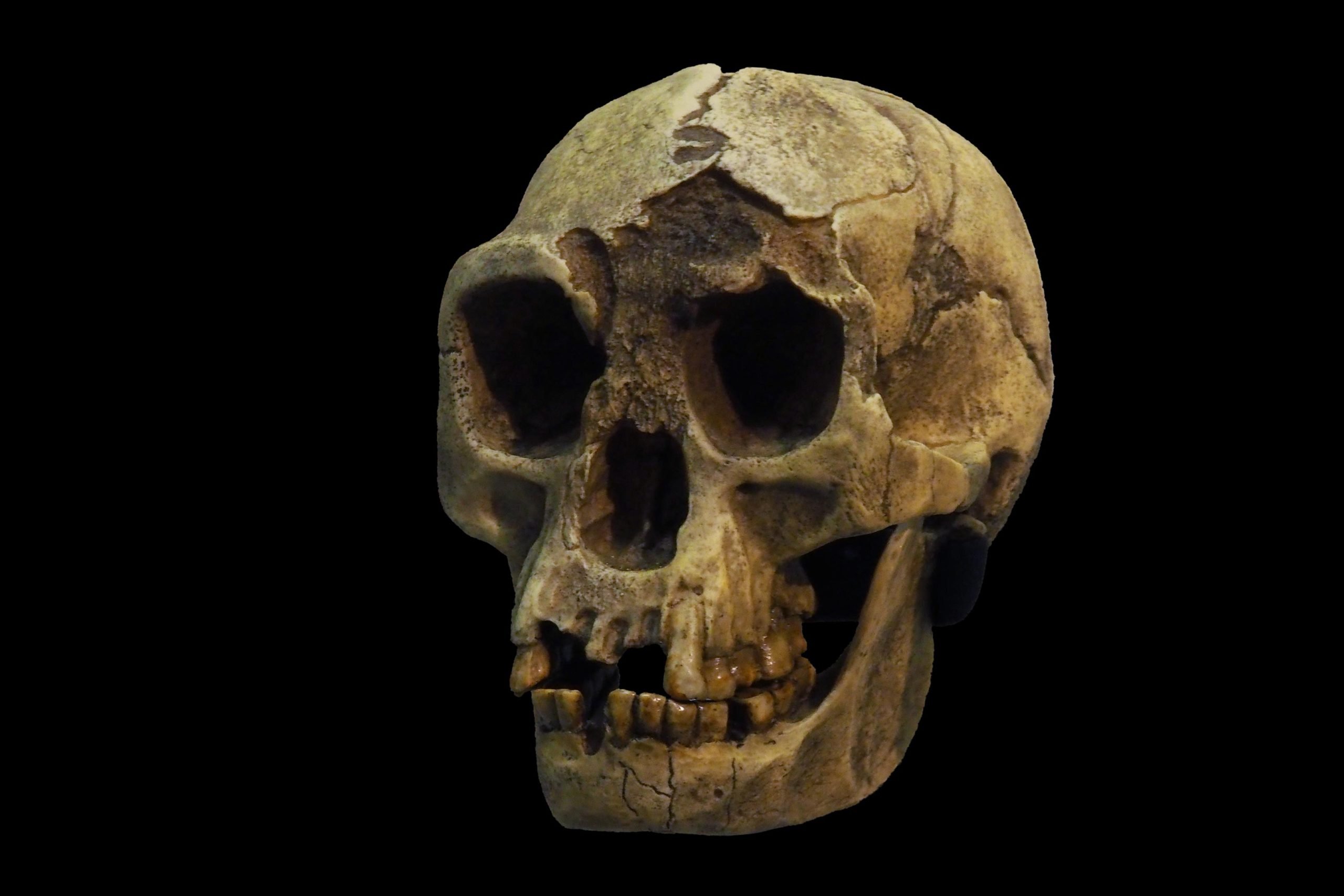
Researchers have uncovered early human fossils on Flores Island, Indonesia, revealing insights into the mysterious ‘Hobbits’ of Flores, Homo floresiensis.
Dated 700,000 years ago, the new findings from the Mata Menge site include the smallest humerus ever found, supporting theories of significant body size reduction in early hominins isolated on the island.
Discovery of Early Human Fossils on Flores
The discovery of extremely rare early human fossils from the Indonesian island of Flores, including an astonishingly small adult limb bone, is reported in a paper published today (August 6) in Nature Communications.
Dated to about 700,000 years old, the new findings shed light on the evolution of Homo floresiensis, the so-called ‘Hobbits’ of Flores whose remains were uncovered in 2003 at Liang Bua cave in the island’s west by a team co-led by Australian-New Zealand archaeologist Professor Mike Morwood (1950–2013).
Archaeological evidence suggests these diminutive, small-brained humans inhabited Liang Bua as recently as 50,000 years ago, a time when our own species (Homo sapiens) was already long established in Australia to the south.
Theories on the Origins of ‘Hobbits’
There has been much debate about the origin of the mysterious humans from Flores. It was first hypothesized that Homo floresiensis was a dwarfed descendant of early Asian Homo erectus.
Another theory is that the ‘Hobbit’ is a late-surviving remnant of a more ancient hominin from Africa that pre-dates Homo erectus and was small in stature to begin with, in which case possible candidates include Homo habilis or the famous ‘Lucy’ (Australopithecus afarensis).
Fossil Evidence From Mata Menge
Other than Liang Bua, hominin fossils have only ever been found at a single location on Flores: the open-air site of Mata Menge 75km to the east of the cave. Located in the sparsely populated tropical grasslands of the So’a Basin, this site has previously yielded several hominin fossils (a jaw fragment and six teeth) excavated from a layer of sandstone laid down by a small stream around 700,000 years ago.
Pre-dating the Liang Bua hominins by 650,000 years, the Mata Menge fossil remains have been shown to belong to at least three individuals with even slightly smaller jaws and teeth than Homo floresiensis, implying that small body size evolved early in the history of Flores hominins.
However, as postcranial elements (bones from below the head) had not been found in the fossil record at this site it could not be confirmed that these So’a Basin hominins were at least as small as, if not slightly smaller than, Homo floresiensis.
It was also unclear what species the Mata Menge fossils belonged to, owing to the lack of more diagnostic specimens. However, some teeth were deemed to be intermediate in form between those of early Asian Homo erectus and Homo floresiensis.
New Insights From Recent Excavations
The new study published in Nature Communications was led by Professor Yousuke Kaifu of the University of Tokyo, Iwan Kurniawan of the Center for Geological Survey in Indonesia, and Associate Professor Gerrit van den Bergh from the University of Wollongong.
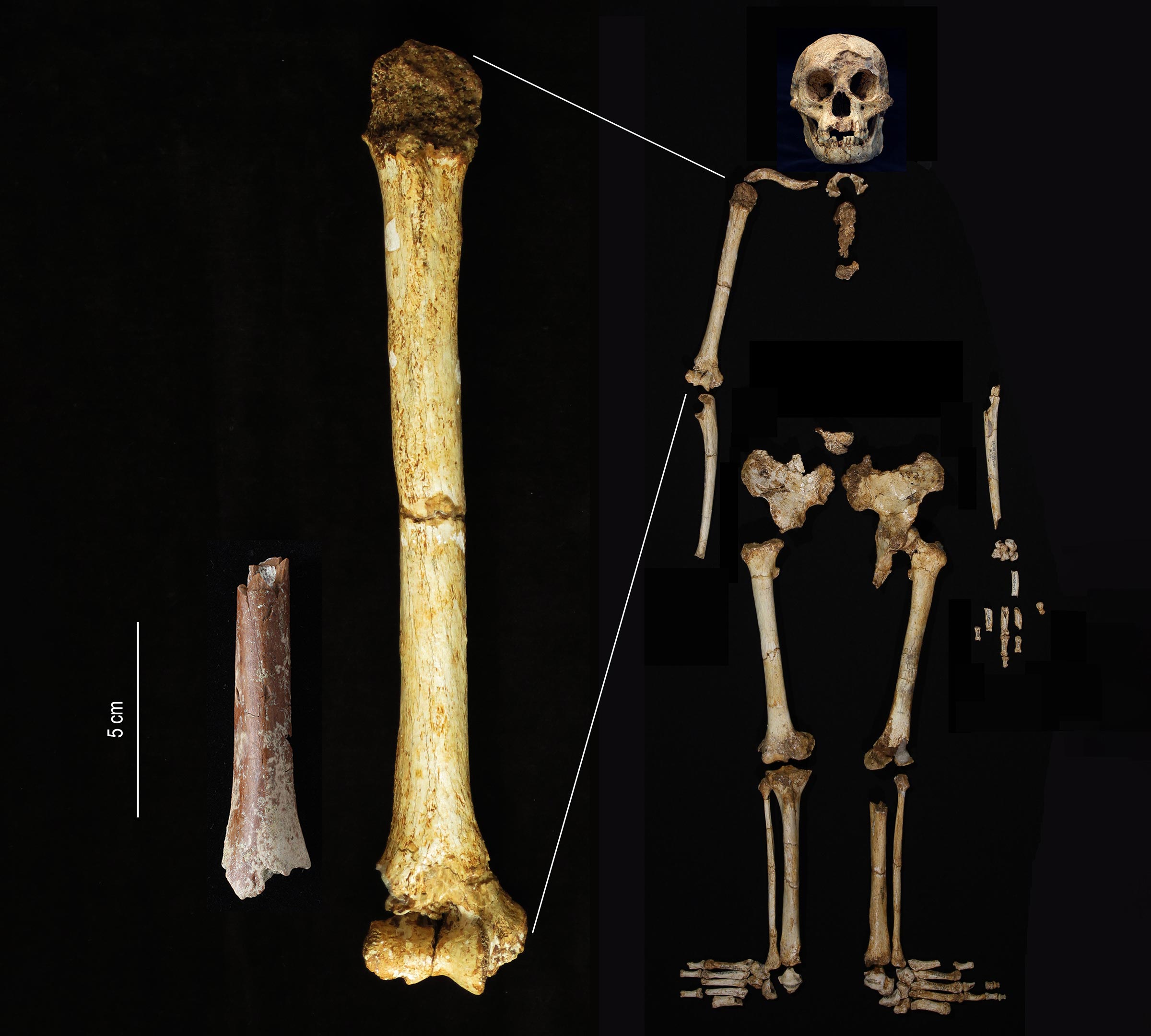
It reports the discovery of three additional hominin fossils from Mata Menge dating to 700,000 years ago, the outcome of several field seasons of excavations at this site. Most importantly, the new assemblage includes the first postcranial element, a distal shaft of an adult humerus (lower half of the upper arm bone).
Implications of the New Fossil Discoveries
The recovery of a fossil limb bone from the Mata Menge excavation site has been long-awaited because of the wealth of evidence it provides regarding the ancestral origin of Homo floresiensis.
Digital microscopy of the microstructure indicates that the small humerus is from an adult individual. Based on the estimated length of the bone, the team was able to calculate the body height of this hominin to be about 100cm tall. This is around 6cm shorter than the estimated body height of the 60,000-year-old Homo floresiensis skeleton from Liang Bua (~106cm, based on the femoral length).
“This 700,000-year-old adult humerus is not just shorter than that of Homo floresiensis, it is the smallest upper arm bone known from the hominin fossil record worldwide,” said Professor Adam Brumm from Griffith University’s Australian Research Centre for Human Evolution, a co-author of the paper.
“This very rare specimen confirms our hypothesis that the ancestors of Homo floresiensis were extremely small in body size; however, it is now apparent from the tiny proportions of this limb bone that the early progenitors of the ‘Hobbit’ were even smaller than we had previously thought.”
The two additional hominin teeth from Mata Menge are also small in size and one bears shape characteristics that are most consistent with early Homo erectus of Java. This similarity does not support the hypothesis that Homo floresiensis evolved from an earlier and more primitive type of hominin, the likes of which have never been recovered from Indonesia, or indeed the wider region outside Africa.
Conclusions on Flores Hominin Evolution
The Mata Menge human remains, which now total 10 fossil specimens, are from at least four individuals (including two children). All of them are very similar anatomically to the Liang Bua Homo floresiensis and can now be regarded as an older variant of this hominin. However, while a direct ancestor of the ‘Hobbit’, this earlier form had a less specialized dentition (more primitive teeth) than its descendant at Liang Bua.
Further, it is evident from the tiny arm bone that extreme body size reduction occurred early in the history of the Flores hominins.
“The evolutionary history of the Flores hominins is still largely unknown,” said Professor Brumm. “However, the new fossils strongly suggest that the ‘Hobbit’ story did indeed begin when a group of the early Asian hominins known as Homo erectus somehow became isolated on this remote Indonesian island, perhaps one million years ago, and underwent a dramatic body size reduction over time.”
Reference: “Early evolution of small body size in Homo floresiensis” by Yousuke Kaifu, Iwan Kurniawan, Soichiro Mizushima, Junmei Sawada, Michael Lague, Ruly Setiawan, Indra Sutisna, Unggul P. Wibowo, Gen Suwa, Reiko T. Kono, Tomohiko Sasaki, Adam Brumm and Gerrit D. van den Bergh, 6 August 2024, Nature Communications.
DOI: 10.1038/s41467-024-50649-7
Never miss a breakthrough: Join the SciTechDaily newsletter.
Follow us on Google and Google News.
1 Comment
“50,000 years ago, a time when our own species (Homo sapiens) was already long established in Australia to the south.”
Completely wrong, the only good evidence of when humans first made it to Australia puts it at a maximum of 50,000 years. The evidence for any longer than that is rather dubious and is more wishful thinking rather than evidence.