
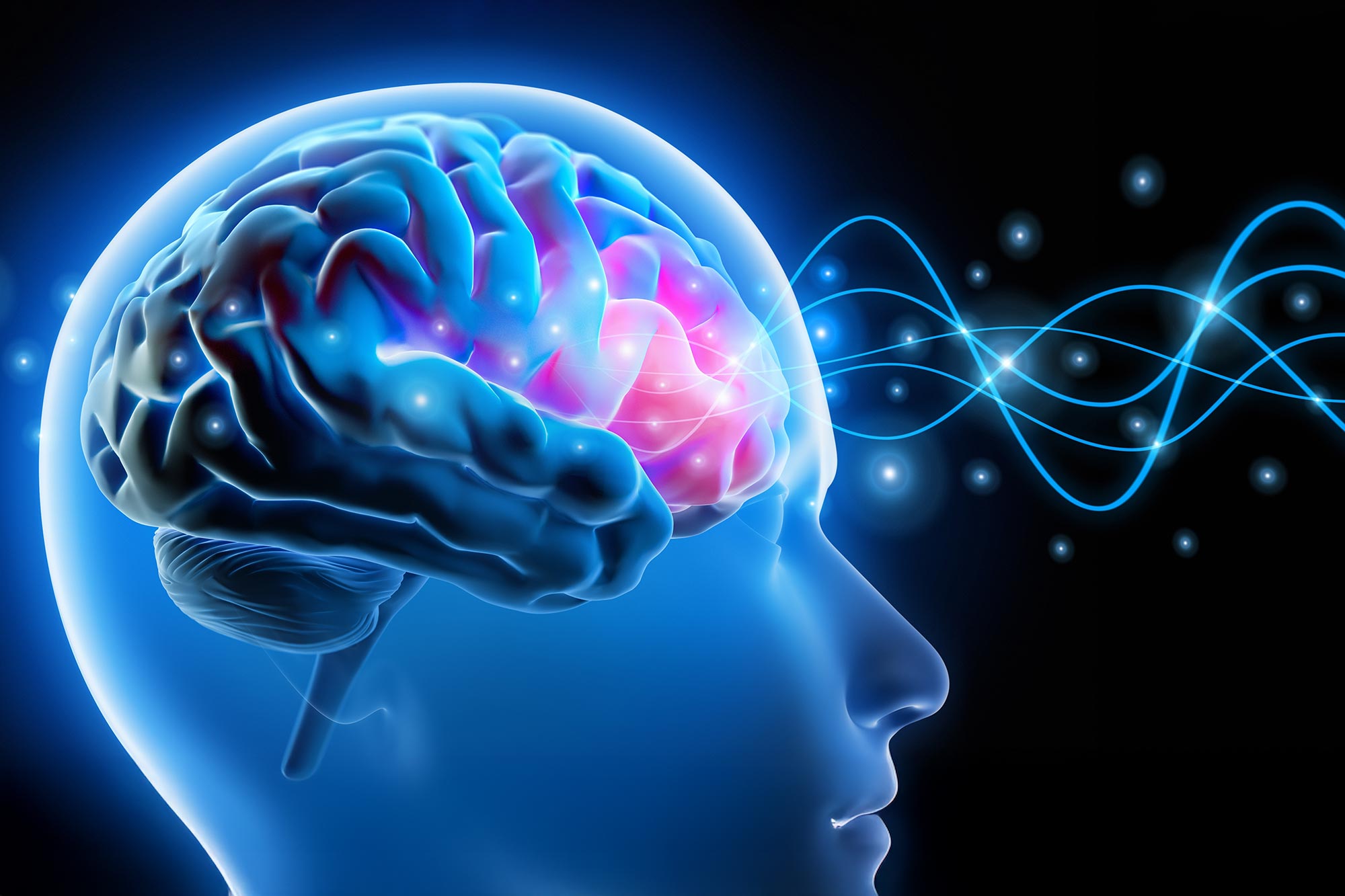
Your sense of owning your own body may depend on the rhythm of your brain waves.
A new study from Karolinska Institutet, published today (January 12) in Nature Communications, shows how rhythmic brain activity called alpha oscillations helps the brain tell the difference between the body and the outside world. The research sheds light on how the brain blends information from different senses to form a stable sense of bodily identity.
At first glance, recognizing your own hand may seem effortless. In reality, the brain must constantly solve a complex puzzle to decide what belongs to the self and what does not.
How the Brain Builds Body Ownership
To explore this process, researchers from Karolinska Institutet combined behavioral experiments, brain recordings (EEG), brain stimulation, and computational modeling. The study involved 106 participants and focused on how the brain merges visual and touch information to create the feeling that a body part belongs to oneself, known as the sense of body ownership.
The results revealed that the speed of alpha brain waves in the parietal cortex plays a key role. This region of the brain processes sensory input from the body. The frequency of these alpha waves determined how accurately people experienced their own body as their own.
“We have identified a fundamental brain process that shapes our continuous experience of being embodied,” explains lead author Mariano D’Angelo, researcher at the Department of Neuroscience, Karolinska Institutet. “The findings may provide new insights into psychiatric conditions such as schizophrenia, where the sense of self is disturbed.”
What the Rubber Hand Illusion Reveals
Participants took part in the rubber hand illusion, a well known experiment used to study body ownership. During the task, a fake hand was placed in view while the participant’s real hand was hidden. When both hands were touched at the same time, many participants began to feel that the rubber hand was part of their own body. When the timing between the touches was mismatched, that sensation weakened or disappeared.
The researchers found that people with faster alpha brain waves noticed even very small timing differences between what they saw and what they felt. Their brains appeared to process sensory information with greater timing precision, leading to a stronger and more accurate sense of body ownership.
When Brain Timing Becomes Less Precise
In contrast, participants with slower alpha frequencies showed a wider temporal binding window. This meant their brains were more likely to treat visual and touch signals as happening together even when they were slightly out of sync. As a result, the boundary between self related sensations and external input became less distinct.
This reduced timing accuracy made it more difficult to clearly separate the body from the surrounding world, weakening the sense of bodily self.
Implications for Prosthetics and Virtual Reality
To test whether alpha wave frequency directly causes these effects, the researchers used non invasive electrical brain stimulation to gently speed up or slow down participants’ alpha rhythms. Changing the frequency altered how precisely participants experienced body ownership and how accurately they judged whether visual and touch signals occurred at the same time.
Computer models supported these findings, showing that alpha oscillations influence how precisely the brain evaluates the timing of sensory information. In doing so, these brain waves help regulate perception and shape the experience of having a body.
“Our findings help explain how the brain solves the challenge of integrating signals from the body to create a coherent sense of self,” says Henrik Ehrsson, professor at the Department of Neuroscience, Karolinska Institutet, and senior author of the study. “This can contribute to the development of better prosthetic limbs and more realistic virtual reality experiences.”
Reference: “Parietal alpha frequency shapes own-body perception by modulating the temporal integration of bodily signals” by Mariano D’Angelo, Renzo C. Lanfranco, Marie Chancel and H. Henrik Ehrsson, 12 January 2026, Nature Communications.
DOI: 10.1038/s41467-025-67657-w
The research was a collaboration between Karolinska Institutet in Sweden and Aix-Marseille Université in France. Funding was provided by the European Research Council (ERC), the Swedish Research Council, VINNOVA, StratNeuro and A*Midex. The researchers report no conflicts of interest.
Never miss a breakthrough: Join the SciTechDaily newsletter.
Follow us on Google and Google News.